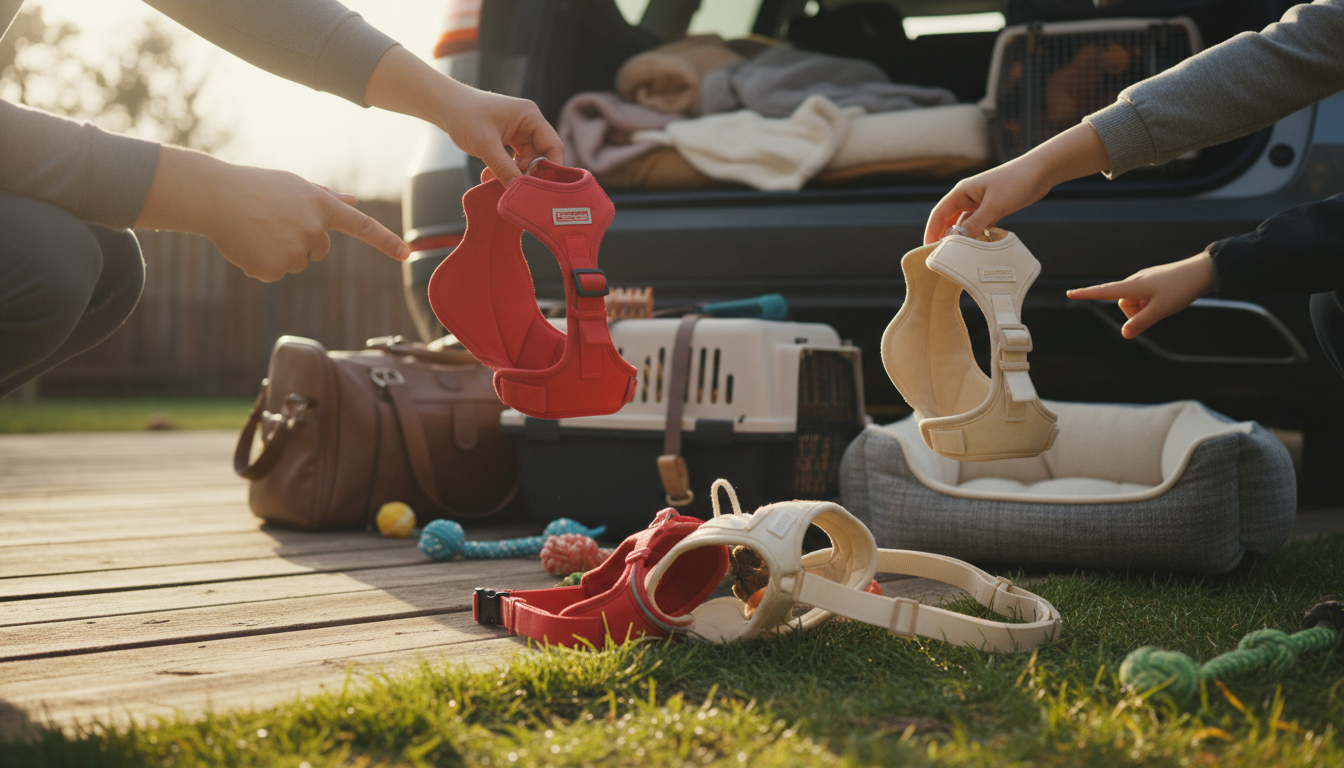
A dog harness should feel secure, supportive, and comfortable—especially for everyday walks and any time your pup is on the move. The harnesses to avoid are the ones that create pressure in the wrong places, restrict natural movement, or rely on flimsy construction that can fail at the worst moment.
Some front-clip “no-pull” styles work well, but avoid designs that sit too low on the chest or cross directly over the shoulder joints. If your dog’s stride looks shortened, their gait changes, or they seem reluctant to walk, the fit or design may be limiting healthy movement.
A harness shouldn’t act like a collar. Skip harnesses with thin, cord-like straps or narrow webbing that can dig into the chest, armpits, or neck area. Narrow pressure points can cause rubbing, hair loss, and sore spots—especially on longer walks or for short-haired dogs.
Chafing around the armpits is one of the most common harness problems. Avoid harnesses with stiff edges, bulky seams, or awkward chest plates that slide into the underarm area. A better option has smooth binding and padding where it touches the body most.
Flimsy plastic buckles, thin D-rings, and loose stitching are red flags. If the harness looks stretched, the stitching is uneven, or the metal rings feel lightweight, it may not hold up under pulling, sudden stops, or daily wear.
Dogs come in all builds—deep-chested, narrow, broad, long-backed, and more. Avoid harnesses that can’t be adjusted in multiple spots. A secure fit should stay put without rotating and allow two fingers of space under the straps.
For a comfort-first approach to travel and daily outings, take a look at this guide: https://kingwuff.com/blog/guide-puff-puppy-dog-car-seat-carrier-bag-king-wuff/.
Keep your body relaxed, avoid looming over them, and let them approach at their own pace. Offer a calm voice and a treat (with the owner’s okay) to build trust quickly.
A well-fitted Y-shaped harness with multiple adjustment points is typically a safe choice because it supports the chest while allowing natural shoulder movement. Look for sturdy hardware and comfortable padding in contact areas.
Some harnesses can rub or restrict movement if they don’t fit properly. They can also encourage pulling in certain dogs without training and may take more time to put on than a collar.