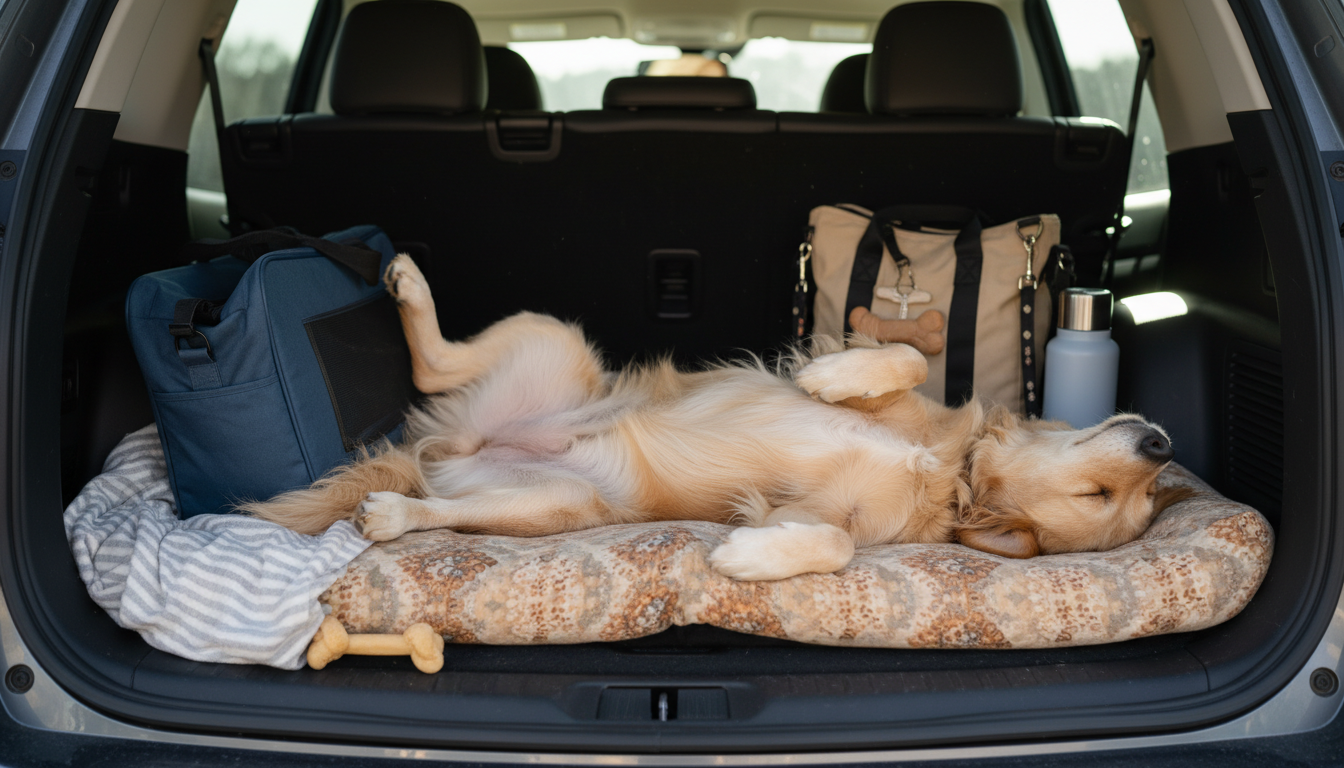
When a dog rolls onto his back with his legs open (sometimes called “splooting” on the back or “airing out”), it’s usually a good sign: comfort, trust, and relaxation. The belly is one of a dog’s most vulnerable areas, so showing it off often means your pup feels safe in the space and comfortable around the people nearby.
Below are practical points for common reasons dogs sleep belly-up.
A loose, floppy belly-up pose—soft eyes, relaxed mouth, slow breathing—typically signals a happy dog who’s fully at ease. Many dogs do this after playtime, a walk, or when they’ve settled into their favorite spot for a nap.
The belly has less fur, so exposing it can help release heat. If your home is warm, your dog just came in from outside, or you notice a lot of stretching and repositioning, the “legs open” pose may simply be temperature management.
Some dogs roll over as a social gesture that can mean “I’m friendly” or “give me a scratch.” But not every belly-up dog wants belly rubs—if the body looks stiff, the tail is tucked, or your dog turns his head away, give him space.
Dogs also land in this position because it feels good on their hips and spine. Puppies and flexible adults may do it more often, and some dogs simply develop it as their go-to sleeping style.
If belly-up sleeping suddenly appears alongside limping, yelping, restlessness, panting, a swollen belly, or your dog won’t let you touch his abdomen, it’s worth calling your vet. A big change in sleep posture can sometimes reflect discomfort.
A supportive, den-like bed can help your dog fully relax—whether he sleeps curled up or sprawled out. For tips on choosing a snug, secure sleep setup, visit this cozy cave bed guide.
Happy dogs often sleep in loose, comfortable positions like curled up, stretched out on their side, or belly-up with relaxed muscles and steady breathing.
This can be a comfortable resting posture that helps some dogs relax their hips and cool down. If it’s new, paired with stiffness, or your dog seems sore, check with a vet.