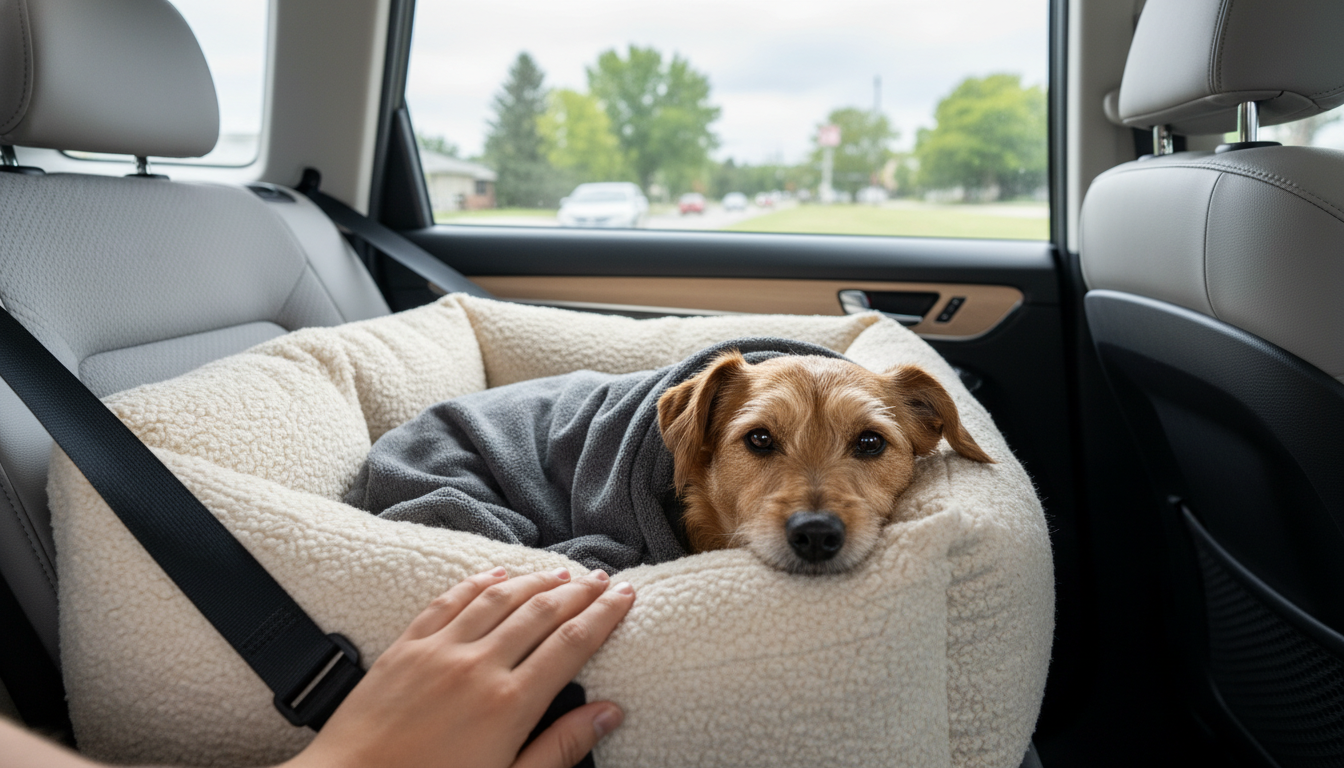
A 10-minute car ride can be a quick “reset” for many dogs: it adds gentle mental stimulation (new sights, sounds, and smells), provides a change of scenery, and can help burn off a little nervous energy. For some pups, it’s a calming routine—especially if they associate the car with fun stops like a park, a pup cup, or a visit with a favorite person.
Even a short drive introduces novelty without being overwhelming. Dogs that are comfortable in the car may become more confident over time when rides are kept brief and positive. Pairing the ride with a simple reward—like a calm greeting and a treat at the destination—can reinforce good feelings about traveling.
Some dogs settle into the motion and arrive more relaxed, while others may show anxiety during even a short trip. Signs of stress can include heavy panting (when it’s not hot), drooling, whining, pacing, shaking, or trying to climb into the front seat. A 10-minute ride is often long enough to notice these patterns and adjust before attempting longer travel.
Short rides are a smart time to practice safe travel habits. Keeping your dog secured helps prevent sudden-lurch injuries, reduces distraction for the driver, and makes stops and turns feel more stable for your pup. Small dogs often do best with a supportive, structured seat or carrier that keeps them comfortable and contained.
For a cozy, safety-first setup (especially for small dogs), check out this guide: Puff Puppy Dog Car Seat Carrier Bag Guide.
Start with a calm, secured position before the car moves, crack a window slightly for fresh air, avoid feeding a full meal right before travel, and keep the vibe low-key—no sudden loud music or frantic greetings. Ending the ride with a short sniff walk can also help your dog “complete” the outing in a relaxed way.
Most dogs do best with a bed that matches their size and sleep style, offers easy-to-clean materials, and provides enough support for their joints—especially as they get older.