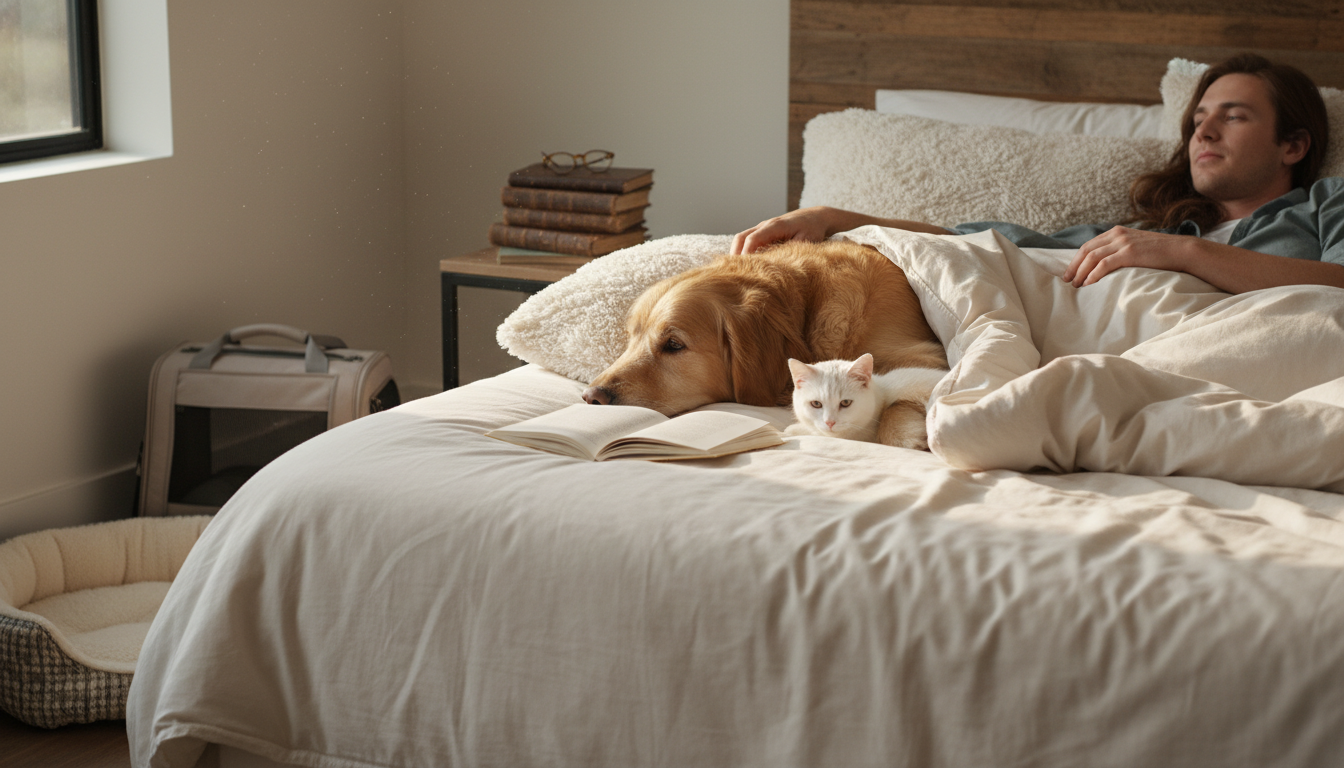
Many veterinarians say bed-sharing can be totally fine for some households, as long as everyone stays healthy, comfortable, and safe. The real “vet answer” is usually: it depends on your dog’s health, your health, your sleep quality, and the habits your dog develops around bedtime.
Vets often point out the biggest benefits first: closeness can reduce anxiety for some dogs, strengthen your bond, and make nighttime feel more secure—especially for newly adopted pets. But they’ll also flag a few practical concerns. If a dog has fleas, ticks, untreated allergies, or frequent skin infections, sharing bedding can spread irritants and make problems harder to manage. The same goes for puppies who aren’t fully house-trained yet, or dogs that tend to lick, scratch, or pace at night and disrupt sleep.
Behavior and safety matter too. Veterinarians and trainers commonly recommend avoiding bed-sharing if a dog guards space, growls when moved, or gets possessive over a partner. And for very small dogs, senior dogs, or pups with back/neck issues, jumping on and off a tall bed can increase injury risk. In those cases, a safer setup is often a supportive bed right next to yours—close enough for comfort, but better for joints and boundaries.
If the goal is cozy togetherness without compromising sleep, many vets suggest a simple compromise: create a “bedtime station” with an easy-to-clean, cushioned dog bed that stays in the same spot every night. That gives your dog a consistent routine, keeps shedding and dirt more contained, and still feels like sleeping “with” you.
For ideas on creating a clean, comfortable sleep setup your dog will actually choose, visit this guide to a cozy, clean dog bed setup.
Often, yes—many dogs choose proximity to people they feel safe with. Still, trust can show up in lots of ways, like relaxed body language and comfort when handled, not just where they sleep.
It can be a problem if allergies flare up, sleep gets interrupted, or parasites and dirt are brought into bedding. Some dogs may also develop guarding behaviors around the bed if boundaries aren’t clear.
They aren’t “not supposed to” across the board—some vets just advise against it for certain health, behavior, or safety reasons. Dogs with medical issues, anxiety, or a tendency to guard space may do better with their own bed nearby.