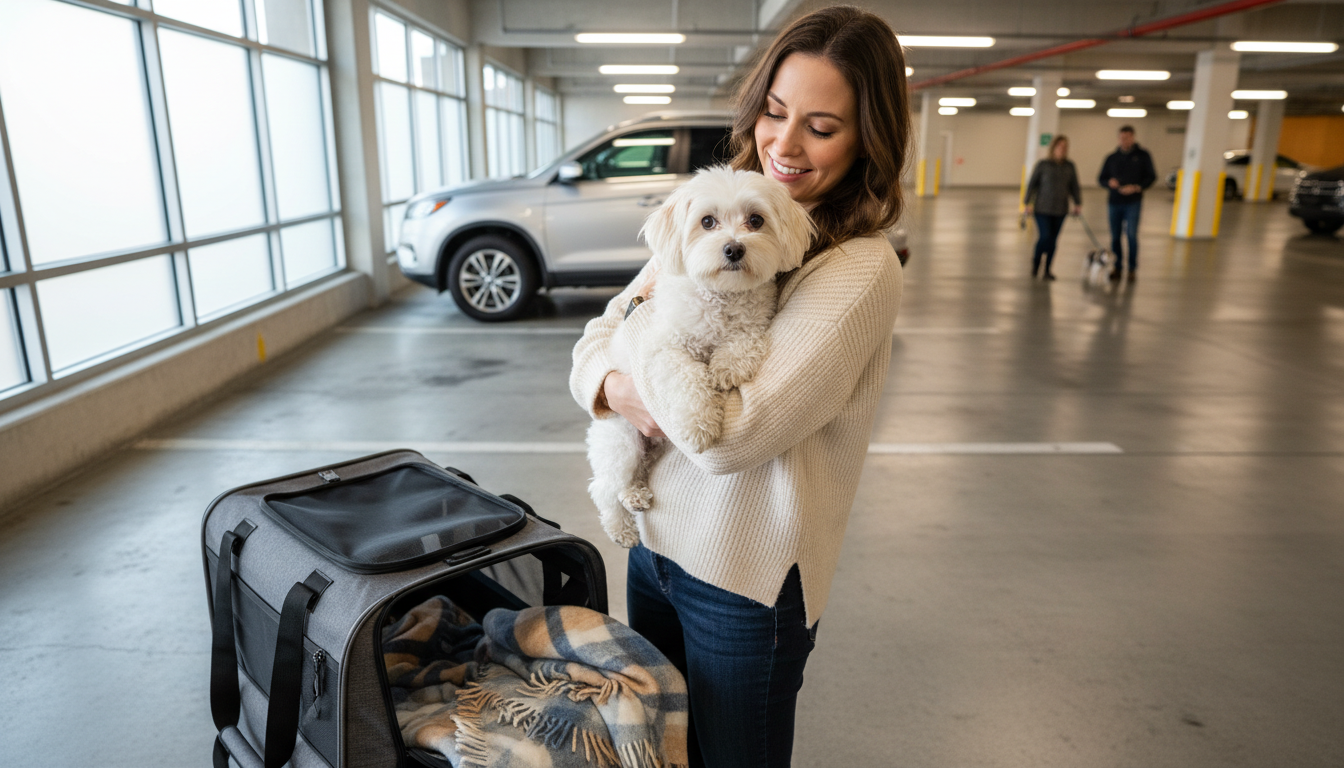
For many small dogs, being picked up can feel like an elevator ride into a safer, warmer spot—or like an unexpected interruption. In that quick moment, a lot depends on past experiences, body comfort, and how securely they’re supported. Some dogs read it as affection and protection, while others read it as “something is happening and I’m not in control.”
When a small dog enjoys being lifted, their body usually softens: ears neutral, muscles loose, breathing calm, and they may lean into you. They may be thinking, “I’m close to my person,” “I’m off the cold/hot ground,” or “I can see more from up here.” This is especially common in busy areas, around larger dogs, or on crowded sidewalks where being scooped up feels like a safe reset.
If a small dog doesn’t like it, they may stiffen, squirm, tuck their tail, whale-eye, lick their lips, or give a low growl. In that case, the thought is closer to, “I didn’t choose this,” “I might fall,” or “My body hurts.” Dogs with sensitive backs, older joints, or a history of being grabbed under the arms can associate pickup time with discomfort.
The “message” you send matters. A steady lift with full support under the chest and hips feels secure. A sudden grab, dangling legs, or a tight hold can feel alarming. For on-the-go comfort, many small dogs relax more when they can ride in a supportive carrier rather than being held in arms for long stretches.
For ideas on making outings smoother and cozier—especially when your dog needs a break from walking—visit this guide to dog carriers, walk bags, and pet travel comfort gear.
It can be, but it’s not always safe for the dog or the person. If lifting is needed, use proper support and consider alternatives like ramps, harness handles, or helping them step up instead.
Some do, but many don’t. Being cradled on their back can feel restrictive, so it’s best to watch their body language and choose a hold that keeps them supported and relaxed.
Some love it and find it comforting, while others prefer keeping their paws on the ground. A secure, gentle lift and respecting signals like stiffening or squirming helps them feel safer.