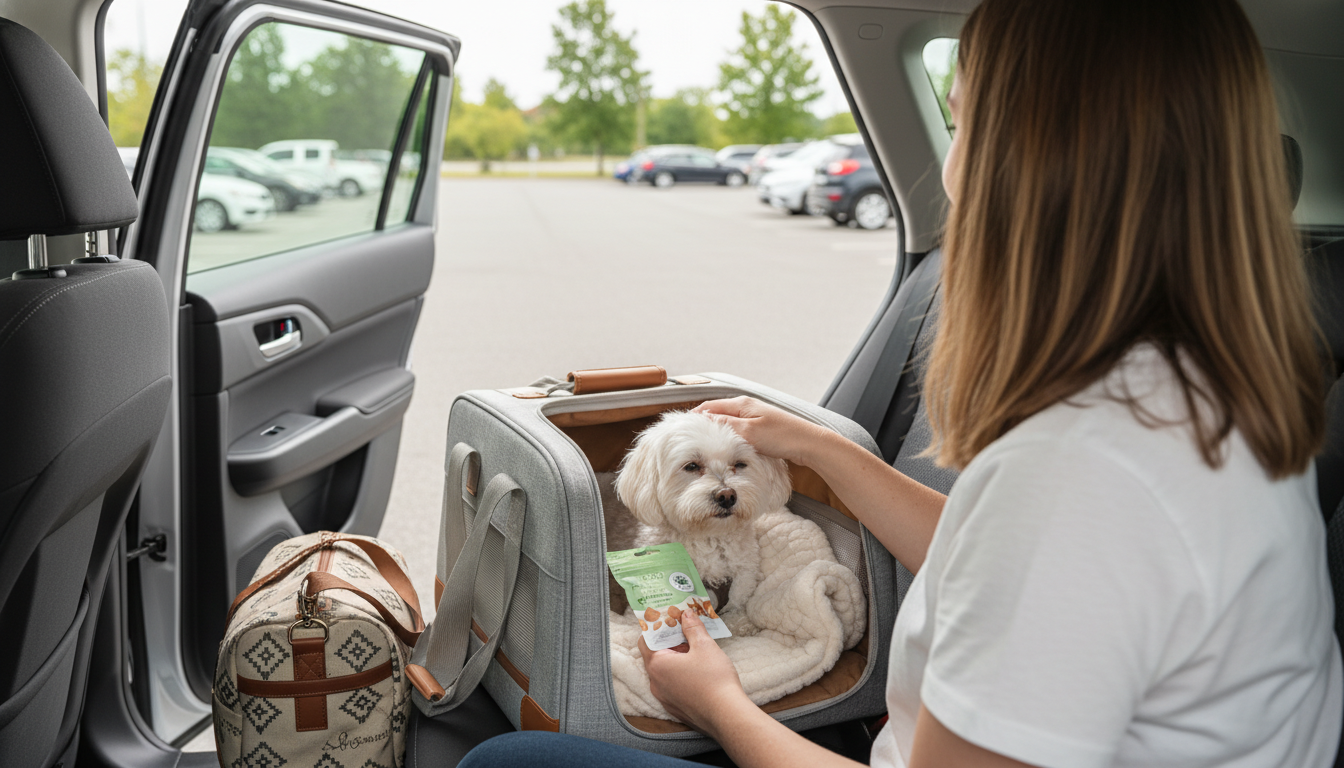
If your dog gets worked up in the car, the safest “calming plan” usually starts with comfort and routine—not a last-minute sedative. Begin with a few easy options that support a relaxed ride, then talk with your veterinarian before giving any medication or supplement.
Bring a familiar comfort item like a favorite blanket or bed cover so the car smells like home. Many dogs settle faster when they have a cozy spot that doesn’t slide around.
Use a secure travel setup (a crash-tested harness or a well-structured carrier) to reduce wobbling and “floating” feelings that can worsen anxiety. A stable, padded seat or carrier also helps dogs who tense up because they can’t find a steady place to rest.
Try calming sound and scent cues such as soft music or white noise, plus good airflow. For some dogs, a light spritz of a dog-safe pheromone spray on bedding (never directly on your dog) can take the edge off.
Calming chews with ingredients like L-theanine, chamomile, or colostrum-based biopeptides may help mild nervousness. Choose products made for dogs and follow label directions by weight.
Motion sickness support matters, too—some dogs look “anxious” when they’re actually nauseous. If drooling, lip-licking, or vomiting shows up, ask your vet about anti-nausea options and feeding timing (often a small meal several hours before travel is easier than a full bowl right before).
If your dog pants heavily, trembles, refuses to get in the car, or escalates despite training, your vet may recommend a prescription medication tailored to your dog’s health history. This is especially important for senior dogs, dogs with heart conditions, or dogs already taking other meds.
For a comfort-first approach to travel—plus tips on choosing a secure, cozy setup—visit this guide to dog car seats and carrier travel.
Benadryl may make some dogs drowsy, but it doesn’t reliably treat anxiety and isn’t appropriate for every dog. Only use it with veterinary guidance for the right dose and to avoid unsafe interactions or side effects.
Sudden fear can come from nausea, a painful condition, a scary event (like loud traffic), or a negative vet visit association. A vet check can rule out pain or motion sickness before focusing on retraining.
Common signs include shaking, panting, drooling, whining, pacing, refusal to enter the car, or accidents shortly after getting in. Some dogs also fixate on exits, yawn repeatedly, or become unusually clingy before rides.