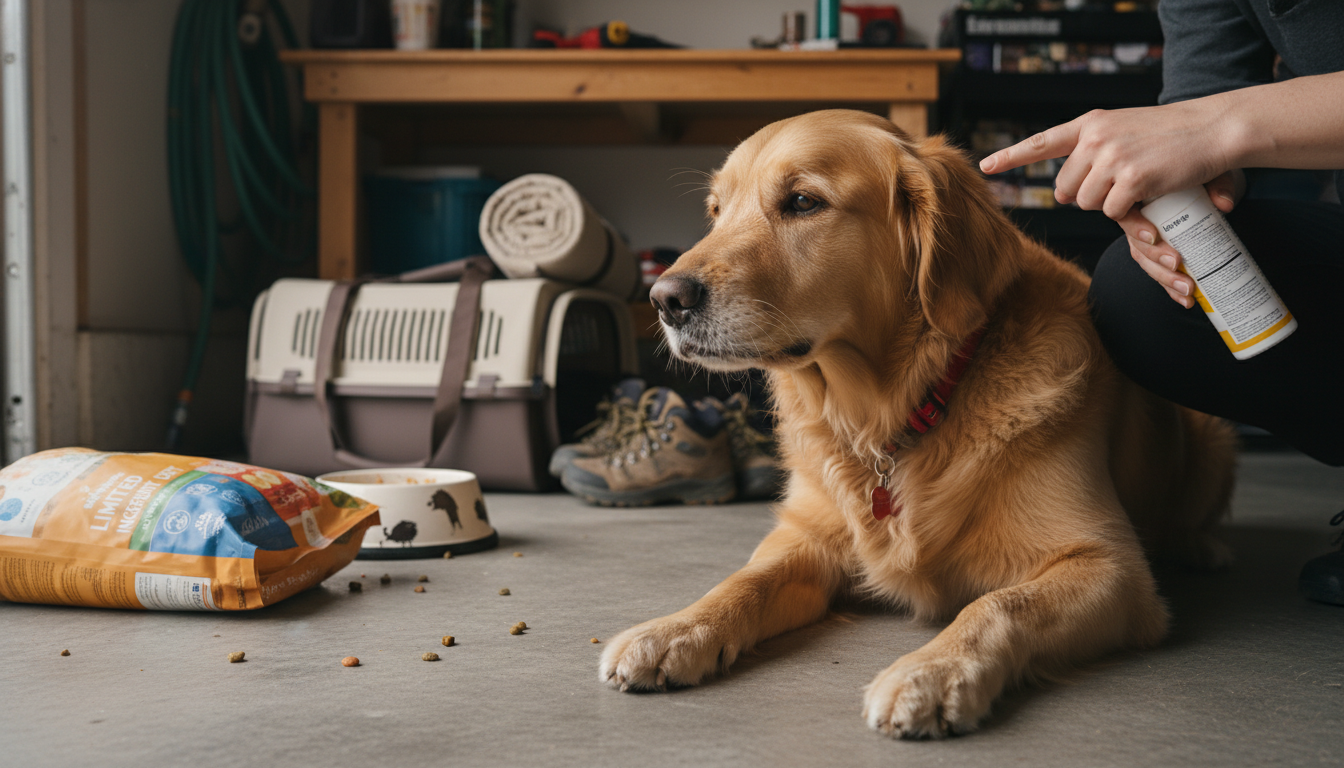
When a dog is itchy, sneezy, or dealing with recurring ear or skin irritation, allergies are often the hidden culprit. While dogs can react to many triggers, three categories show up again and again in vet offices and living rooms alike.
Flea allergy dermatitis is one of the most common—and most intensely itchy—reactions dogs experience. Even a single bite can set off days of scratching, chewing, and hot spots in sensitive pups. Consistent flea prevention, frequent vacuuming, and washing bedding can help reduce flare-ups, especially during warmer months.
Just like people, dogs can react to what’s in the air and on household surfaces. Seasonal pollen can trigger licking and paw chewing, while indoor allergens like dust mites and mold can cause year-round symptoms. Keeping a dog’s sleep space clean and dry, using regular laundry routines, and wiping paws after walks can make a noticeable difference.
Food allergies are less common than fleas or environmental triggers, but they do happen—typically as a reaction to a protein source. Common offenders include beef, chicken, dairy, and eggs. Signs can include chronic itching, ear infections, and sometimes digestive upset. A vet-guided elimination diet is the safest way to pinpoint the cause without guesswork.
A cozy, easy-to-clean sleep setup can support dogs with sensitive skin by reducing exposure to dust, dander, and lingering outdoor pollen. For a snug, den-like option that’s designed with comfort in mind, see the Cozy Cave Bed guide and look for washable materials and a supportive shape your dog will actually use.
Flea allergy (a reaction to flea saliva) is one of the most common and can cause intense itching even from a single bite. Consistent flea control is key for sensitive dogs.
Common triggers include fleas, pollen, dust mites, mold, grasses, certain proteins (like beef or chicken), dairy, eggs, some shampoos/chemicals, and contact irritants like certain fabrics or cleaning residues.
It depends on the trigger, but many dogs struggle most in spring and fall when pollen counts rise. Flea-related issues often spike in warmer months.