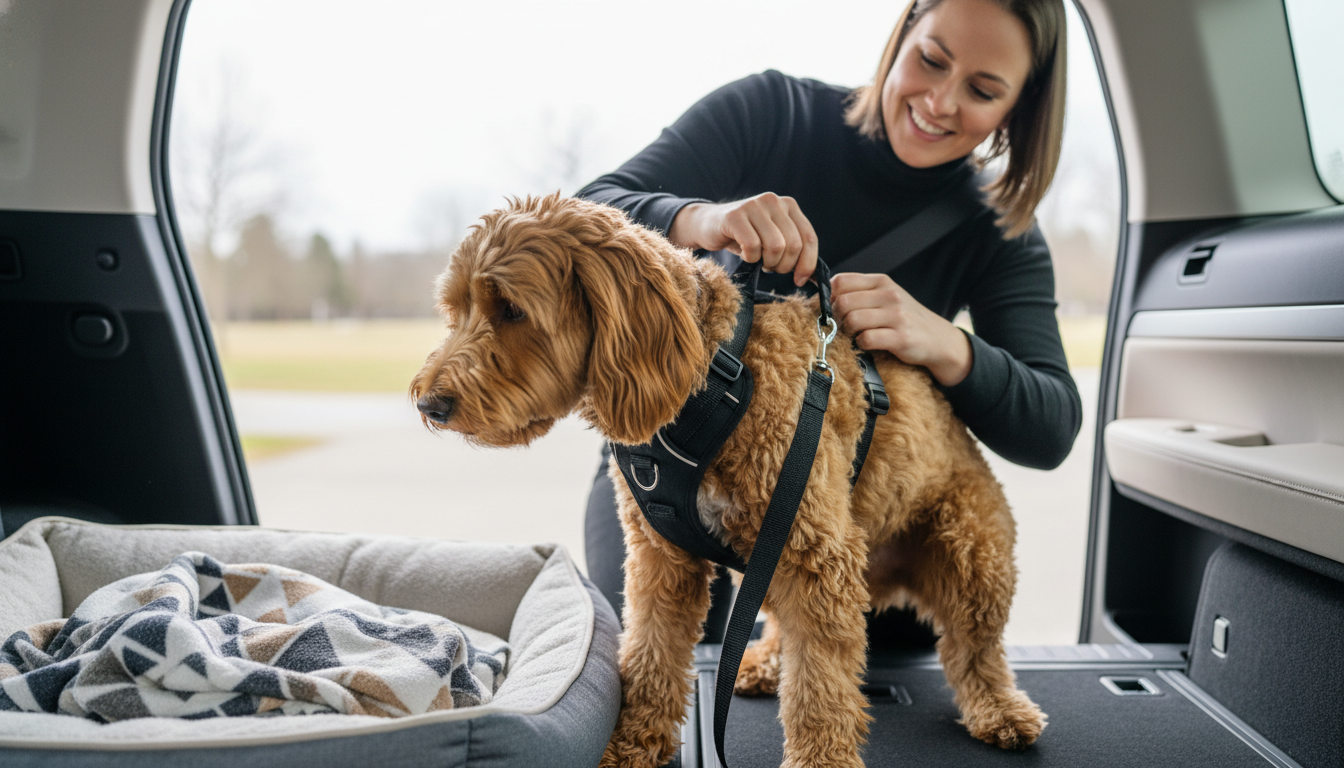
A dog harness can be a comfy, safety-forward choice for walks and travel, but it isn’t perfect for every pup or situation. Here are the most common downsides to consider before choosing one.
Front-clip harnesses often help reduce pulling, but back-clip styles can make it easier for strong or energetic dogs to lean in and pull harder. If pulling is an issue, fit and clip placement matter as much as the harness itself.
Harnesses come in many shapes, and dogs do too. A harness that’s too tight can chafe behind the legs or across the chest, while one that’s too loose can shift, twist, or be escaped. Long-haired dogs may also experience matting where straps sit.
Compared to clipping a leash to a collar, harnesses take longer to put on correctly. Some dogs get wiggly, freeze up, or act stressed during the “step-in” or “over-the-head” process, especially when they’re still getting used to it.
Not all harnesses provide the same steering control. Minimal “H-style” harnesses can be comfortable, but they may not offer enough guidance for reactive dogs or crowded environments unless paired with training and the right leash setup.
Bulky buckles or thick straps may press in odd places when a dog is sitting or lying down during rides. For road trips, it helps to think about overall travel comfort and secure positioning; see this helpful guide for a cozy, safety-minded setup: Puff Puppy Dog Car Seat Carrier Bag Guide.
Harnesses can rub if they don’t fit well, and some designs may encourage pulling. They also take more time to put on and adjust than a simple collar.
A harness is often more comfortable for big dogs because it spreads pressure across the chest instead of the neck. That said, the best choice depends on training, pulling habits, and proper fit.
Many trainers like harnesses for everyday walking, especially for dogs that pull or have sensitive necks. For training goals, they may recommend a specific style (front-clip harness, martingale collar, etc.) based on the dog and handler.