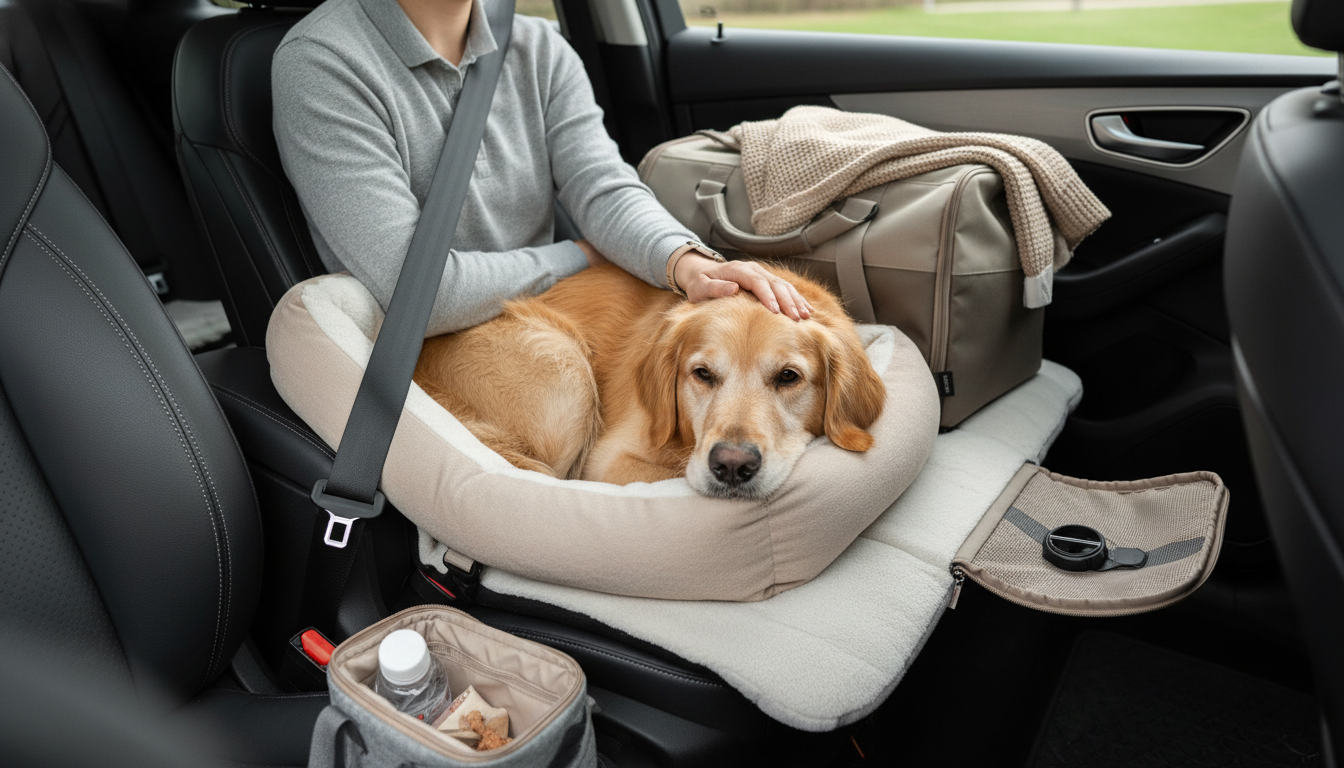
On most commercial airlines, pet dogs are not allowed to “sit in a seat” like a human passenger. Even when small dogs are permitted in the cabin, they typically must stay inside an airline-approved carrier that fits under the seat in front of you for taxi, takeoff, and landing—and often for the entire flight.
Usually, they mean one of two things: (1) the dog is a trained service animal traveling with a handler (still generally required to stay on the floor and not on the seat), or (2) the owner purchased an extra seat for space, but the pet carrier still must remain stowed under the seat per the airline’s cabin-safety rules.
Some crews may allow a zipped carrier to be placed on your lap once you’re at cruising altitude, but that’s not the same as occupying a seat—and it’s always subject to the airline’s written policy and the flight crew’s direction. If you’re planning around this, confirm the rules directly with your airline before booking.
If your dog qualifies for in-cabin travel, the biggest comfort win is choosing a supportive, well-ventilated carrier that keeps your pup secure and cozy without slumping. For more practical packing and comfort ideas, visit our complete guide here: https://kingwuff.com/blog/guide-pet-travel-comfort-gear-dog-carriers-walk-bags-tips/.
Airlines that are considered dog friendly typically have clear pet policies, reasonable in-cabin fees, and straightforward carrier requirements. Friendliness can still vary by route, aircraft, and crew, so it’s smart to verify details before you buy tickets.
In general, large dogs are not allowed in the cabin unless they are trained service animals that meet the airline’s requirements. Otherwise, large dogs usually must travel via cargo options or a pet-focused/charter alternative.
Buying an extra seat typically does not allow a big dog to sit in it on commercial airlines. Most airlines still require pets (if allowed) to be contained properly, and large dogs generally don’t qualify for in-cabin pet travel.