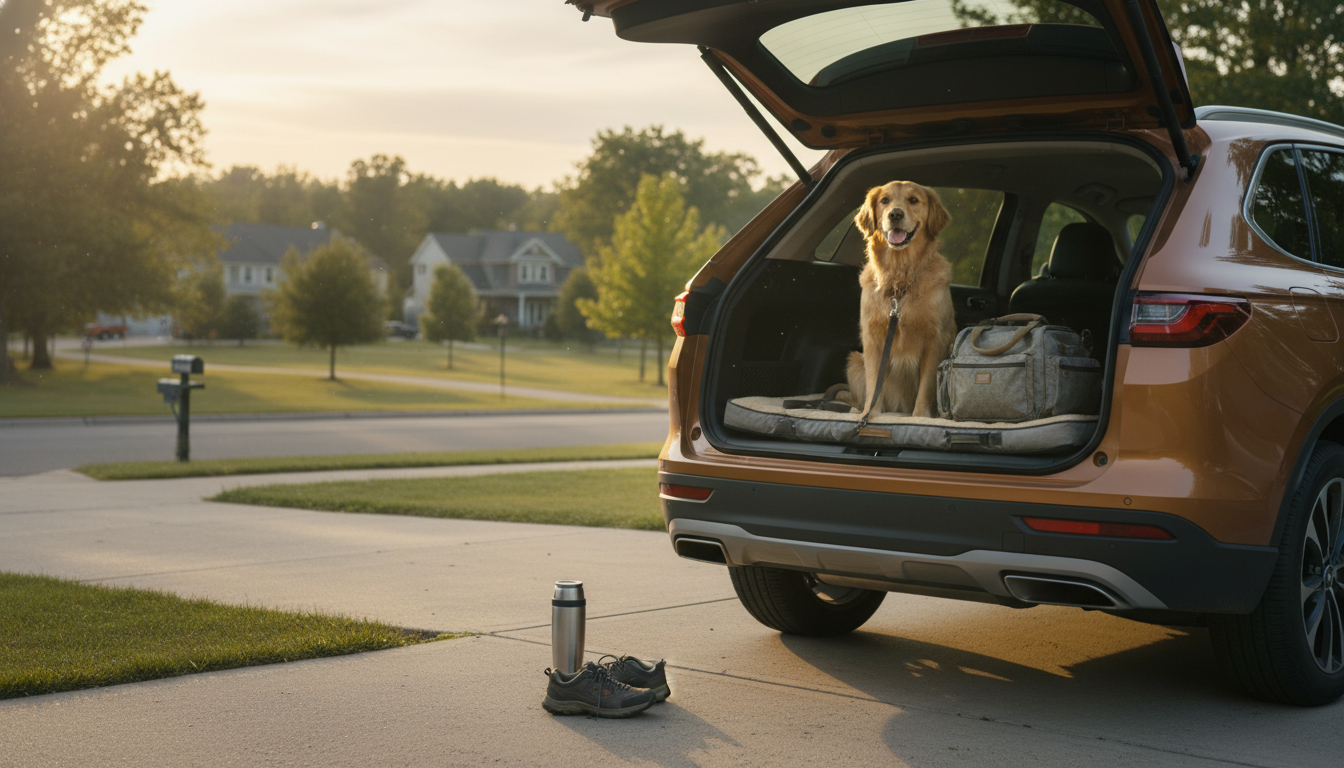
Often, yes—an early walk can be a calm, healthy way to start your dog’s day. Many dogs wake up ready to move, sniff, and take a bathroom break, and a short morning outing can help prevent indoor accidents while easing restlessness. It can also set a steady routine, which tends to lower stress for dogs who thrive on predictability.
That said, “first thing” doesn’t have to mean rushing out the door. If your dog is groggy, older, or dealing with joint stiffness, a few minutes of gentle stretching, a sip of water, and a quick potty break might be the best first step—followed by a longer walk once they’re fully awake. Puppies and seniors may also do better with shorter, more frequent outings.
A morning walk is especially helpful if your dog sleeps through the night, has a lot of energy, or gets anxious when the household starts moving. It’s also a smart choice during warmer months, when early hours are cooler and paw-friendly. Keep it relaxed: let your dog sniff, move at their pace, and use the walk as a gentle “reset” before breakfast or alone time.
If your dog eats immediately upon waking and is prone to stomach upset, consider a quick potty break first, then breakfast, and a walk after a short rest. Dogs with medical conditions, recovering from surgery, or showing signs of nausea may benefit from a slower morning routine—check with your veterinarian if symptoms persist.
Early walks go smoother when everything has a place—treats, waste bags, keys, phone, and a small water bottle. For tips on staying hands-free and prepared, visit this guide to a hands-free, organized dog walking bag.
Many dogs do well with a quick potty break right after waking, then a longer walk shortly after. Adjust based on age, energy level, and any tummy sensitivities.
Common advice is to start with a short potty break and then fit in a longer walk when it works for your schedule. What matters most is consistency and meeting your dog’s exercise needs.
Aim to wait about 20–30 minutes after a walk before feeding, especially after brisk exercise. This gives your dog time to cool down and can help reduce digestive discomfort.