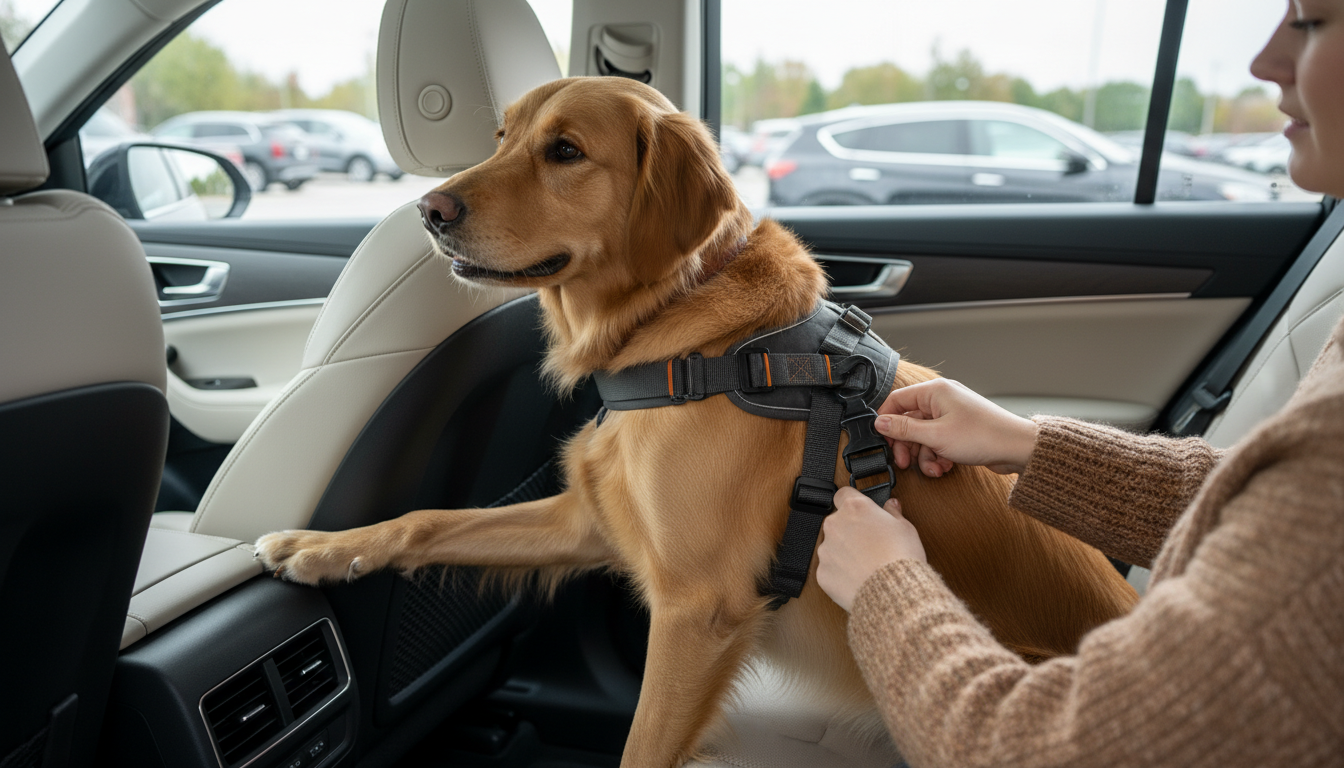
Yes—most dogs should wear a properly fitted travel harness (or ride in a secured carrier or car seat) whenever they’re in the car. A harness that connects to the vehicle’s seat belt system helps limit dangerous movement during sudden stops, reduces distraction for the driver, and can prevent a dog from being thrown forward in a crash.
Even calm pups can get nervous or excited on the road. A car harness helps keep your dog in one spot so they’re not climbing into the front seat, jumping between seats, or bracing awkwardly when you brake. It’s also an easy way to give your dog a familiar “seatbelt routine” that signals it’s time to settle in.
A collar isn’t designed to restrain a dog’s body during impact and can put pressure on the neck. A well-made harness distributes force across the chest and torso, which is generally safer and more comfortable for travel.
Choose a travel-specific harness that fits snugly without rubbing, and attach it to an appropriate seat belt tether (never clip to a standard leash). Keep the tether short enough to prevent your dog from reaching the front seat, but long enough for comfortable sitting or lying down. For small dogs, a secured dog car seat or carrier can be an equally cozy, stable option.
For more tips on comfortable, secure rides—especially for small dogs—visit this guide to the Puff Puppy dog car seat carrier bag.
Yes. A travel harness helps keep your dog restrained and reduces the risk of injury and driver distraction during sudden stops or accidents.
The safest options are a crash-tested harness attached to the seat belt system or a securely fastened carrier/car seat sized for your dog. Either method keeps your pup stable and away from the front seat.
They can work well when they’re travel-rated, properly fitted, and correctly attached to the vehicle’s seat belt setup. Fit and correct use make a major difference in safety and comfort.