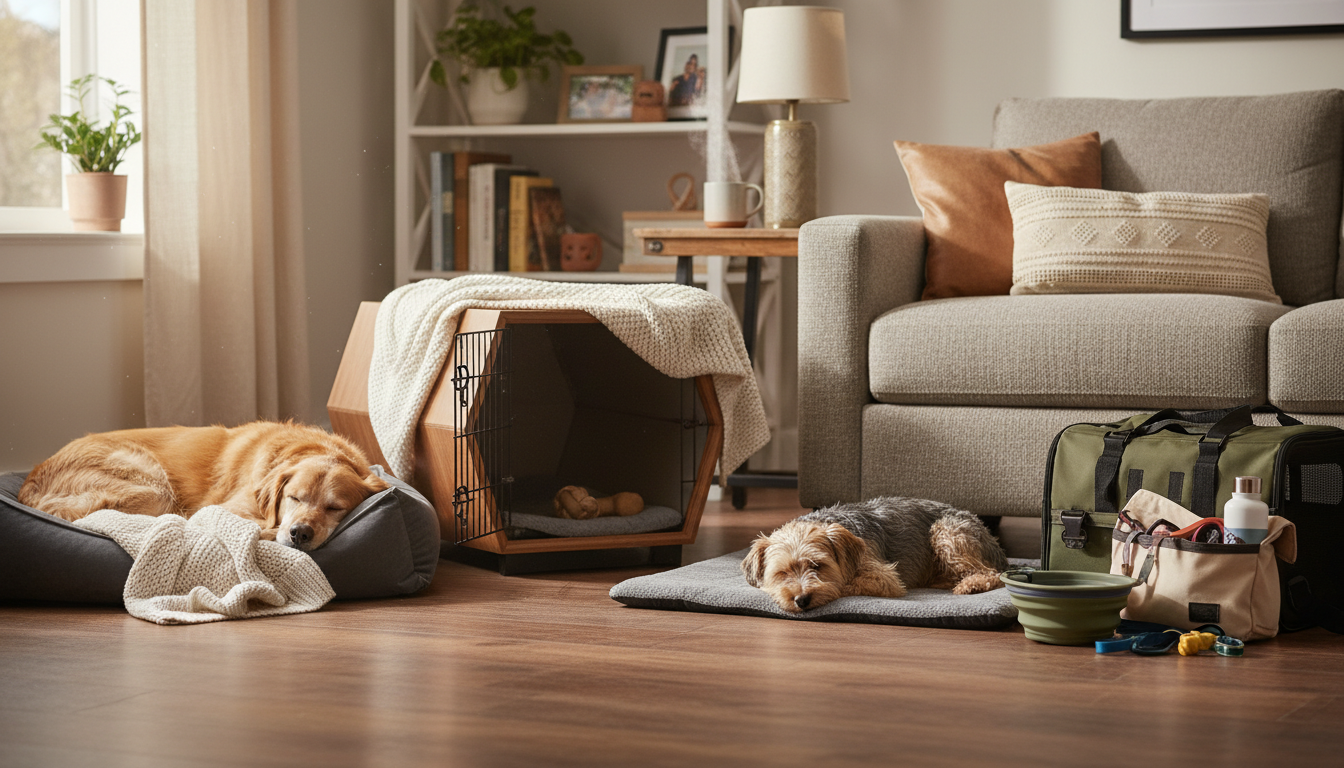
The best place for a dog to sleep depends on what helps everyone rest well—your dog included. Both the bedroom and living room can work beautifully, as long as the spot is safe, consistent, and comfortable.
For many dogs, sleeping near their people feels secure and calming. This can be especially helpful for puppies adjusting to a new home, senior dogs who startle easily, or dogs who get anxious at night. If your dog sleeps quietly, settles well, and you’re not dealing with allergies or disrupted sleep, the bedroom can strengthen your routine and reduce nighttime pacing or whining.
Bedroom sleeping is often easiest when your dog has a designated bed on the floor rather than sharing the human bed. A supportive, cozy bed gives them their own “nest,” helps protect joints, and keeps boundaries clear.
The living room can be ideal for dogs who overheat, sprawl out, or get restless in a smaller sleeping space. It’s also a practical choice if someone in the household has allergies, is a light sleeper, or if your dog is still learning nighttime manners (like staying settled instead of hopping on and off the bed).
Some dogs sleep more soundly in a quieter area away from bedroom movement—late-night phone alarms, turning over, or a partner coming and going can wake a sensitive pup.
Pick the location that supports uninterrupted sleep for everyone, then make it consistent. Aim for a low-traffic corner, away from drafts, direct heat, and cords or small objects. If switching rooms, transition gradually by moving the bed a little at a time and rewarding calm settling.
Wherever your dog sleeps, a clean, well-cushioned bed makes a noticeable difference in relaxation and routine. For tips on creating a cozy sleep setup and choosing a bed that stays comfortable and easy to maintain, visit this guide to a cozy, clean dog bed setup.
Most dogs do best with a bed that matches their size and sleep style, offers easy-to-clean materials, and provides enough support for their joints—especially as they get older.