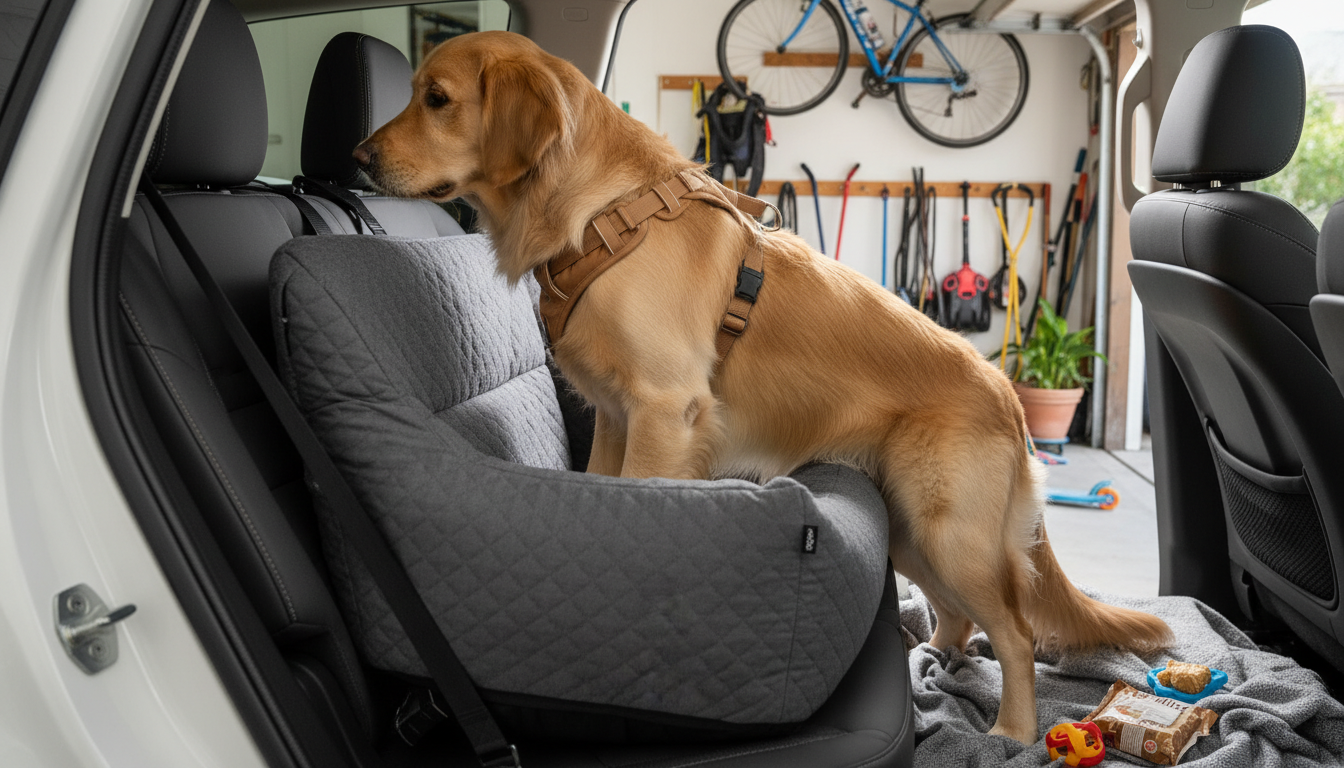
Yes—most dogs are safer and more comfortable when they ride in a properly secured dog car seat or carrier. A dedicated seat helps keep a pup from roaming the cabin, climbing into the front, or sliding off the seat during sudden stops. It also creates a cozy “home base” that can reduce stress for dogs who get nervous in the car.
A car seat is especially helpful for small to medium dogs who tend to shift around on slick upholstery or who like to perch up to look out the window. It can also be a smart choice for frequent trips—vet visits, weekend errands, road trips—where a consistent setup keeps routines predictable and calm.
A dog car seat should be secured to the vehicle (usually via the seat belt) and include a way to attach a harness tether. The tether should connect to a properly fitted harness—never a collar—to help prevent neck injuries. The goal is to limit dangerous movement without restricting breathing or putting pressure on the throat.
A good seat isn’t just a safety tool; it’s a comfort upgrade. Look for supportive cushioning, high sides for a snug feel, and durable materials that stand up to claws, shedding, and everyday use. A wipe-clean surface and stable base can make travel feel easy for both you and your dog.
Start with short rides and let your dog explore the seat while parked. Add a familiar blanket or favorite toy, and reward calm behavior. Once your pup associates the car seat with comfort, most dogs settle in quickly.
For a deeper look at choosing the right fit and setup, visit this complete guide to dog car seats and carrier bags.
Many dogs benefit from riding in a secured car seat or carrier, especially smaller pups or anxious travelers. While rules vary by location, a restrained dog is generally safer for both the pet and the driver.