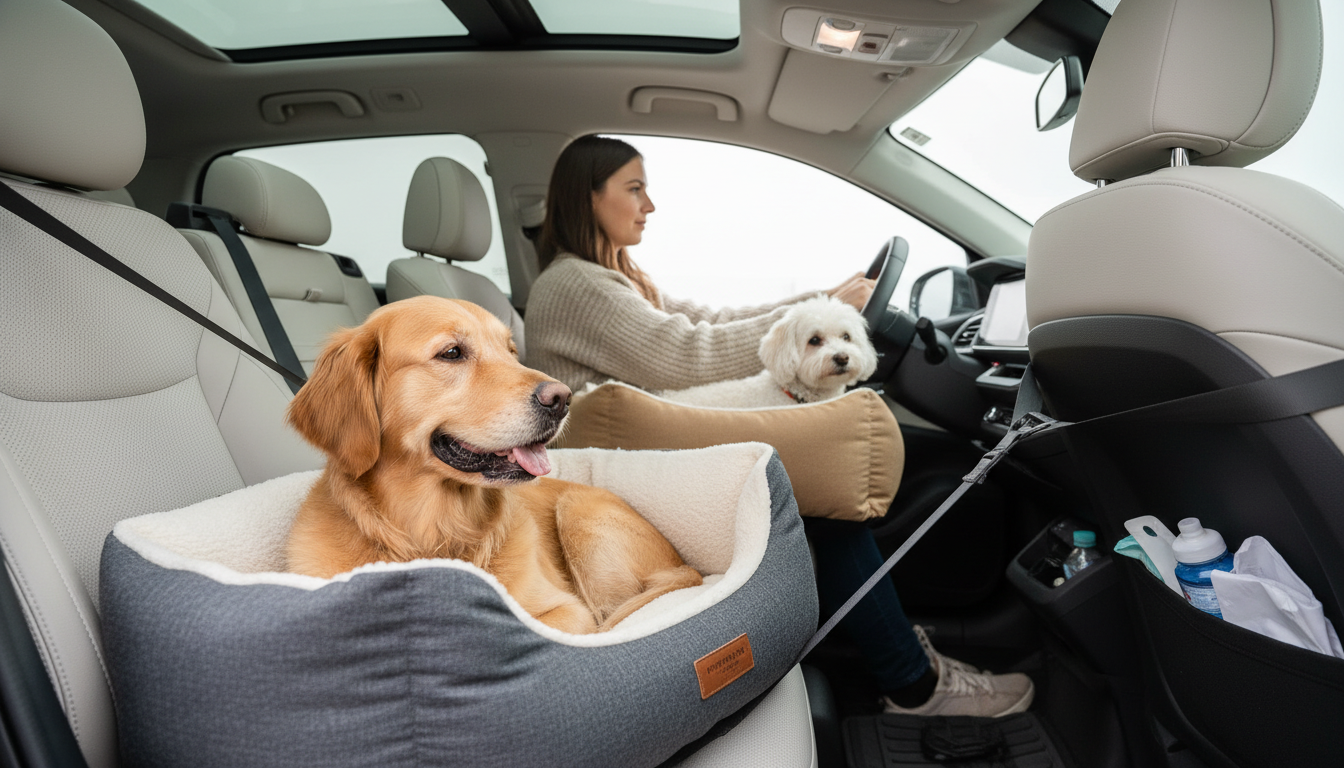
In most everyday trips, the back seat is the safer choice for dogs. It’s farther from the windshield, dashboard, and airbags, and it typically offers a more stable spot for a properly secured harness, crate, or dog car seat. The goal is simple: keep your pup comfortably restrained so sudden stops, sharp turns, and minor collisions don’t turn into serious injuries.
Back seat advantages: The back seat keeps dogs away from front airbags, which can injure a pet on deployment—even in low-speed crashes. It also reduces the chance of your dog being thrown forward toward hard surfaces. When paired with a seat belt–compatible harness or a secured carrier, the back seat helps limit movement while still letting your dog ride cozy and calm.
Front seat considerations: The front passenger seat is generally riskier due to airbags and proximity to the dashboard. If the front seat is the only option (for example, a single-cab truck), take extra precautions: disable the passenger airbag if possible, move the seat as far back as it can go, and secure your dog in a crash-tested harness or a well-anchored carrier so they can’t climb onto the console or into your lap.
Use the right restraint: A seat belt–compatible harness, a secured crate, or a dedicated dog car seat/carrier that anchors to the vehicle is key. “Loose” dogs can become projectiles, and they can also distract the driver—both are avoidable with the right setup.
Choose a stable position: The center of the back seat can be a solid option when you can anchor the restraint correctly and your dog stays comfortable. For smaller pups, a supportive car seat carrier can help them feel snug and reduce shifting during the ride.
Comfort matters: A calmer dog is safer. Look for supportive padding, durable materials, and a secure attachment system—especially for frequent trips.
For a deeper look at safe, cozy travel setups (including dog car seat carrier tips), visit this guide on dog car seat carriers.
It can be a good choice for many dogs if it fits their size and sleep style and uses supportive, washable materials. Look for a non-slip base, durable stitching, and enough cushioning—especially for seniors or larger breeds.