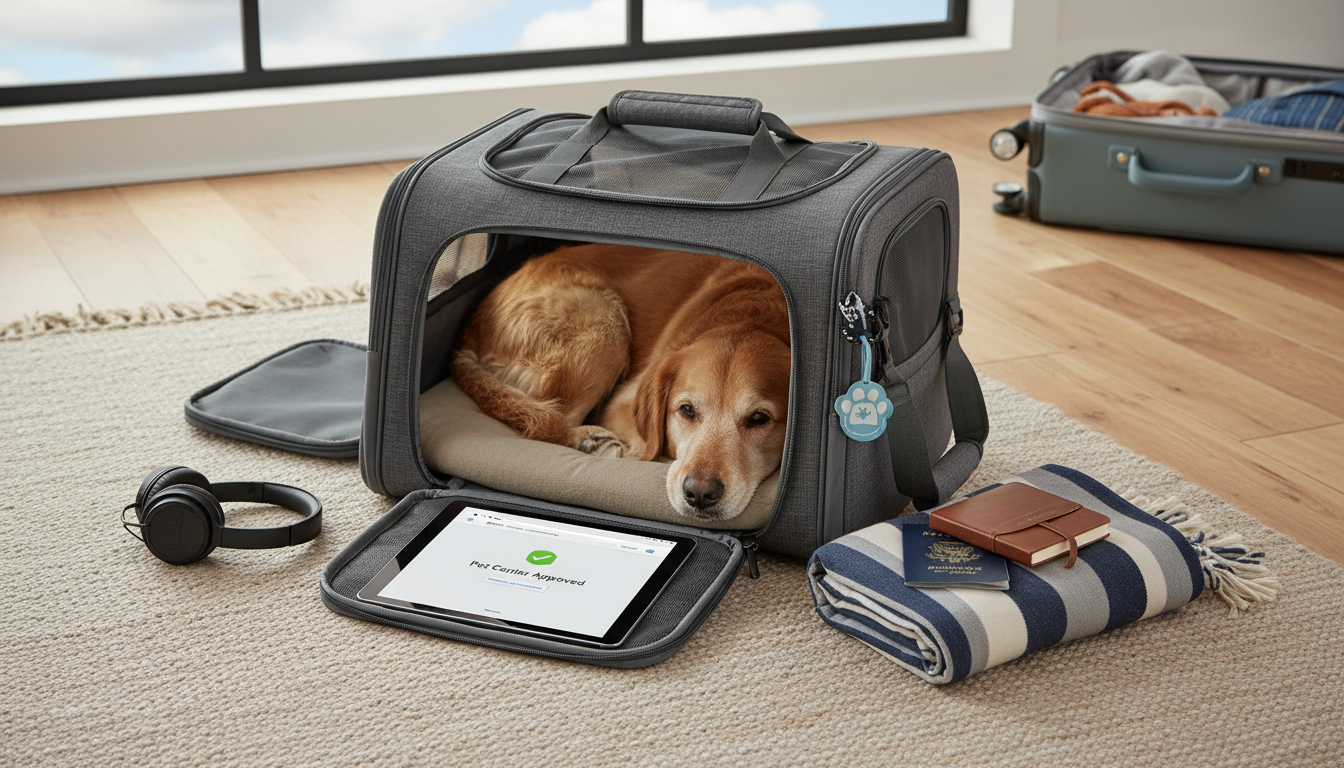
Sleepypod is known for making pet carriers that are accepted by many airlines, but “airline approved” isn’t a single universal stamp that applies to every flight or every Sleepypod model. Some Sleepypod carriers are designed to fit under-seat requirements and are commonly used for in-cabin travel, yet each airline (and even each aircraft) can have different size limits, weight rules, and pet policies.
The safest way to confirm approval is to check three things before booking: the exact carrier model you own, your airline’s current in-cabin pet carrier dimensions, and the aircraft type on your itinerary. If your carrier meets the airline’s published under-seat measurements (and your pet can stand up and turn around comfortably), you’re typically in good shape.
Start with the airline’s rules, not the product label. Measure your carrier (length, width, and height) and compare it to the airline’s maximum under-seat size. Soft-sided carriers can be a little more forgiving, but they still need to fit fully under the seat without forcing it.
Next, confirm ventilation, secure closures, a leak-resistant base, and a stable structure—details airlines often look for at check-in. Finally, consider your pet’s comfort: a carrier that’s technically the right size but cramped for your dog or cat can make travel stressful.
If you’re weighing options for a cozy, safer ride—whether for car trips now or flights later—this guide breaks down what matters most in real life: fit, comfort, and secure design. Visit the full guide here: https://kingwuff.com/blog/guide-puff-puppy-dog-car-seat-carrier-bag-king-wuff/.
Compare the carrier’s exterior measurements to your airline’s under-seat size limits and confirm the airline allows soft-sided or hard-sided carriers for in-cabin pets. Always verify rules for your specific route and aircraft.
Look for a manufacturer statement that the crate complies with IATA Live Animals Regulations and confirm it has required features like proper ventilation, secure fasteners, and a rigid, leak-proof base. For cargo travel, airlines may also have extra requirements beyond IATA.
Many cats prefer soft carriers because they feel cozier and can reduce visual stimulation. The best choice depends on the cat’s personality, carrier stability, and whether the carrier stays well-ventilated and secure.