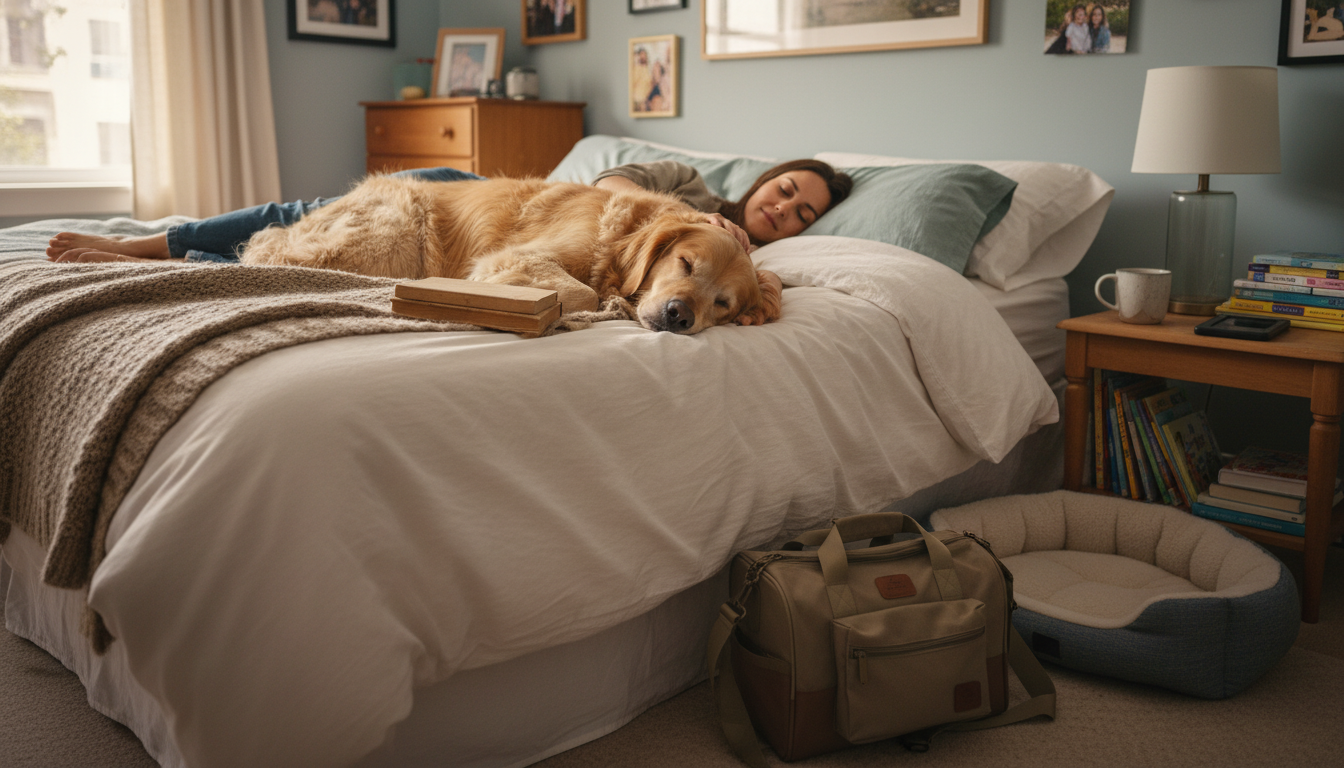
It’s not weird at all—lots of dog parents share their bed with their pups. For many households, it’s simply part of the nightly routine: a warm, reassuring presence that can help both humans and dogs settle down. What matters most is whether it supports good sleep, healthy boundaries, and safe habits for everyone involved.
If your dog is calm, clean, and comfortable with gentle handling, bed-sharing can be a cozy way to bond. Some dogs feel more secure near their person, especially during storms, travel, or big changes at home. For people, having a dog close by can feel soothing and comforting—like a living, breathing weighted blanket.
Co-sleeping can be less ideal if your dog guards the bed, growls when moved, disrupts sleep with constant shifting, or has accidents. It may also be a problem for anyone with allergies, asthma triggers, or a compromised immune system. Puppies still learning house rules and senior dogs with mobility issues often sleep better (and safer) on their own surface.
Set simple, consistent rules: invite your dog up rather than allowing free-for-all jumping, and teach an “off” cue. Keep nails trimmed and bedding clean, and consider using a washable layer for easy maintenance. If your dog sprawls, overheats, or wakes you up, try a bedside setup—many dogs are happiest in their own bed right next to you.
A supportive, non-slip, washable dog bed can give your pup the same “close to you” feeling while protecting your sleep and their joints. For ideas on choosing a practical, comfort-first option, visit this guide to a washable, non-slip dog bed mattress plush pad.
Yes—many dogs do great with occasional sleepovers. Consistency helps, so use a clear invitation cue and keep a comfy dog bed available for nights you need more space.
No, it’s a common topic and plenty of pet owners do it. The best choice depends on your dog’s behavior, your sleep quality, and what feels safe and comfortable in your home.