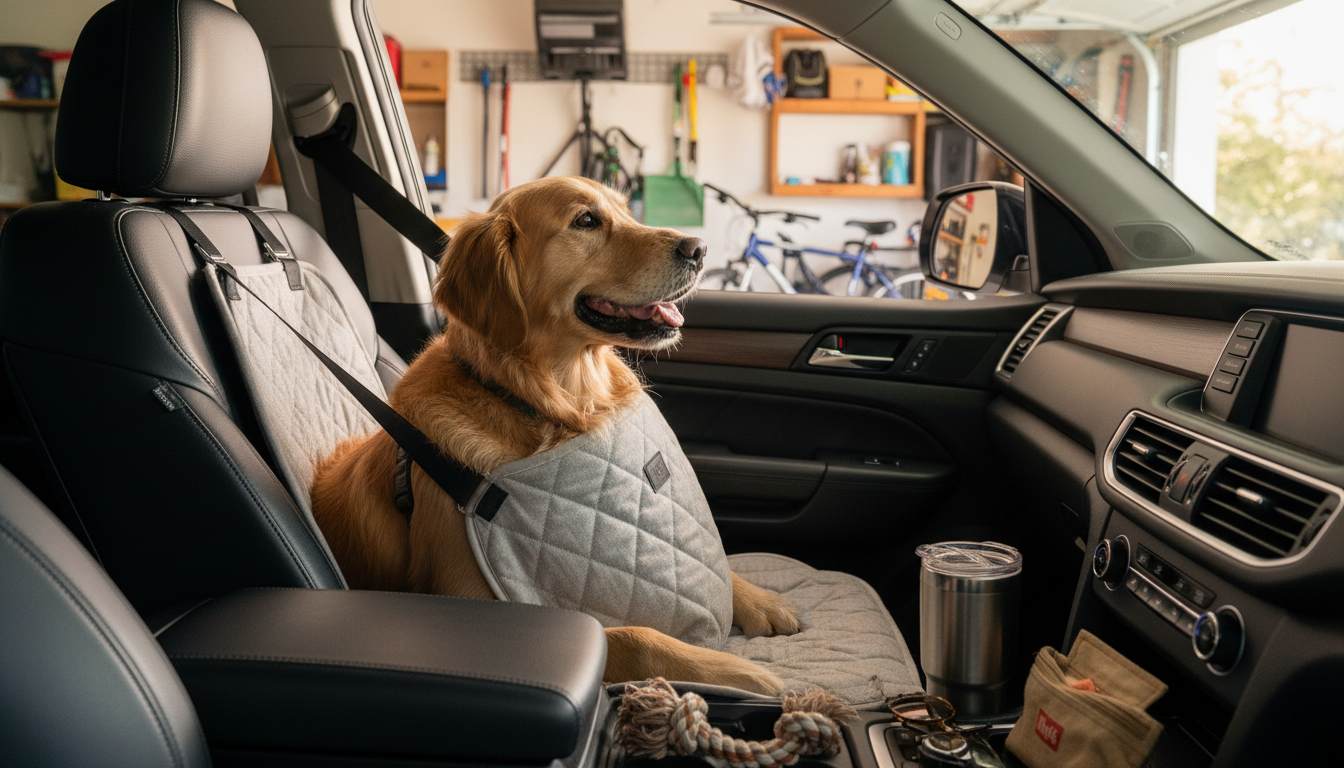
It can be safe, but only if your dog is properly restrained and the setup keeps them away from airbags, sudden braking forces, and distractions. The front seat is often riskier than the back seat because passenger airbags can seriously injure a dog in a crash—even at low speeds. For many pets, the safest choice is a secured spot in the back seat using a crash-tested harness or a well-fitted car seat carrier that stays anchored in place.
The biggest concern is the airbag. If the airbag deploys, it can strike a dog with enough force to cause severe injury. Front-seat riding can also increase driver distraction if your pup climbs into your lap, blocks the gear shift, or tries to look out the windshield.
If the front seat is your only option (for example, a single-cab truck), focus on controlled, stable positioning:
Many dogs ride more calmly when they have their own secure “nest,” especially on longer drives. For a detailed look at choosing a supportive, stylish option that’s built for comfort and safer travel, visit this dog car seat carrier guide.
Yes, but it’s typically safer in the back seat. If your dog must ride up front, use a proper restraint and take steps to reduce airbag risk.
You can, but don’t leave them unrestrained. A secured harness or anchored carrier helps prevent injury and keeps the driver from getting distracted.
Texas rules can vary by city and situation, but there’s no statewide requirement that dogs must ride in the back seat. Even when it’s legal, a restraint is still the safest approach.