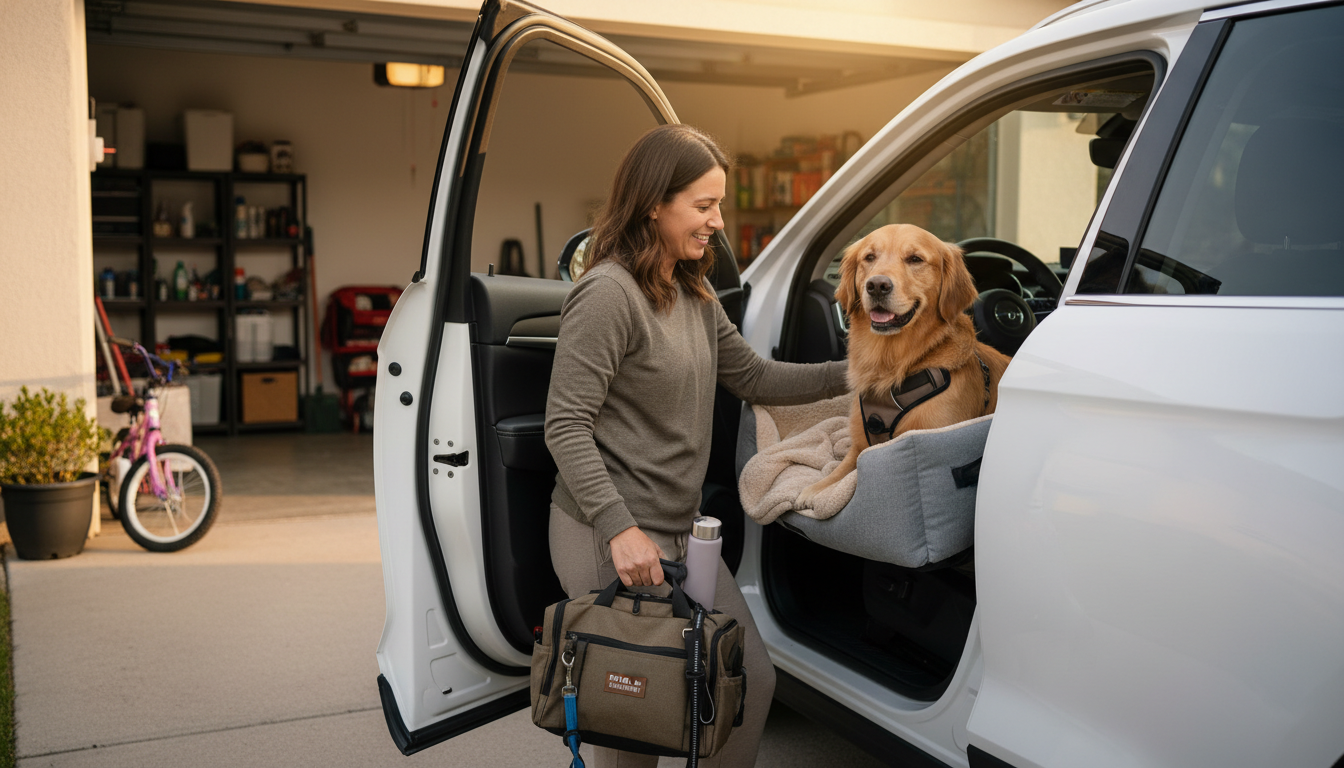
It can be okay, but only when it’s done safely. A loose dog in the front passenger seat can become a distraction, get injured during sudden stops, or be hit by a deploying airbag. The safer approach is to treat the passenger seat like any other spot in the car: secure your dog with a crash-tested harness, a properly anchored pet carrier, or a sturdy dog car seat designed to keep them stable and contained.
The biggest concern up front is the airbag. Even a small bump can trigger deployment, and an airbag can seriously injure a dog. If your dog rides in the passenger seat, turn off the passenger airbag when possible (if your vehicle allows it), and keep your pup restrained so they can’t climb into the footwell or onto the dashboard.
Start with the right fit: your dog should be supported, not sliding or perched on the edge. Use a harness that connects to the seat belt, or place your dog in a secured car seat or travel carrier that attaches to the seat. A cozy, well-padded setup reduces stress and helps prevent your dog from shifting around during turns, braking, or bumpy roads.
For many dogs, the back seat is the safest option because it’s farther from airbags and offers more space to secure a carrier or dog seat. If you’re deciding between front and back, the back seat usually wins for overall protection—especially for small dogs.
For a helpful breakdown of comfortable, secure travel setups, visit this guide to dog car seats and carrier bags.
It can be, especially if your dog is unrestrained or sitting near an active airbag. With proper restraint and airbag precautions, it can be safer, but the back seat is often the better choice.
Yes, but your dog should be secured with a seat-belt harness or a properly anchored car seat/carrier. Avoid letting your dog ride loose or sit on your lap.
Your dog can sit there if they’re safely restrained and not in the path of an airbag. If your vehicle can’t disable the passenger airbag, consider placing your dog in the back seat instead.