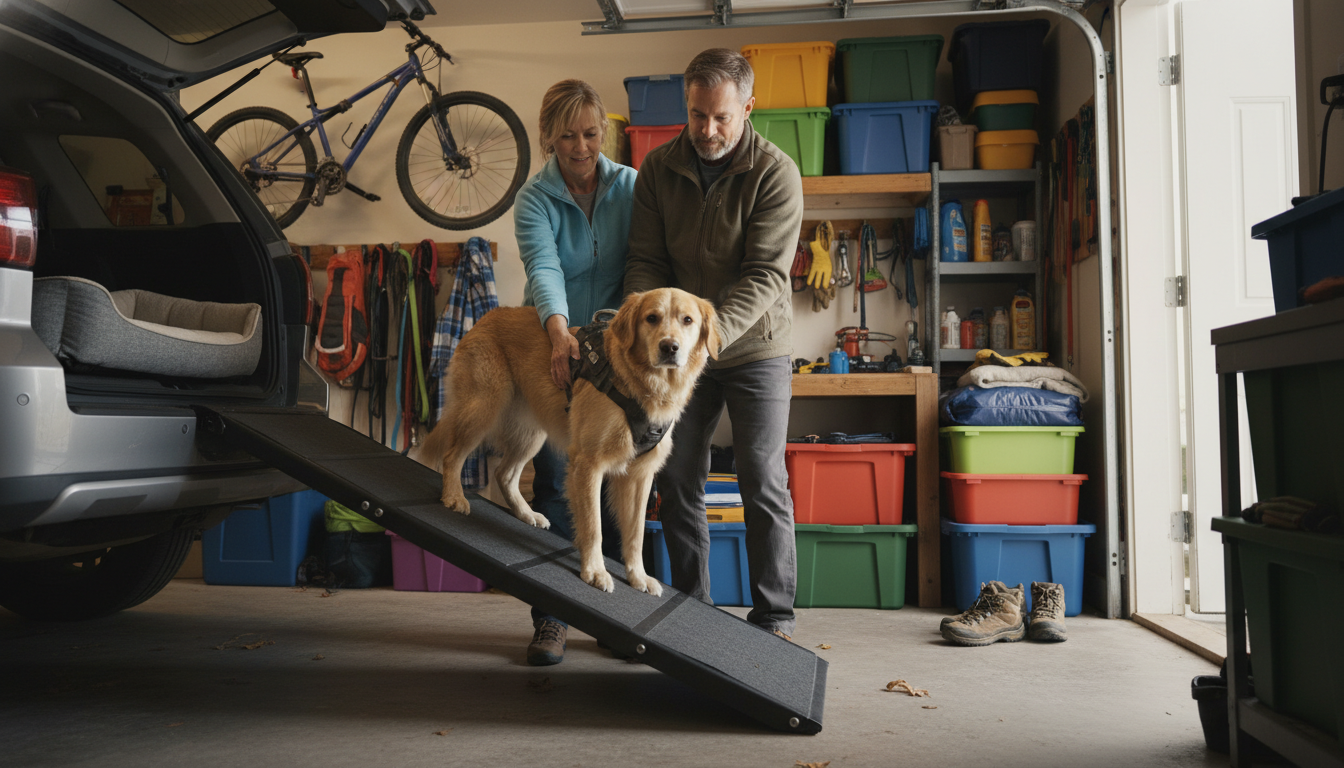
Yes—sometimes it’s okay to pick up a large dog, but it should be the exception, not the routine. Many big dogs tolerate being lifted, yet their size means a higher risk of strain or injury for both of you if the lift is awkward, sudden, or unsupported.
Picking up a large dog can be helpful in short, safety-first moments—like getting them away from a traffic hazard, helping them over a slick threshold, or moving them during an emergency. It’s usually not a good idea for casual carrying, extended lifting, or “just because” cuddles if your dog is uncomfortable, squirmy, or showing stress signals (stiff posture, whale eye, growling, tucked tail).
If your dog has known back, hip, knee, or spine issues, lifting can worsen pain without the right support. Likewise, if you’re dealing with a very heavy dog, it may be safer to use alternatives like ramps, steps, or supportive travel gear designed to reduce strain during transitions.
If you truly need to lift, move slowly and keep your dog’s body stable and close to your torso. Avoid lifting by the front legs, armpits, or collar—those methods can hurt and cause panic.
For routine travel and outings, consider solutions that reduce the need to lift at all—like steps for cars, supportive carriers for smaller companions, and cozy travel accessories that keep dogs secure and calm on the move. For more ideas on comfort gear and travel-friendly options, visit this guide to pet travel comfort gear, carriers, and walking bags.
It can be okay if the dog is comfortable and you’re supporting both the chest and hindquarters. Many owners avoid frequent lifting because it can stress joints and backs—especially for heavier dogs.
Support both the front and rear evenly and keep the spine as level as possible. When hip pain is involved, a support harness or assistance from another person is often safer than a solo lift.