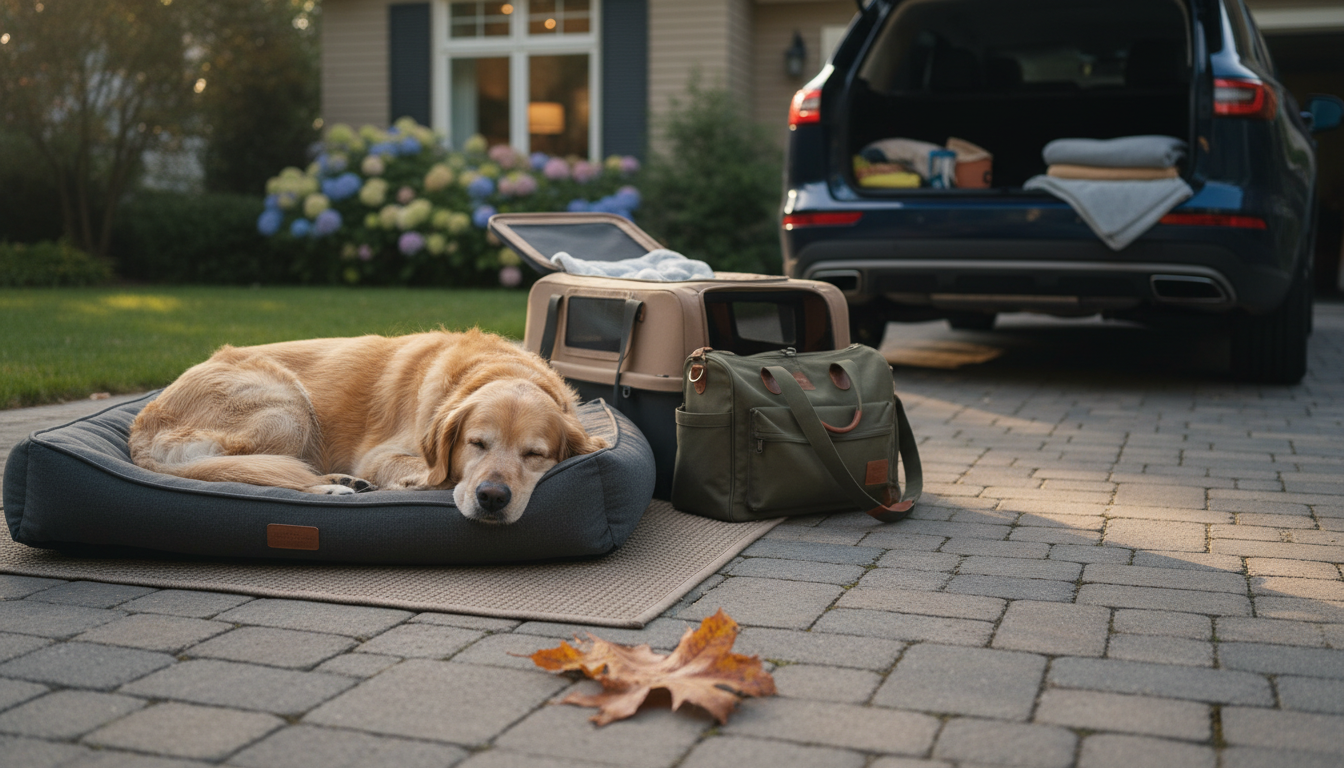
Yes—many dogs do great sleeping in the living room, as long as the space feels safe, calm, and comfortable. For some pups, it’s actually a cozy “den” spot where they can relax near familiar household scents and sounds without being right underfoot.
A living room can be a wonderful sleeping area when it’s set up with your dog’s needs in mind. Start with a dedicated place that stays consistent each night. Dogs settle faster when they know exactly where “bed” is.
If the living room stays active late into the evening, your dog may not get quality rest. Signs the setup isn’t working include pacing, frequent waking, startled reactions to normal sounds, or choosing random spots (like the hallway) instead of their bed.
It may also be worth rethinking the arrangement for dogs who are very young, newly adopted, anxious, or recovering from illness—those pups often benefit from extra closeness or a more enclosed, predictable sleeping area.
Before settling on the living room long-term, check that the space is safe after dark: no exposed cords, small chewable items, easy access to water, and a comfortable temperature. If your dog tends to wander, consider a baby gate or a crate/playpen setup that still feels cozy rather than restrictive.
For bed features that make a big difference—like washable materials, plush comfort, and staying put on slippery floors—see this guide: washable non-slip dog bed mattress and plush pad tips.
Yes, as long as the area is quiet enough for restful sleep and your dog has a dedicated, comfortable bed. Consistency and a low-stress setup are key.
The best room is the one where your dog feels safest and sleeps most soundly—often a quiet bedroom, living room corner, or a calm laundry/office space. Choose a spot with stable temperature and minimal nighttime traffic.
It usually means your dog feels secure near you and enjoys your presence at night. Some dogs also seek the bedroom because it’s calmer and more predictable than shared living spaces.