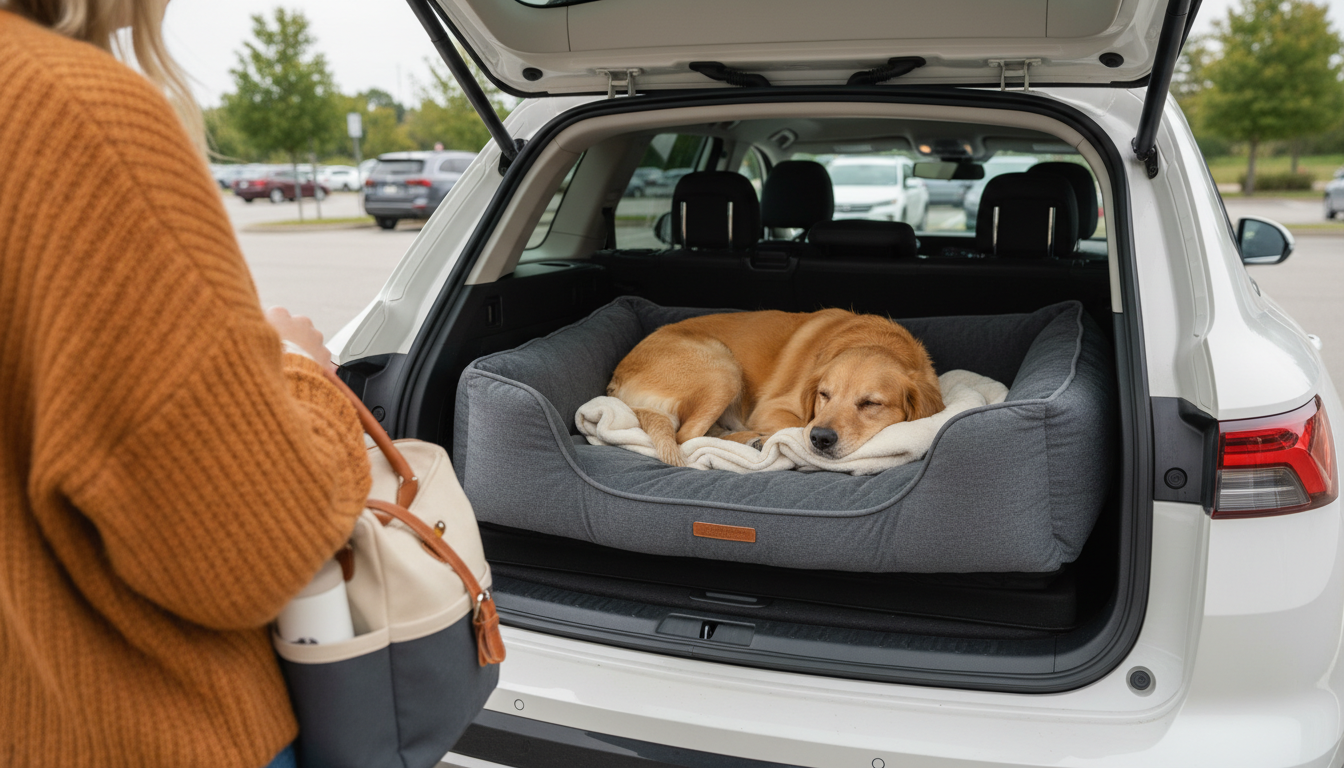
Yes—most of the time, it’s completely okay (and often a great sign) when a dog sleeps on his side. Side-sleeping usually means your dog feels safe enough to fully relax, letting his muscles loosen and his breathing settle into a steady rhythm. Many dogs choose this position when they’re comfortable, warm (but not overheated), and ready for deeper rest.
When a dog flops onto his side, it often signals comfort and trust in the space around him. You may notice gentle twitching of paws or whiskers—normal dream activity. Side-sleeping can also help some dogs stretch out their spine and hips, which can feel especially good after a long walk or play session.
Side-sleeping alone isn’t a problem, but the bigger picture matters. If your dog suddenly starts sleeping much more than usual, seems stiff when getting up, pants heavily at rest, or yelps when rolling over, it’s worth checking in with your veterinarian. Older dogs or dogs with joint sensitivity may still sleep on their side, but they often do best with extra cushioning and support.
A supportive, cozy bed helps protect pressure points (like shoulders and hips) and keeps your dog from seeking harder floors for cooling. If your dog likes to stretch out on his side, look for a bed with enough surface area plus soft bolsters for that “tucked-in” security. For dogs who also enjoy burrowing, a covered, cave-style bed can feel especially calming—see the cozy guidance here: https://kingwuff.com/blog/guide-dog-bed-snuggler-beige-black-cozy-cave-bed/.
Sick dogs often sleep more than usual and may choose curled-up positions to conserve warmth and energy. Some may switch positions frequently if they’re uncomfortable or achy.
This is often a sign of relaxation, cooling off, or feeling very secure. If it’s paired with stiffness, discomfort, or excessive licking, it may be worth a vet check.
Many dogs do this to cool down and fully relax their muscles. It can also be a natural, comfy stretch—especially after activity.