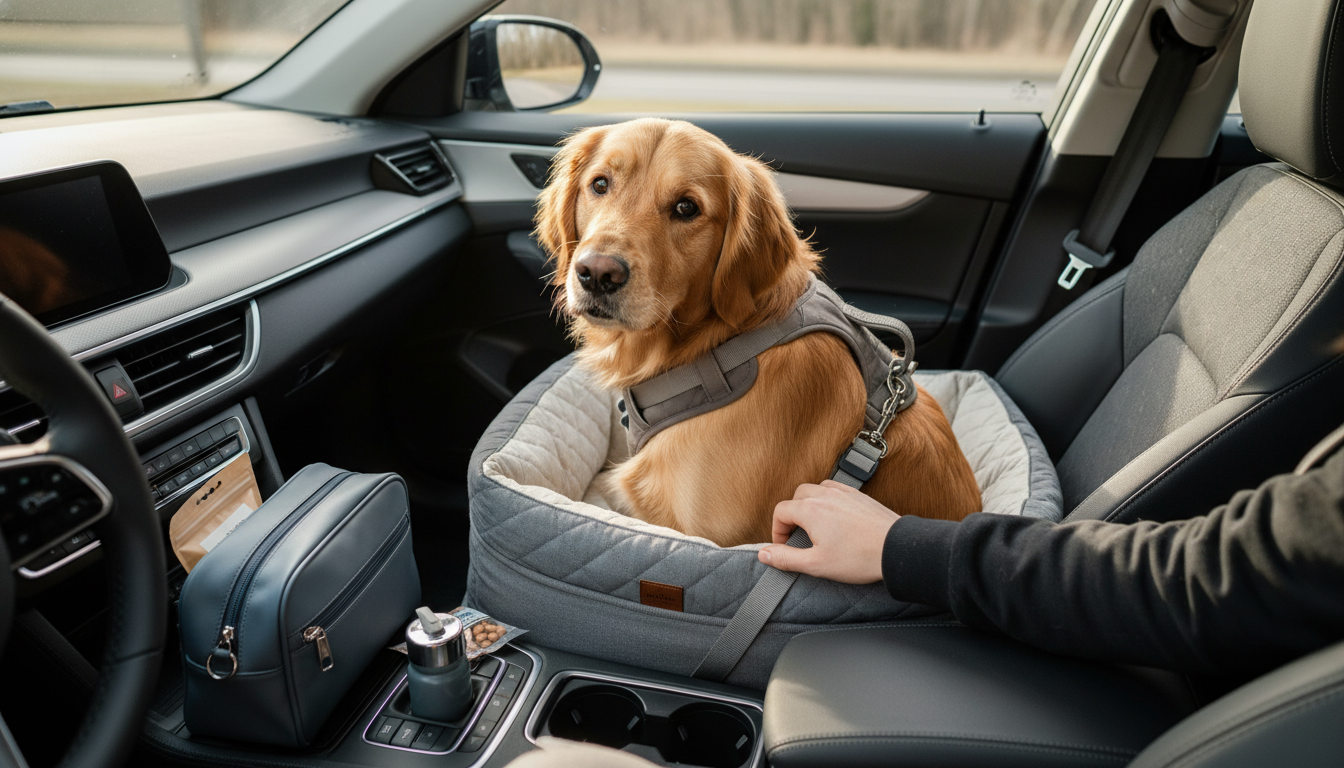
Sometimes, but it’s usually not the best choice. The front seat is the highest-risk spot in a crash because of airbags, hard surfaces, and how close your dog sits to the dashboard. Even a calm pup can become a distraction if they try to climb into your lap or jump down near the pedals.
If your dog rides up front, the safest setup is a properly secured restraint system that keeps them in one position—never loose. Small dogs do best in a structured car seat carrier that stays anchored with the vehicle seat belt, while medium-to-large dogs typically need a crash-tested harness attached to the seat belt. Either way, the goal is the same: reduce movement, prevent falls, and protect your dog (and you) during sudden stops.
If your passenger airbag can’t be turned off, it’s safest to keep your dog out of the front seat. Airbags deploy fast and forcefully, and a dog sitting close to the dash can be seriously injured. Puppies and small dogs are especially vulnerable, but any size dog is at risk.
The back seat is typically the coziest and safest place for most dogs—especially when paired with a secured car seat carrier or seat belt harness. It also helps keep your attention on the road and gives your dog a calmer, more stable ride.
For a deeper look at choosing a supportive, secure setup for your pup, visit this guide: Puff Puppy Dog Car Seat Carrier Bag Guide.
It can be safe only with the right restraints and with the passenger airbag disabled. In many cars, the back seat is still the safer option because it reduces airbag risk and distractions.
Use a secured car seat carrier (for small dogs) or a seat-belt harness (for larger dogs), and keep your dog from moving freely. Push the seat back, keep windows mostly up, and never let your dog ride on your lap.