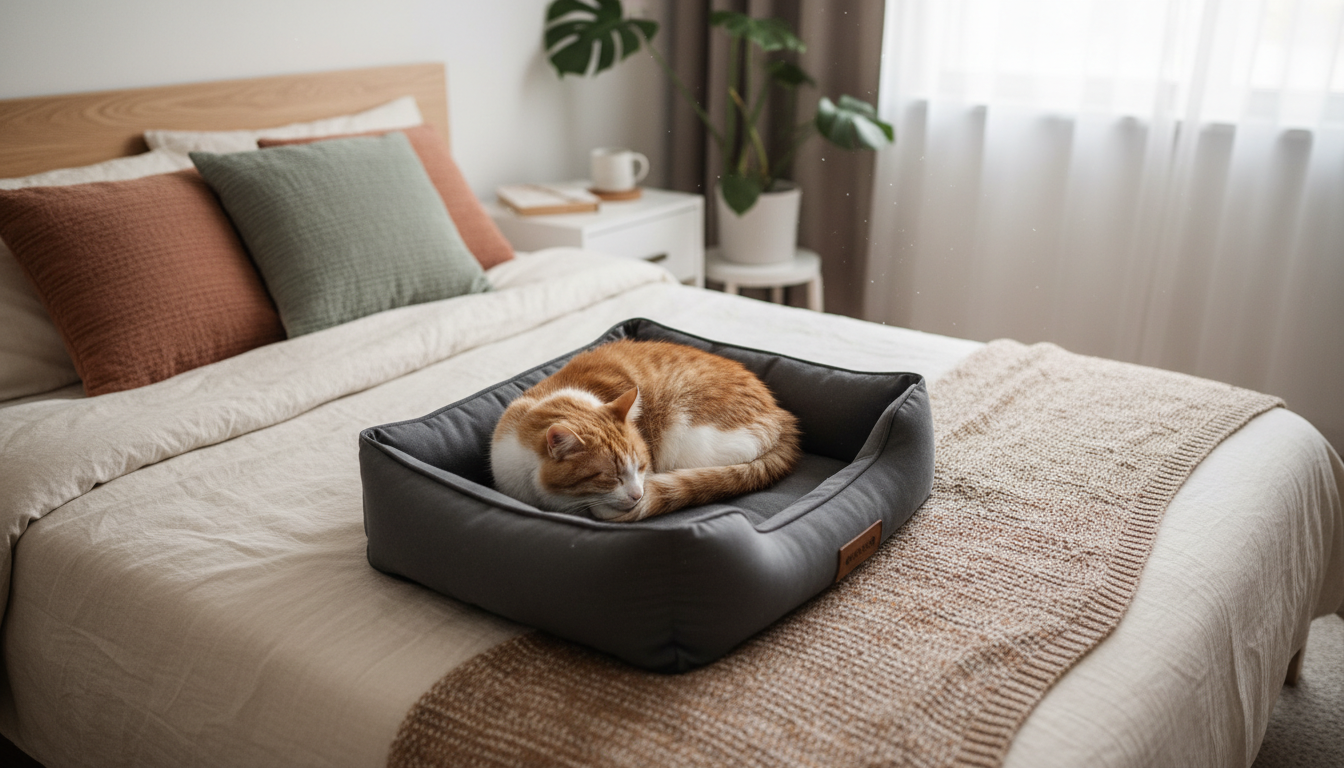
For many households, yes—it can be perfectly okay for a cat to sleep on your bed at night. Cats often choose the bed because it’s warm, familiar, and close to their favorite person. If everyone in the home sleeps well and your cat is healthy, nighttime cuddles can be a cozy routine.
That said, it’s not the best fit for every sleeper or every cat. Light sleepers may get woken up by zoomies, kneading, or early-morning meowing. And if anyone in the home has allergies, asthma, or an immune condition, sharing a sleep space can increase irritation or risk. If your cat spends time outdoors, parasite control and consistent vet care become even more important before inviting them under the covers.
Bed-sharing is typically a good option when your cat is indoor-only (or well-protected with vet-approved flea/tick prevention), uses the litter box reliably, and doesn’t disturb your sleep. Regular grooming and clean bedding help keep dander and tracked litter to a minimum.
Consider keeping your cat out of the bed if anyone is experiencing allergy flare-ups, if your cat has a habit of biting toes or waking you repeatedly, or if you’re dealing with litter box accidents, fleas, or skin issues. Kittens may also be better off starting with a safer, predictable sleep spot until routines settle.
If you’d rather not share the bed, place a comfortable pet bed right next to yours so your cat still gets the comfort of being near you. The same principles that make a great pet sleep setup—easy-to-clean materials, supportive cushioning, and a stable, non-slip base—can make bedtime smoother for everyone. For ideas on building a simple, washable sleep space, visit this guide on washable, non-slip pet beds.
It usually means your cat feels safe with you and enjoys your warmth and routine. Many cats also like the familiar scent and the elevated, secure feel of a bed.
There isn’t a universal “never,” but it may be a poor choice if allergies, asthma, parasites, or frequent sleep disruption are issues. Some cats also develop habits that make bedtime harder, like waking you early for food.
It’s generally safe if your cat is healthy, stays up to date on veterinary care, and is on appropriate parasite prevention. If anyone in the home is immunocompromised or highly allergic, it’s safer to keep separate sleep spaces.