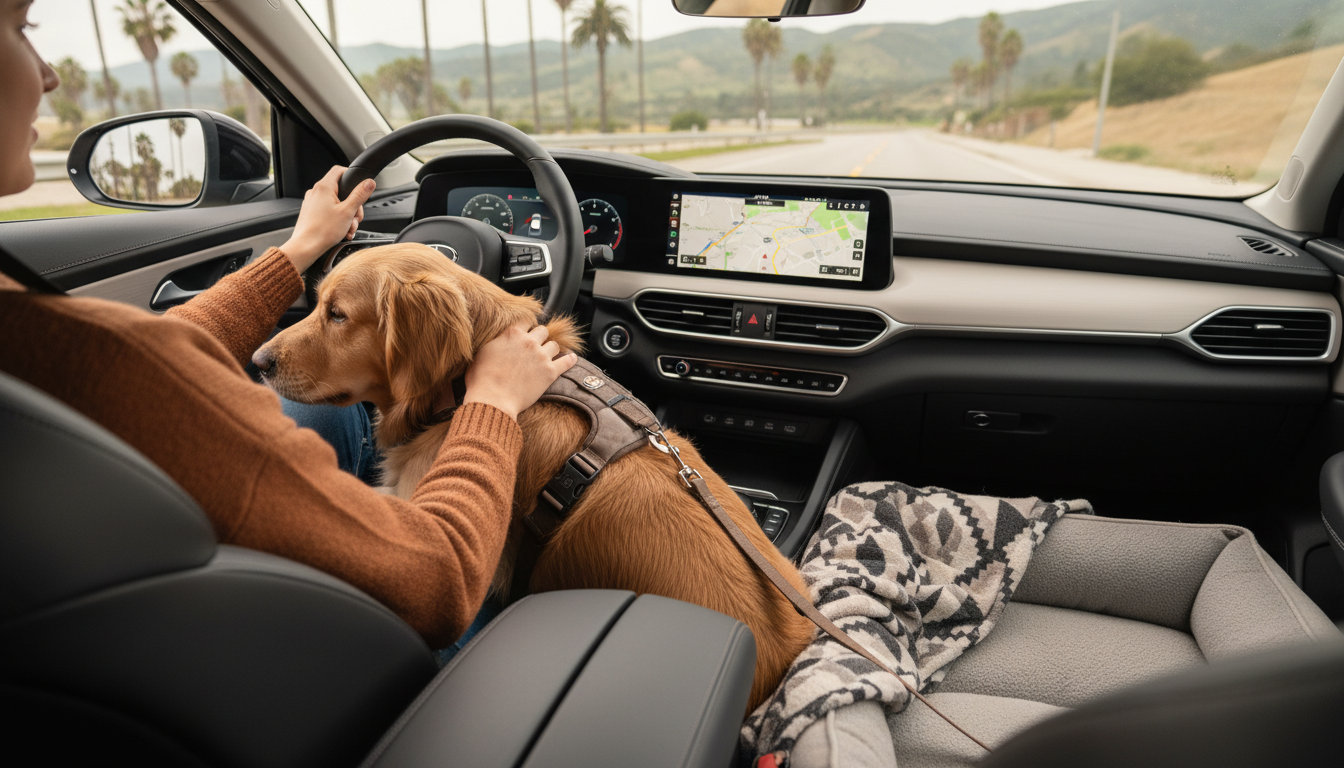
California doesn’t have a single, specific law that says, “No dogs on laps while driving.” However, it can still be considered unsafe and may lead to a ticket if your dog interferes with your ability to drive safely, blocks your view, or contributes to distracted or reckless driving. In other words: it may not be automatically illegal in every moment, but it can quickly become a legal problem if it affects control of the vehicle.
If a dog on your lap shifts suddenly, bumps the steering wheel, gets under your arms, or distracts you at the wrong time, an officer may view that as driving without due care or driving in an unsafe manner. Even a well-behaved pup can react to a horn, a sudden stop, or a new smell—and that split-second movement is where risk (and citations) can happen.
The safest option is to secure your dog in a dedicated car seat, carrier, or travel restraint so they’re stable and protected, and you’re free to focus on the road. It also helps prevent your dog from becoming a projectile in a sudden stop. For a cozy, practical breakdown of travel-friendly options, see the full guide here: Puff Puppy Dog Car Seat Carrier Bag Guide.
Keep your dog out of the front seat when possible (airbags can be dangerous), and aim for a secure, supported spot where they can sit or lie down comfortably. A calm, contained pup usually means a calmer drive for everyone.
It can still be illegal if the conditions put your dog at risk (especially heat). Cracked windows don’t guarantee a safe temperature or adequate ventilation.
Windows down may not prevent overheating, and leaving a dog unattended can become dangerous quickly. If there’s any chance of heat stress, it’s best not to.
Yes, it’s legal to drive with your dog in the car. The key is making sure your dog is transported safely and doesn’t interfere with your ability to drive.