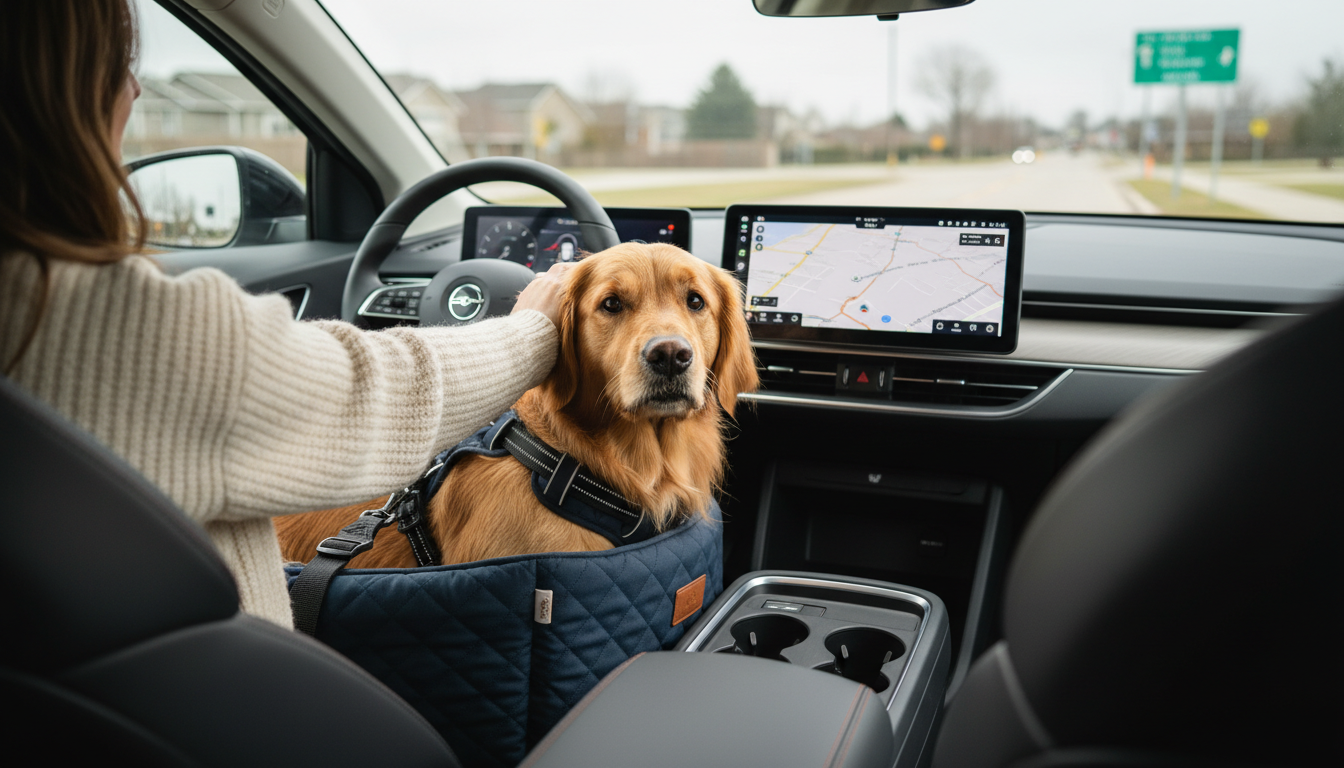
It depends on where you live. In most U.S. states, it’s not automatically illegal for a dog to ride in the front seat, but laws about distracted driving, animal restraint, and safety can still apply. Even when it’s legal, an unrestrained dog up front can create a real safety risk for you, your passengers, and your pup.
Dog-specific “front seat” bans are uncommon, but police can still issue citations if a pet interferes with driving. Many areas enforce distracted driving rules broadly—if your dog is on your lap, blocking your view, bumping the gearshift, or climbing onto the dashboard, you may be considered distracted or not in control of the vehicle.
Some states also have animal cruelty or safe-transport laws that can come into play if the dog is riding in a dangerous way (for example, unsecured in a moving vehicle). Local ordinances can be stricter than state rules, so it’s smart to check your city and state guidance before traveling.
Even when it’s allowed, the front seat isn’t the safest place for most dogs. Airbags can seriously injure a dog in a crash, especially small breeds. Sudden braking can also turn an unrestrained pet into a projectile, risking broken bones or worse.
For everyday rides and road trips, the goal is comfort plus secure positioning so your dog isn’t roaming. A structured dog car seat carrier can help keep your pup contained and supported while you stay focused on the road. For tips on fit, placement, and travel-ready features, see this guide to dog car seat carrier bags.
Below are practical points for quick safety checklist.
It can be a good choice for many dogs if it fits their size and sleep style and uses supportive, washable materials. Look for a non-slip base, durable stitching, and enough cushioning—especially for seniors or larger breeds.