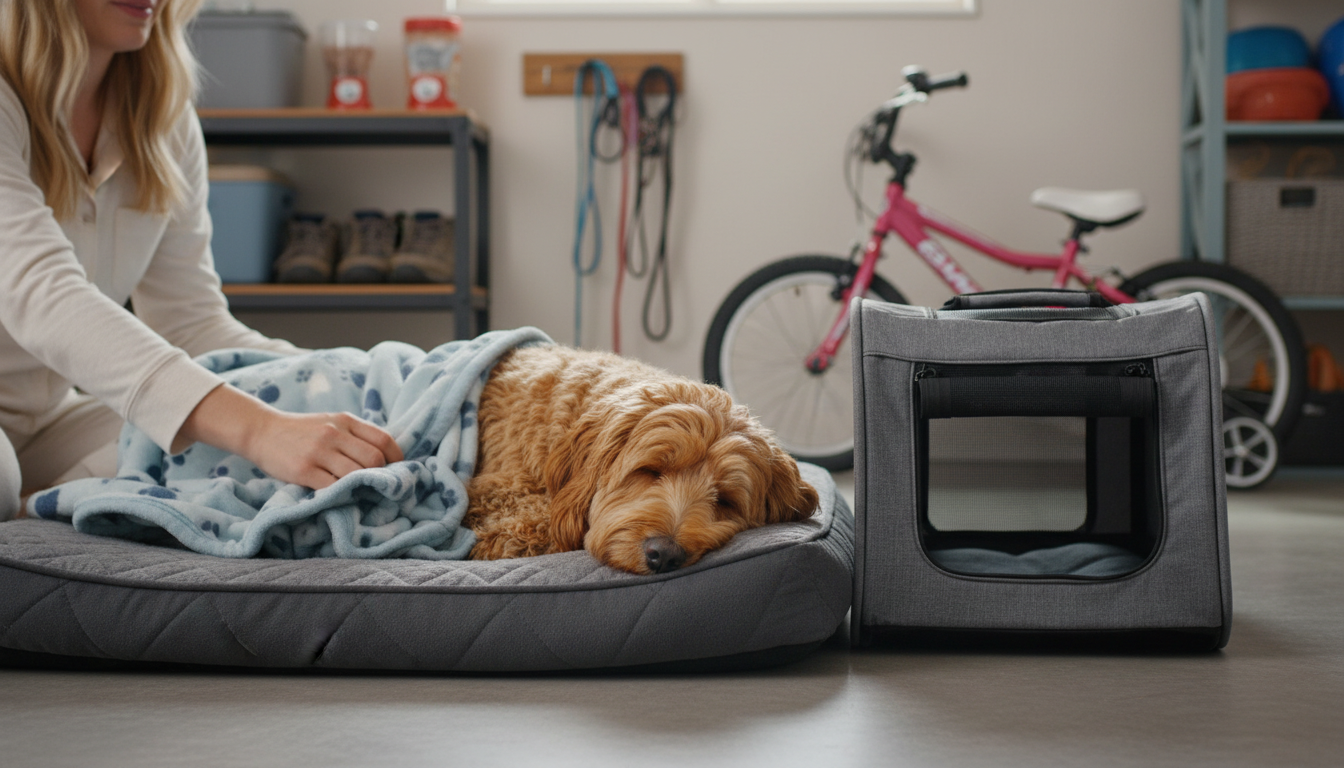
It can be better to sleep with your dog if it helps both of you relax and you can do it safely and comfortably. For some people, the steady warmth, familiar breathing, and bedtime routine reduce stress and make it easier to fall asleep. For others, sharing a bed leads to lighter sleep, allergies acting up, or nighttime disruptions—so it’s not automatically the “best” choice for every home.
If your dog is calm at night, reliably house-trained, and doesn’t guard space or resources, co-sleeping may feel cozy and restorative. Many dogs settle quickly when they’re close to their person, and that sense of security can be especially comforting during travel, storms, or changes in routine.
If anyone wakes easily, snores more around pet dander, or needs a firm boundary for training, sleeping separately can improve sleep quality. Puppies, seniors with mobility issues, or dogs that scratch, lick, or patrol the house at night may do better with their own sleep spot. Safety matters too: small dogs can be injured by rolling over, and dogs that growl when moved should not share the bed.
Many pet parents find the “best of both worlds” by keeping a dedicated dog bed right beside the human bed. Your dog gets closeness and a consistent place to settle, while you keep your sleep space cleaner and less interrupted. If you want a snug, easy-to-clean sleep setup that still feels like a midnight nest, see the guide here: https://kingwuff.com/blog/guide-midnight-nest-dog-bed-cozy-clean-sleek-comfort/.
Keep nails trimmed, wash bedding regularly, and use a washable cover on your dog’s bed. Teach “off” and “place” cues so everyone can settle without negotiation. If allergies are a concern, consider an air purifier and make your dog’s bed the primary sleep zone.
It can be a good choice for many dogs if it fits their size and sleep style and uses supportive, washable materials. Look for a non-slip base, durable stitching, and enough cushioning—especially for seniors or larger breeds.