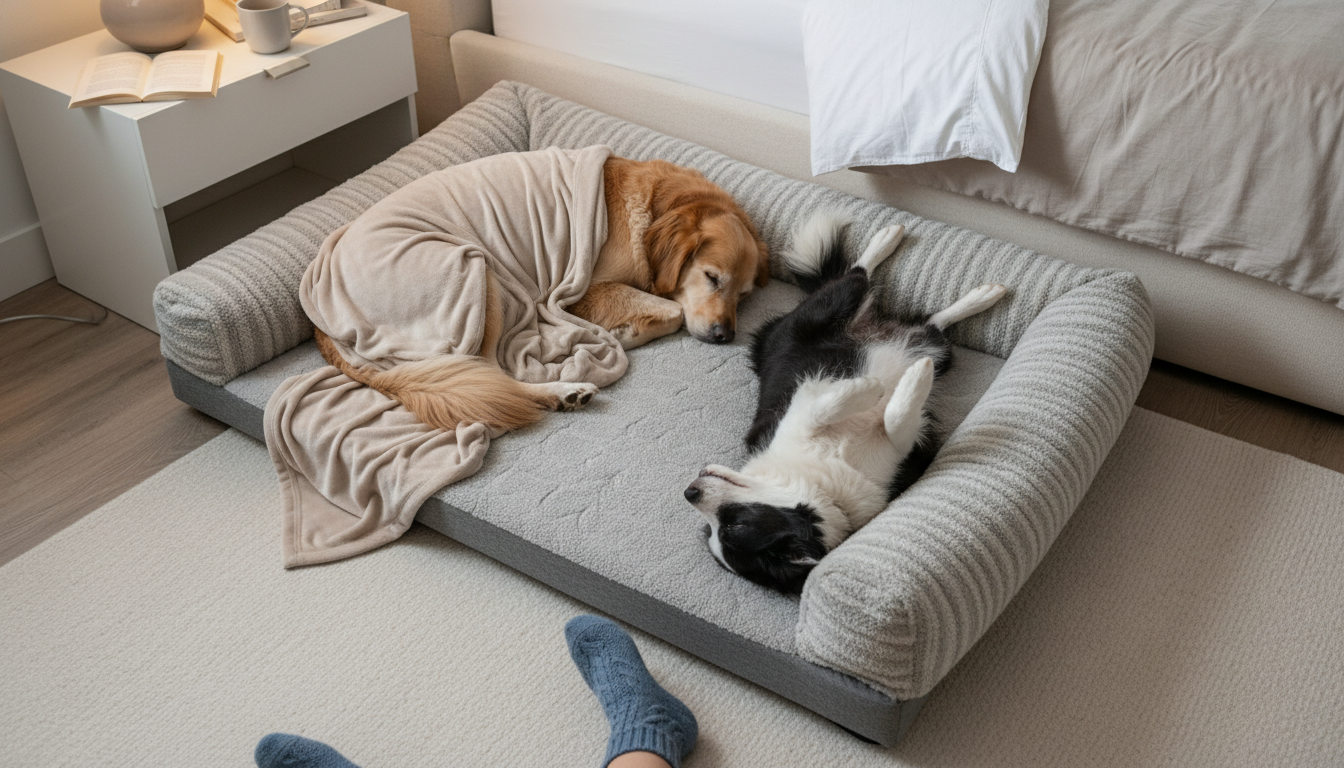
Letting your dog sleep in your bed isn’t automatically a bad idea—it’s a personal comfort and health decision that depends on your dog’s behavior, your sleep quality, and your household boundaries. For many people, sharing a bed can feel cozy and bonding. For others, it can lead to disrupted sleep, allergies acting up, or confusion about rules.
It may be a bad idea if anyone in the home has allergies or asthma, if your dog tracks in dirt or sheds heavily, or if you’re waking up sore because you’re sleeping around a curled-up pup. It can also create issues if your dog guards the bed, growls when moved, or gets anxious when separated—those are signs to reset routines and consider a dedicated sleep space.
Bed-sharing often works best with a calm, well-trained dog who respects “off” and “move” cues, stays clean with regular grooming, and doesn’t disturb sleep. If you’re comfortable with a little extra laundry and your dog settles quickly, it can be a warm, safe nighttime routine.
If you like having your dog close but want better sleep or a cleaner setup, a supportive dog bed right beside your bed can be the best of both worlds. Your dog still gets the comfort of being near you, while you keep your mattress clearer and maintain consistent boundaries.
For tips on choosing a sleep setup that stays comfortable and easy to maintain, visit this guide to creating a cozy, clean midnight nest for your dog.
Often, yes—many dogs choose to sleep close to people they feel safe with. Still, trust shows up in many ways, like relaxed body language, responsiveness, and comfort with daily routines.
Use a washable blanket on top of your bedding, wipe paws before bedtime, and stay consistent with grooming. Regularly washing bedding and keeping a lint roller nearby also helps.
It can be if it worsens allergies, disrupts sleep, or encourages guarding or anxious behavior. If everyone sleeps well and your dog follows boundaries, it can be perfectly fine.