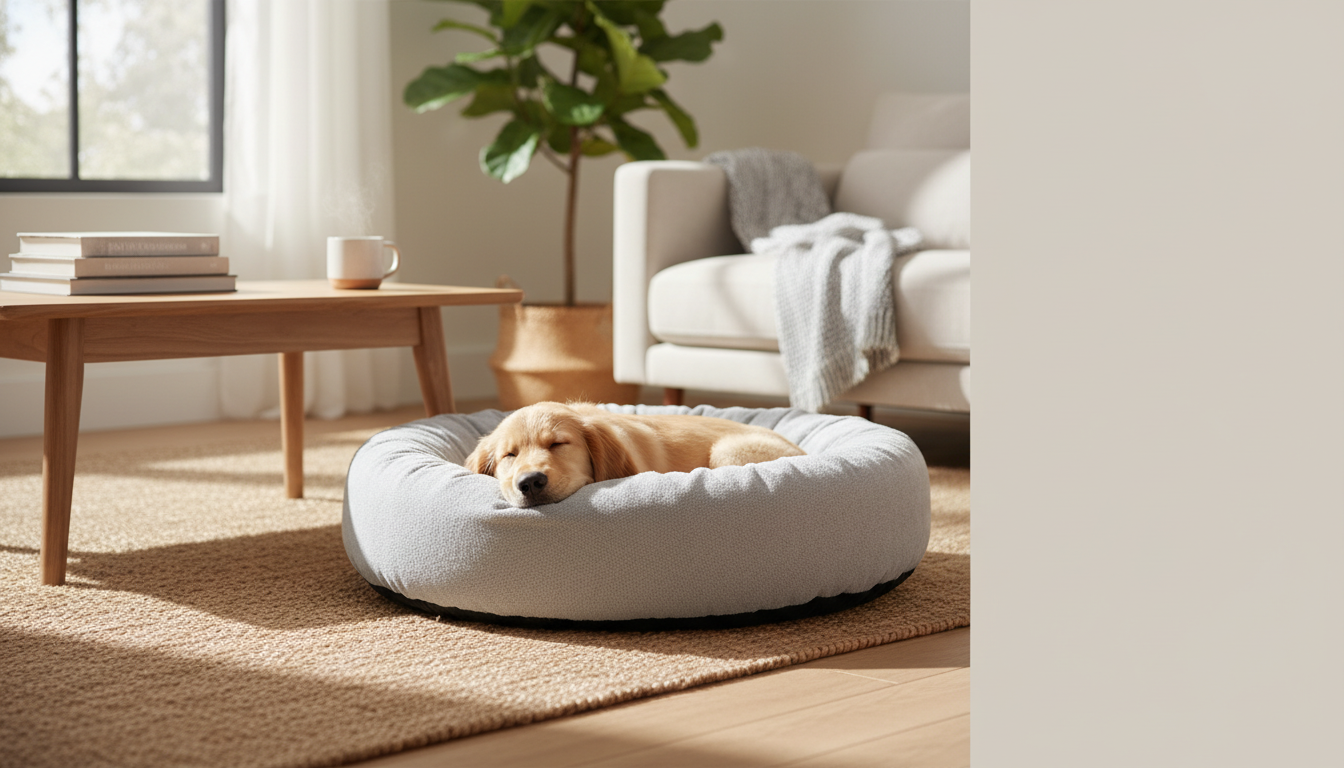
While you can’t “switch off” anxiety, you can help your dog feel safer, build confidence, and reduce anxious behaviors with patient, positive training. Think of it as teaching calm, one small success at a time—paired with steady routines and cozy comfort at home.
Keep a predictable daily schedule for meals, walks, and rest. Offer a dedicated safe space—like a supportive, cushioned bed—so your dog has a relaxing place to decompress. A comfortable mat can become a powerful cue for relaxation during training.
Identify what triggers your dog’s stress (doorbells, being alone, car rides). Introduce the trigger at a very low intensity and pair it with high-value rewards. Slowly increase exposure only when your dog remains relaxed. If anxiety spikes, dial back to the last easy step.
Catch and reward the micro-moments of calm: soft eyes, loose body, quiet settling. Mark with “Yes!” and treat. Avoid comforting frantic behavior in the moment; wait for a breath or brief calm, then reward to teach what earns attention.
Train simple behaviors that promote stillness—mat/place, settle, and chin-rest. Practice in short sessions, then generalize to new rooms and mild distractions. Pair your dog’s bed or mat with chews or snuffle activities to deepen the calm association.
Balanced activity reduces nervous energy. Mix sniffy walks, puzzle feeders, and low-impact play with daily quiet time. Over-arousal can look like anxiety; aim for “just right” enrichment.
Track small wins, stay consistent, and consider a certified trainer or veterinary behaviorist for persistent or severe anxiety. With patience, structure, and comfort-first tools, most dogs learn to feel safer and settle faster.
Want more cozy comfort tips for creating a calm home base? Read our full guide: Dog Bed Cushion “Mellow Mat”.
Yes. With positive reinforcement, gradual desensitization, and consistent routines, most dogs improve significantly. Severe cases may benefit from a trainer or veterinary behaviorist.
Start with ultra-short departures, pair them with special chews on a comfy mat, and return before your dog worries. Slowly increase duration and vary pre-departure cues to prevent stress buildup.
It varies. Mild cases can improve in weeks with daily training; long-standing or severe cases may take months. Progress is faster with structured plans and professional guidance.