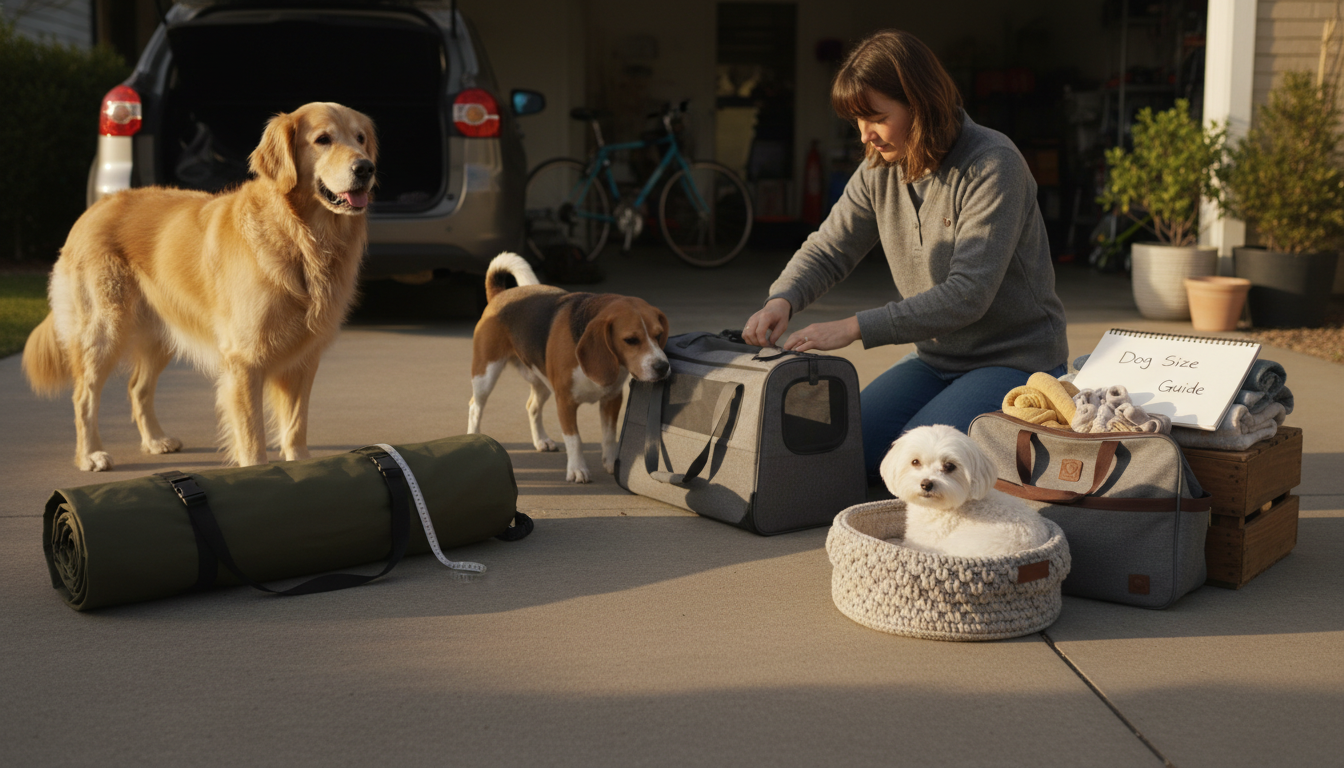
Dog size isn’t just a vibe—it affects everything from the safest carrier to the coziest bed. The easiest way to tell if your dog is small, medium, or large is to use a mix of weight, height, and build, then confirm with breed standards (if known) and your vet’s guidance.
While there’s no single universal chart, these ranges are commonly used in pet products:
If your dog sits right on the edge (like 20–25 lb or 48–55 lb), treat them as the larger category when choosing beds, carriers, or travel gear so they have room to stretch and turn comfortably.
Measure from the floor to the top of the shoulder blades (the withers):
This is especially useful for dogs that are light but tall (or compact but heavy).
Two dogs can weigh the same but need very different bed space. Long-backed dogs, broad-chested breeds, and “sprawl sleepers” usually do best with a little extra surface area and supportive cushioning. For dogs that love to nest, a snug fit can feel secure—just make sure they can fully stretch out at least occasionally.
Breed averages are helpful, but mixes vary a lot. If your pup is still growing, ask your vet about expected adult size so you can pick comfort products that will last.
For more help choosing a safe, comfy setup, see this guide on selecting a washable, non-slip dog bed and plush pad: https://kingwuff.com/blog/guide-washable-non-slip-dog-bed-mattress-plush-pad/.
Most dogs do best with a bed that matches their size and sleep style, offers easy-to-clean materials, and provides enough support for their joints—especially as they get older.