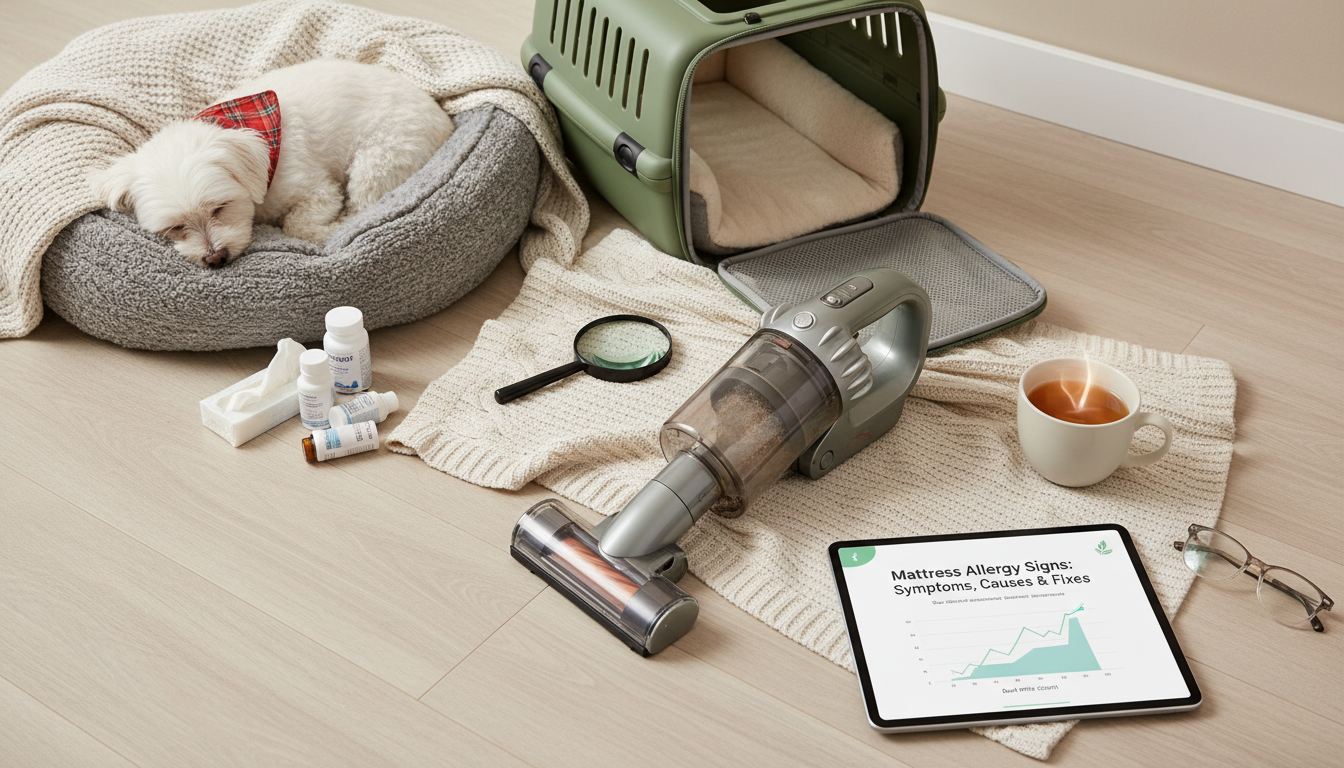
If you feel fine during the day but start sneezing, itching, or getting congested once you crawl into bed, your mattress (or what’s living in it) could be the trigger. Most “mattress allergies” aren’t to the mattress itself—they’re usually reactions to dust mites, mold, pet dander, or lingering detergents and fragrances trapped in bedding.
Watch for symptoms that show up at night or right after waking: runny or stuffy nose, frequent sneezing, itchy or watery eyes, postnasal drip, coughing, wheezing, or a tight chest. Skin clues can include itchy patches, hives, or eczema flare-ups where your face, neck, arms, or legs touch sheets and the mattress surface. Headaches and fatigue can also happen when nighttime congestion ruins sleep.
Timing matters. If symptoms improve when you sleep elsewhere (a different room, hotel, or even a freshly cleaned guest bed), that’s a strong hint. Also notice whether symptoms spike after making the bed, fluffing pillows, or stripping sheets—those actions can kick dust and allergens into the air.
Start with cleaning and barriers: wash sheets and blankets weekly in hot water (when fabrics allow), dry thoroughly, and use zippered allergen-proof covers for the mattress and pillows. Vacuum the mattress surface with a HEPA vacuum, and keep bedroom humidity lower to discourage dust mites and mold. If you use fragranced sprays, fabric refreshers, or new laundry products, pause them to see if irritation fades.
If you share sleep space with your dog, wash pet bedding often and choose options designed to be easier to clean and more resistant to buildup. For pet-friendly tips on keeping bedding fresher, see this guide to a washable, non-slip dog bed mattress and plush pad.
Seek urgent care for trouble breathing, swelling of the lips or face, or severe hives. For ongoing symptoms, an allergist can test for dust mites, mold, and other triggers and recommend targeted treatment.
Yes. Most reactions are to dust mites, mold, or buildup in and on the mattress rather than the foam or fabric itself.
Allergens can accumulate over time, humidity can encourage mold, or a change in detergent, fragrance, or a new topper/pillow can trigger irritation.
Look for symptoms that consistently worsen in bed and improve when you sleep elsewhere, especially if sneezing, congestion, or itching spikes when you handle bedding.