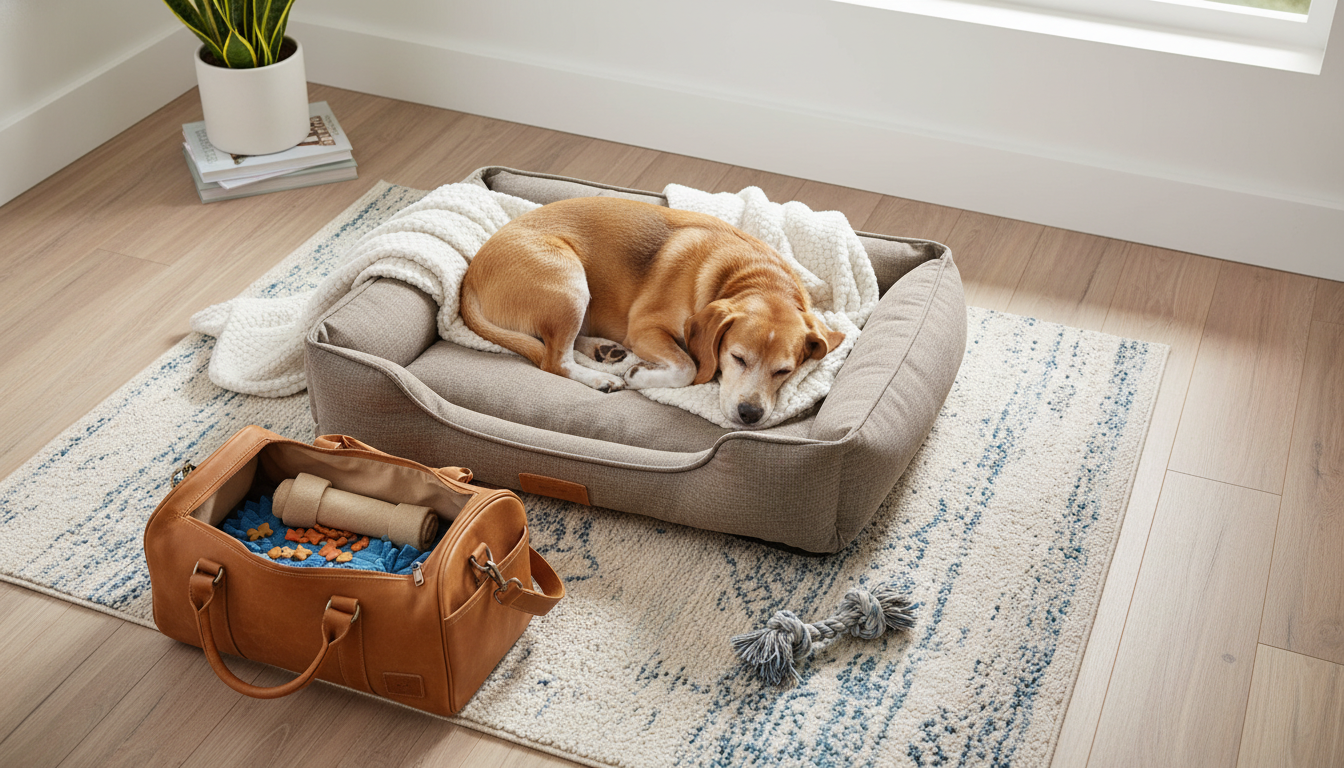
Bed chewing is usually a mix of puppy teething, boredom, stress, or a bed that simply isn’t meeting your dog’s comfort needs. The fastest way to stop it is to manage access, satisfy the urge to chew with appropriate alternatives, and make the bed a calm, rewarding place—then scale up durability if needed.
If your dog is chewing right after settling, the bed may be too hot, too flat, too scratchy, or not supportive. Some dogs also “nest” and chew when they’re anxious. Check for skin irritation, fleas, tummy upset, or changes in the home routine. If chewing is sudden or intense, a quick vet check can help rule out pain or anxiety issues.
For now, the bed should be available only when you can supervise or when your dog is safely confined (crate or pen) and calm. If your dog starts to chew, interrupt with a neutral “uh-uh,” guide them to a chew toy, and praise when they switch. Repeated success builds a new pattern: bed = rest, toy = chew.
Give two or three safe chew outlets: a durable rubber chew, a food-stuffed option, and a textured chew. Rotate daily to keep novelty high. If your dog is a power chewer, choose products sized appropriately to prevent choking and replace worn items promptly.
A short sniff walk, a training mini-session, or a puzzle feeder before settling can dramatically reduce destructive chewing. Tired brains and bodies are less likely to seek stimulation by shredding bedding.
Dogs that like to burrow may chew to create a “cave.” A cozy covered bed can satisfy that instinct while keeping your pup feeling secure. For a comfort-first option and fit tips, see this guide to a cozy cave-style dog bed.
Remove the bed when you can’t supervise, redirect chewing to a safe chew toy, and reward calm lounging on the bed. Pair this with daily exercise and enrichment so the bed isn’t the most exciting option.
Use safe confinement (crate/pen), leave long-lasting enrichment like a stuffed chew, and increase exercise before you leave. Start with short absences and build up so being alone stays manageable.
Manage the environment by limiting access to tempting items and providing structured enrichment. If destruction is paired with panic behaviors, talk with a vet or trainer about separation anxiety support.