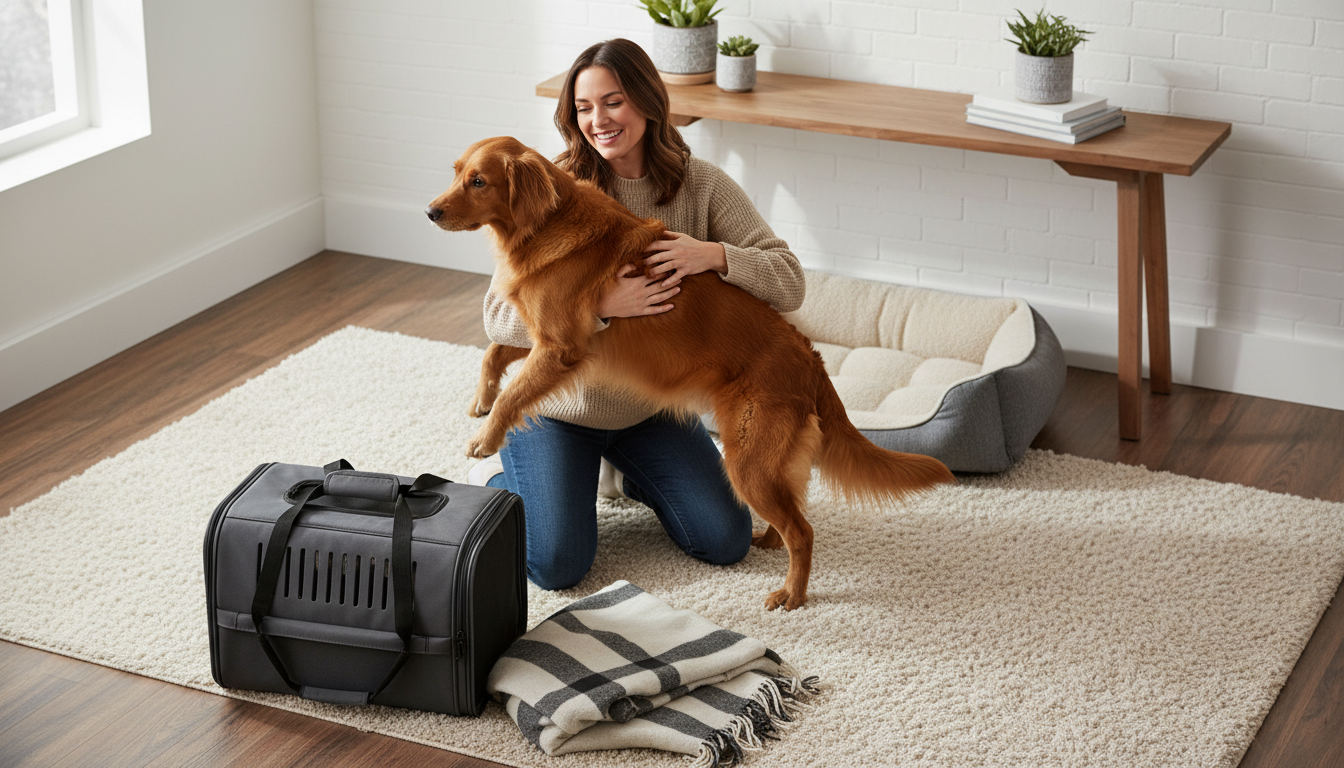
Picking up a medium-sized dog (roughly 25–60 lbs) should feel steady and secure for both of you—never rushed. The goal is to support the chest and hips so your dog’s spine stays aligned and their legs don’t dangle.
Approach calmly from the side, say their name, and watch for signs they’re uncomfortable (stiff posture, tucked tail, lip-licking, growling). If your dog is in pain or resisting, don’t force it—use a leash to guide them or ask your vet or groomer for handling tips.
Stand close to your dog with your feet shoulder-width apart. Bend at your knees (not your back) and keep your core engaged. This helps protect your back and keeps your dog from slipping.
Slide one arm under your dog’s chest, just behind the front legs. Place your other arm under their rear end, supporting the hips and thighs. Lift smoothly in one motion, keeping your dog close to your body like you’re hugging them—this reduces strain and keeps them feeling secure.
Keep your dog’s body level against your torso. To set them down, squat with your knees and lower them gently until all four paws are on the ground, then release.
If you often need to lift your dog into the car, onto a bed, or through crowded areas, consider tools that reduce how often you have to pick them up. For comfort-forward travel ideas—like carriers, walk bags, and accessories—see this guide: https://kingwuff.com/blog/guide-pet-travel-comfort-gear-dog-carriers-walk-bags-tips/.
Many dogs can live for years with hip problems when pain is well-managed through vet care, weight control, and supportive routines. The outlook varies based on severity, age, and overall health.
Use a stable squat, keep the dog close, and support both the chest and hindquarters to keep the spine aligned. For very heavy dogs, use a two-person lift or a support harness to avoid injury.
The safest approach is to minimize lifting when possible and use a harness or ramp. If lifting is necessary, support the front and rear evenly and lift with your legs—not your back.