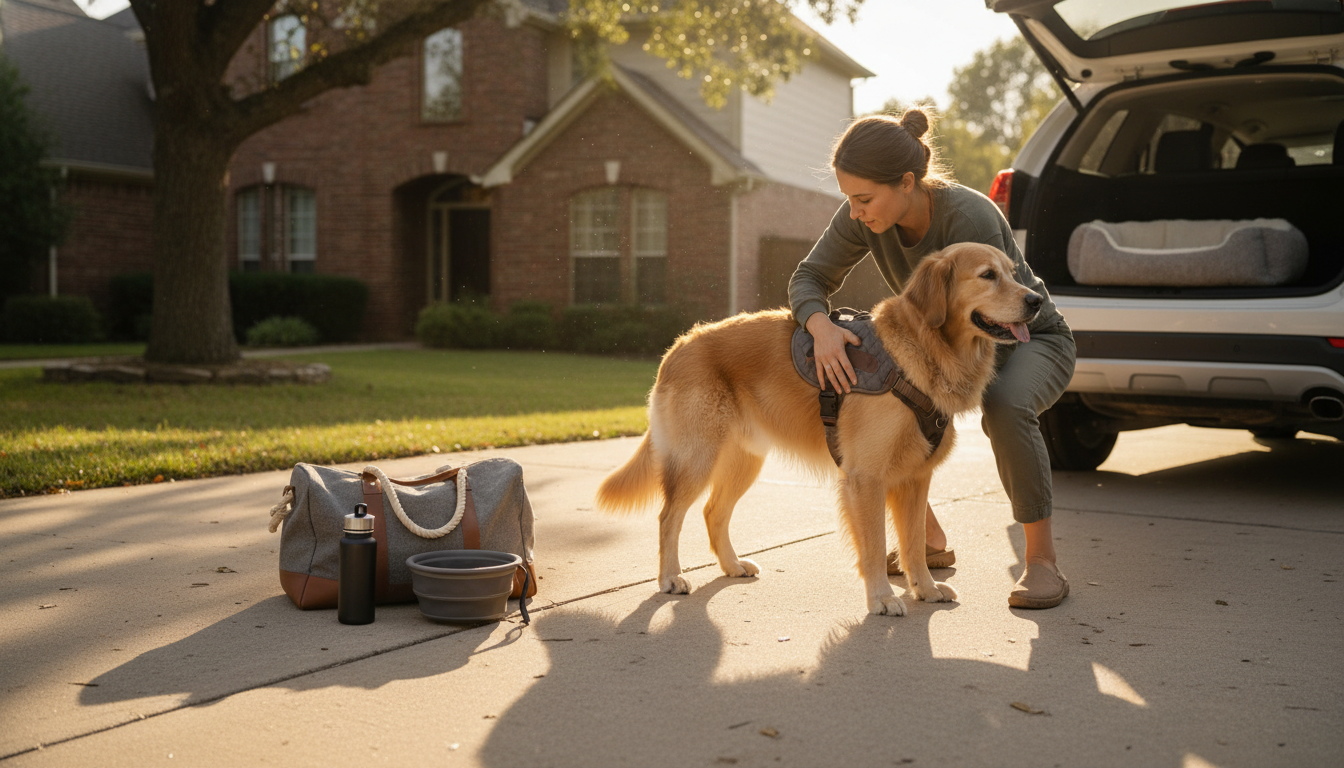
Sometimes a big pup needs a lift—after surgery, on steep stairs, or when they’re simply worn out. The goal is to support your dog’s body evenly while keeping your own back safe. A calm setup and the right grip make all the difference.
Before lifting, make sure the floor isn’t slippery and you have a clear path to where you’re going. Ask your dog to stay, speak softly, and move slowly. If your dog is anxious or in pain, consider using a leash for gentle control and ask a second person to help when possible.
Stand close to your dog with feet shoulder-width apart. Bend at your hips and knees (like a squat), keep your chest up, and tighten your core. Avoid rounding your back or twisting while you lift—turn with your feet instead.
For many large dogs, the most stable approach is the “two-point support” lift: one arm supports the chest in front of the front legs, and the other supports the rear under the hips or in front of the back legs. Lift smoothly, keeping your dog close to your body so the weight stays centered.
If you regularly help your dog into the car, up stairs, or through crowded areas, a well-fitted support harness or structured carrier can reduce strain on your arms and protect your dog’s joints. Look for durable materials, secure fasteners, and comfortable padding—especially for travel days or long walks.
If your dog yelps, resists strongly, has a suspected spinal injury, or feels too heavy to control safely, don’t force it. Use a sling, get assistance, or contact your veterinarian for guidance.
For more comfort-first travel ideas—plus helpful gear options for walking and on-the-go support—visit this guide to pet travel comfort gear, dog carriers, and walk bags.
Use a two-person lift when possible, with one person supporting the chest and the other supporting the rear. If you’re alone, use a support harness or sling and keep the dog close to your body while lifting with your legs.
Support both the front and back ends evenly to avoid stressing the spine. A rear support sling or full-body harness is often safer than carrying in your arms for longer distances.
Look for demonstrations that show squatting mechanics, keeping the dog close, and avoiding twisting. Prioritize videos from veterinary clinics or certified trainers for the safest technique.