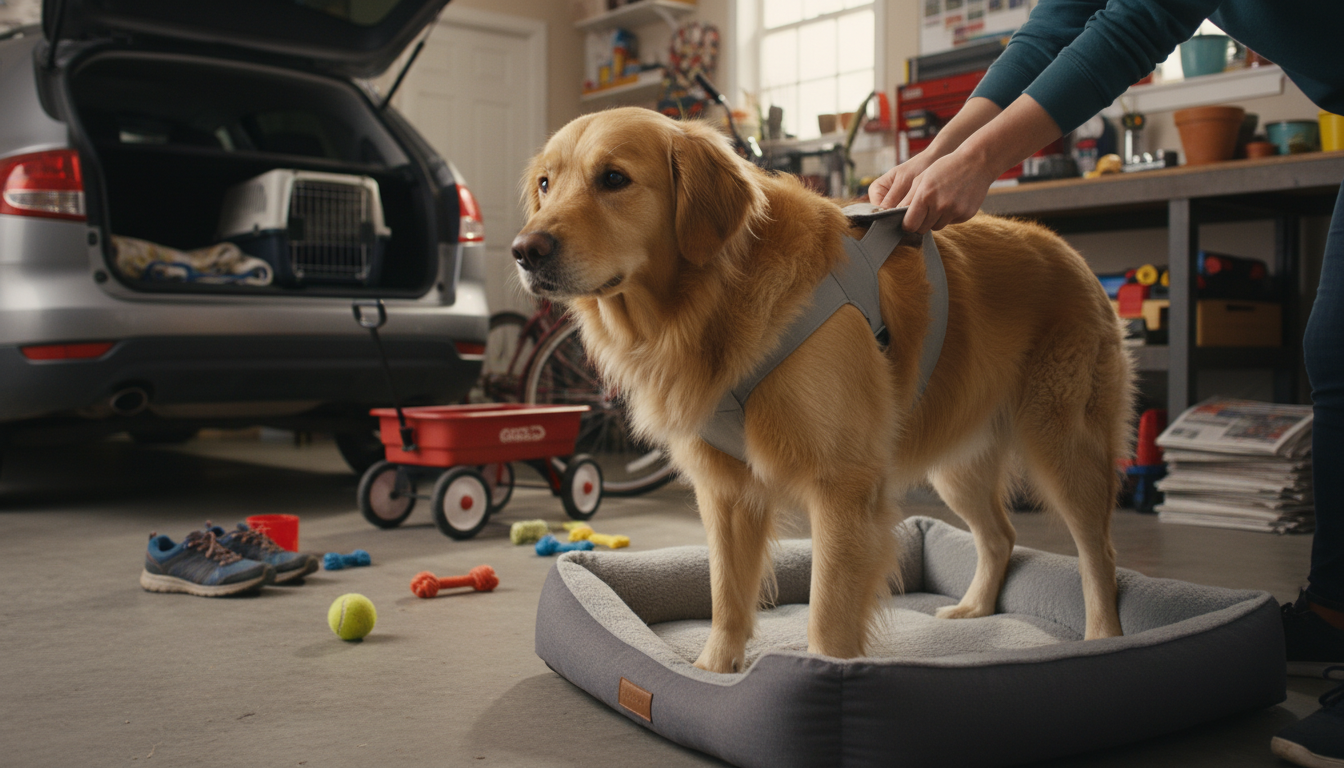
When a dog resists being lifted, it’s usually a comfort or safety signal—not “bad behavior.” The goal is to keep everyone calm, prevent strain on your dog’s body, and avoid teaching them that being picked up equals stress. If your dog is growling, snapping, yelping, or suddenly refusing when they used to be fine, pause and consider a vet check to rule out pain.
Approach from the side, speak softly, and avoid looming overhead. Let your dog see your hands, then offer a small treat and a brief chest or shoulder rub (if they enjoy touch). If they back away, don’t chase—reset, give space, and try again later with a calmer setup.
Squat instead of bending at the waist. Slide one arm under the chest, just behind the front legs, and the other arm under the hips to support the rear. Lift smoothly and keep your dog close to your body (like holding a sturdy backpack against your chest). Avoid lifting by the front legs, armpits, scruff, or harness handle alone.
Turn your body slightly so your dog’s spine stays supported and their feet don’t dangle. Move slowly, and set them down as gently as you picked them up—feet to the ground, then release. Pair the whole sequence with rewards so “up” predicts something good.
Dogs that dislike being picked up often do better with supportive dog carriers or walk bags that keep them secure without pressure on joints. For ideas on choosing comfortable, durable options for errands and trips, see this guide to pet travel comfort gear and dog carriers.
Stop if your dog shows fear or aggression, and try luring them into position with a treat instead of grabbing. If you must lift, squat, support the chest and hips, keep them close, and lower them gently.
Yes—many dogs dislike being lifted because it feels unstable or they’ve had an uncomfortable experience. A sudden change in tolerance can also indicate pain, so consider a vet check if it’s new.