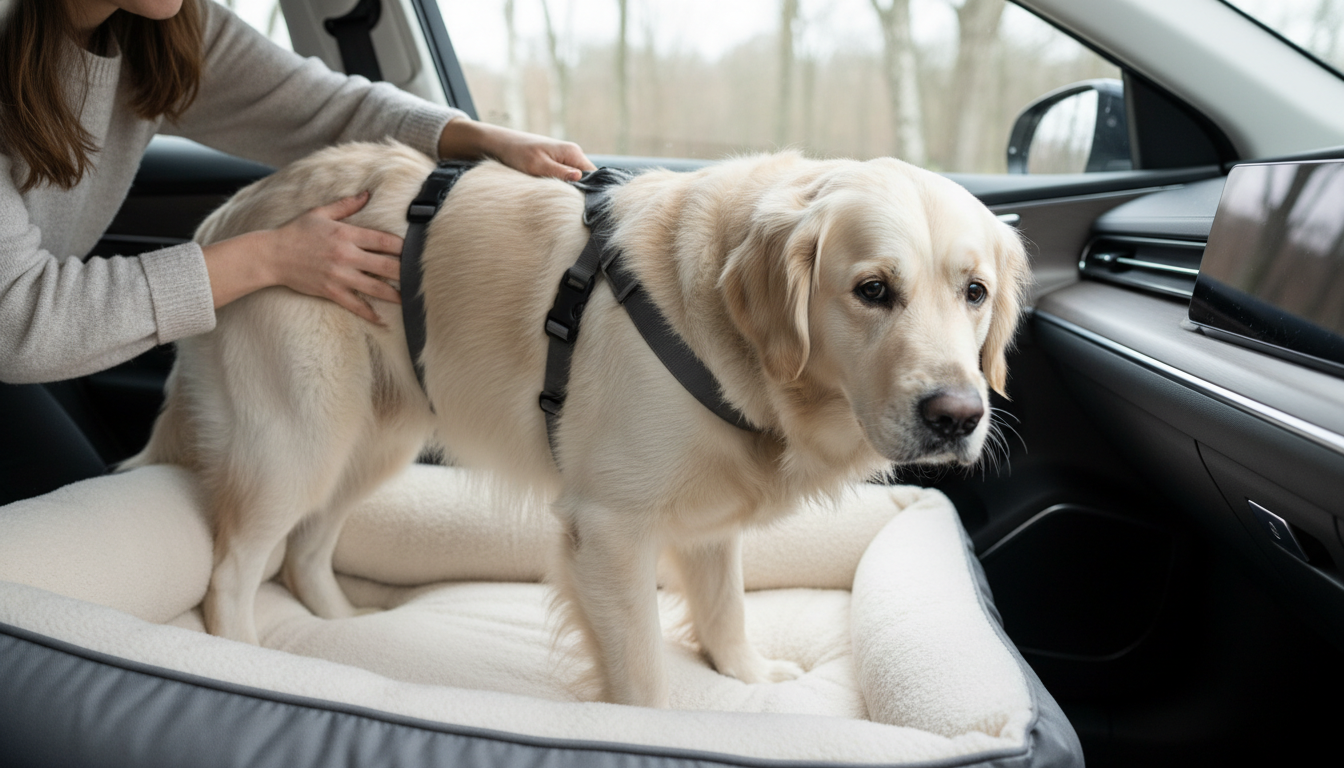
When a large dog has sore hips, the goal is to lift without twisting their back or letting their rear legs dangle. Move slowly, keep your dog close to your body, and use steady support under both the chest and the hindquarters. If your dog yelps, resists, or seems unstable, stop and switch to a support tool (like a lift harness) or ask for help.
1) Set up the space. Clear clutter, place a non-slip rug or mat, and position yourself so you won’t need to pivot mid-lift. If possible, guide your dog to stand with their weight evenly distributed.
2) Get close and go low. Squat (don’t bend at the waist) and bring your chest near your dog’s shoulder area. Keep your back straight and your feet shoulder-width apart.
3) Support the front first. Slide one arm under the chest, just behind the front legs. Your other hand can steady the collar or harness at the shoulder (avoid pulling up by the neck).
4) Support the hips. Use your free arm to scoop under the belly in front of the hind legs, or cradle under the rear end so the hips stay level. Lift smoothly so the dog stays “horizontal,” not tipped upright.
5) Hold them close and take small steps. Keeping your dog snug against your body reduces strain on their hips (and your back). Move in short, careful steps and set them down gently.
If your dog is heavy, wobbly, or painful, a rear support sling or full-body lift harness is often safer than a full carry. These tools help you assist their back end while they walk, especially for stairs, car loading, and potty breaks. For more comfort-focused travel tips and gear ideas, visit this guide to pet travel comfort gear, carriers, and walk bags.
Pause and reset with calm handling, then use a treat to guide them into position instead of grabbing. If they still resist, use a support harness or ask a second person to help so the experience stays safe and gentle.
Keep the spine level by supporting both the chest and the hindquarters, and hold your dog close to your body. For heavier dogs, a rear sling or full-body lift harness is often safer than a full carry.
Use a stretcher-style approach with a blanket or a rigid board when possible, and get help from another adult to keep the body supported evenly. If pain is severe or movement is unsafe, contact a vet or emergency clinic for guidance.