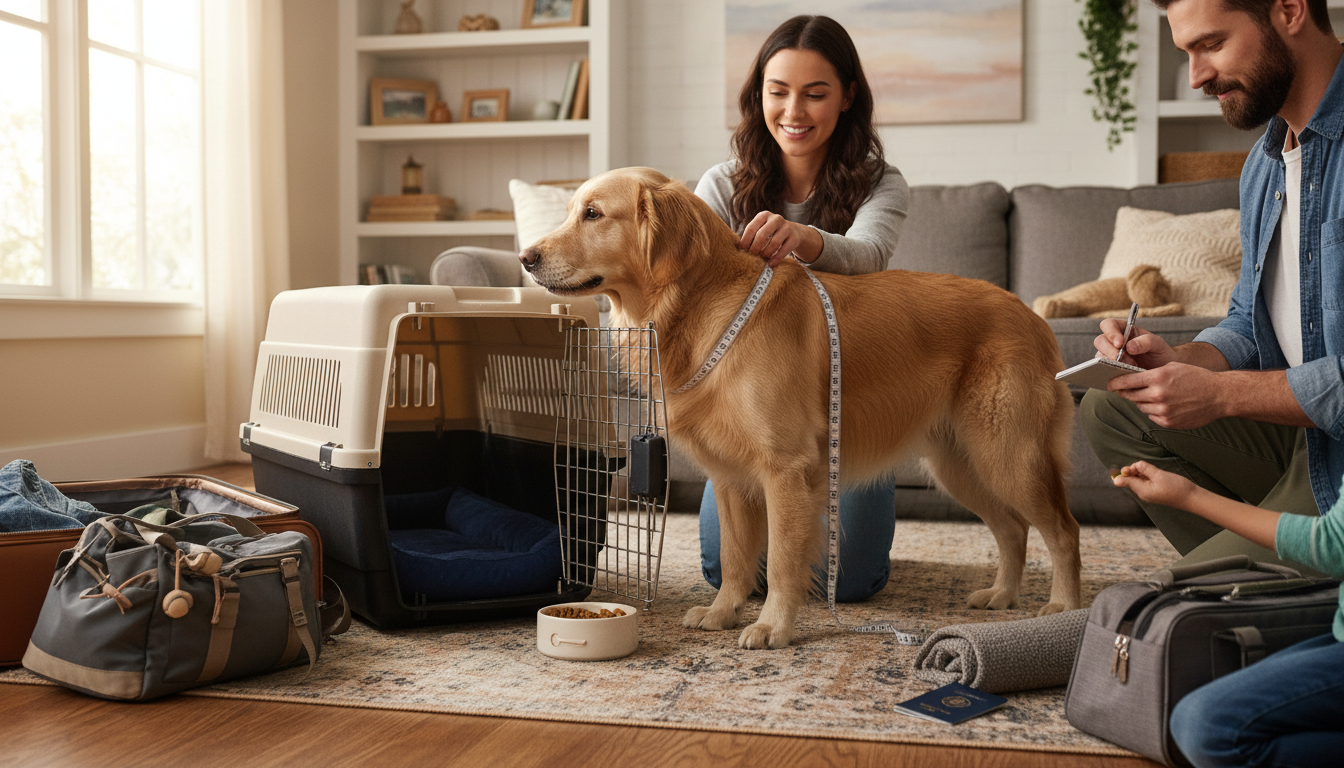
Getting the crate size right is one of the easiest ways to make air travel calmer and safer for your dog. Airlines and cargo programs typically follow IATA-style guidance: your pup should be able to stand naturally, turn around, and lie down comfortably without touching the sides or top.
Have your dog stand on a flat surface. Use a soft measuring tape (or a string you can measure afterward).
A practical sizing method used by many shippers is:
If you’re between sizes, it’s usually safer to go up—unless an airline has strict maximum dimensions for the specific aircraft.
Each airline can set its own requirements for crate construction, door type, ventilation, fasteners, and allowable sizes. Always confirm the latest pet policy for your exact flight, then choose the smallest crate that still allows full, relaxed movement.
If your dog qualifies for a soft-sided carrier, see this helpful travel guide: https://kingwuff.com/blog/guide-totengo-brown-canvas-dog-carrier-bag/.
Most dogs do best with a bed that matches their size and sleep style, offers easy-to-clean materials, and provides enough support for their joints—especially as they get older.