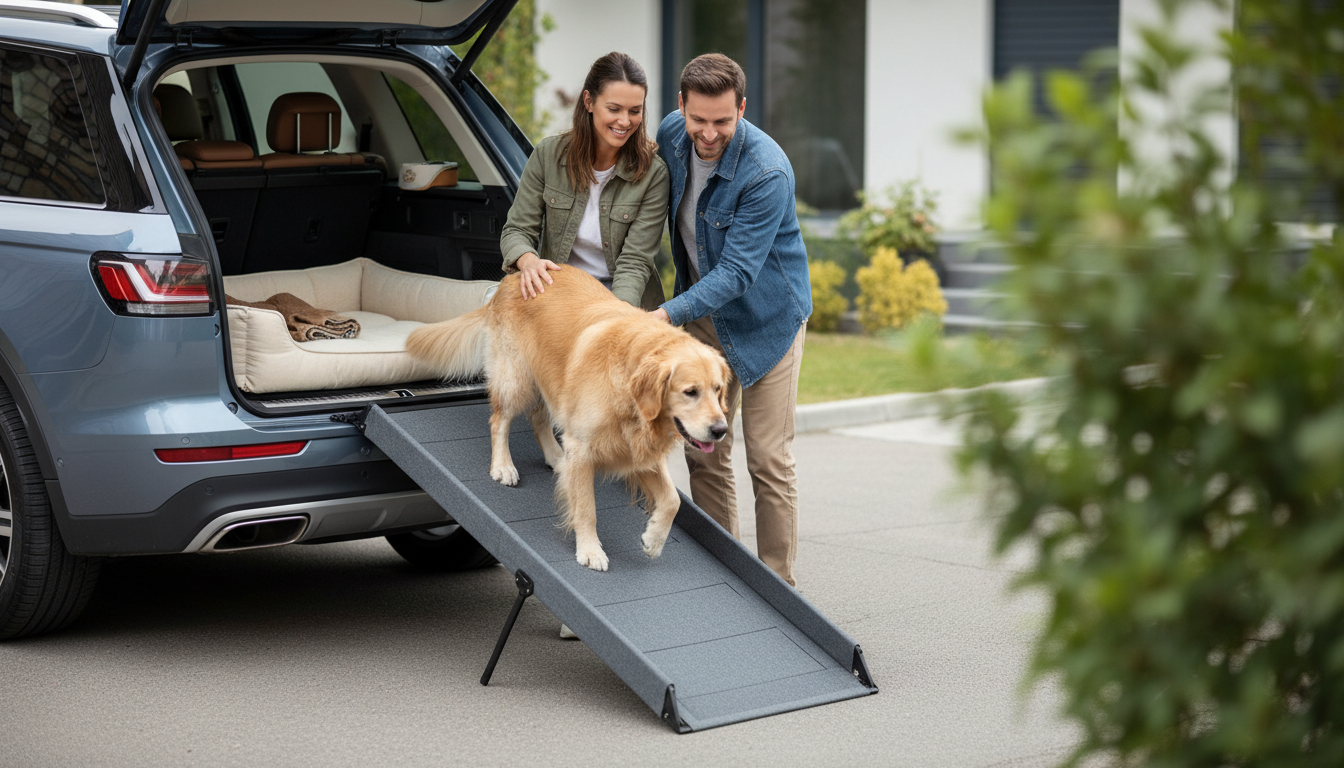
Getting a big pup into the car should feel calm and secure—not like a wrestling match. The goal is to protect your dog’s joints and your back, while making the ride a cozy, positive experience.
Park on level ground, set the parking brake, and open the door or hatch wide. If you have a ramp or sturdy steps, place them securely and add traction if needed (a towel or non-slip mat helps). For higher vehicles, a ramp often feels easier on hips and knees than a big jump.
If lifting is necessary, stand close to your dog with a straight back and bent knees. Slide one arm under the chest (behind the front legs) and the other arm under the rear end, supporting the hips. Lift with your legs, keep your dog close to your body, and smoothly guide them onto the seat or cargo area.
A well-fitted harness with a sturdy top handle can help you guide and steady your dog as they step up or as you assist a partial lift. Avoid pulling by the collar; it can strain the neck and increase fear. If your dog is senior, recovering, or very heavy, a rear-support sling can reduce stress on the back legs.
Place a supportive travel bed or padded mat where your dog will sit or lie down to prevent slipping and add comfort. Secure your dog with a crash-tested harness or travel restraint when possible, and keep water and essentials organized for smoother trips.
For more ways to keep car rides comfy and well-prepped, visit this pet travel comfort guide.
Use treats and a calm voice, letting your dog approach at their own pace. Add traction with a mat, and try a ramp or steps to reduce hesitation from jumping.
Look for demonstrations featuring “two-arm scoop” support or harness-and-sling assistance. Choose videos from veterinarians, trainers, or rehab professionals for the safest technique.
Bring your dog close to the edge, then support the chest and hips before lifting down with bent knees. Go slowly to prevent slipping, especially on smooth pavement.