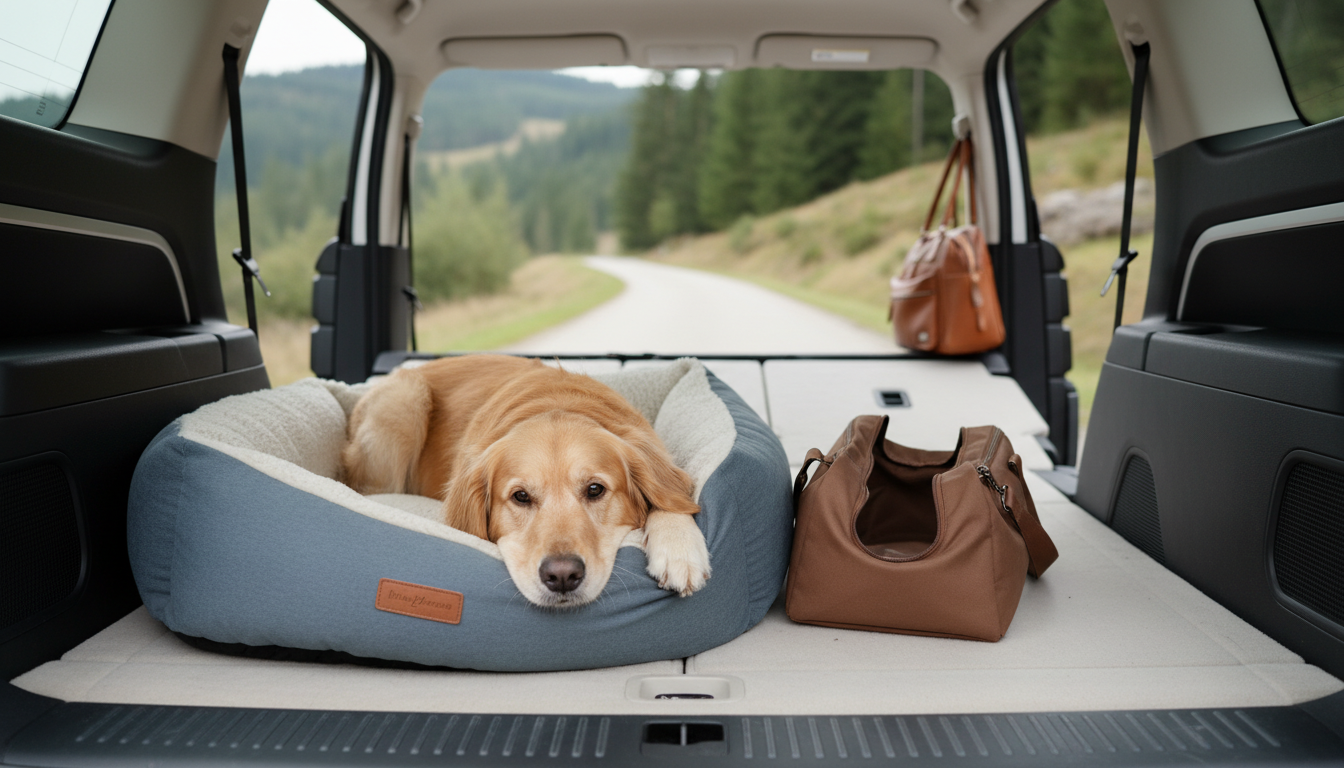
A dog bed is too small when your pup can’t fully relax into their natural resting positions. The easiest way to tell is to watch how they settle: if they constantly reposition, spill off the edges, or avoid the bed altogether, sizing is likely the issue.
1) Legs or hips hang off the bed. When your dog lies on their side, their body should fit on the sleeping surface without their back end or paws dangling over the edge.
2) They can’t stretch out. Most dogs alternate between curling up and stretching long. If the bed only works for one position (usually the tight curl), it’s often too short or too narrow.
3) They look “perched,” not settled. A too-small bed can make a dog rest with their chest propped up or their spine curved awkwardly, instead of sinking into a comfortable, flat posture.
4) Frequent bedtime shuffling. Circling is normal, but repeated circling, pawing, or hopping off and on can mean they’re trying—and failing—to find a comfortable spot.
5) They choose the floor nearby. If your dog sleeps next to the bed (not in it), the bed may feel cramped or restrictive.
Measure your dog from nose to the base of the tail while they’re standing, then add a few inches for wiggle room. Compare that number to the bed’s usable sleeping area (not just the outer dimensions). If your dog loves sprawling, size up so they can fully extend.
A properly sized bed supports restful sleep, reduces pressure on joints, and helps your dog feel secure. If your dog travels with you, the right fit is even more important—comfort and stability can make car rides and overnight stays feel familiar and safe.
For more tips on choosing a cozy, practical setup—including features like washable materials and non-slip bottoms—visit this guide to washable, non-slip dog bed mattresses and plush pads.
Most dogs do best with a bed that matches their size and sleep style, offers easy-to-clean materials, and provides enough support for their joints—especially as they get older.