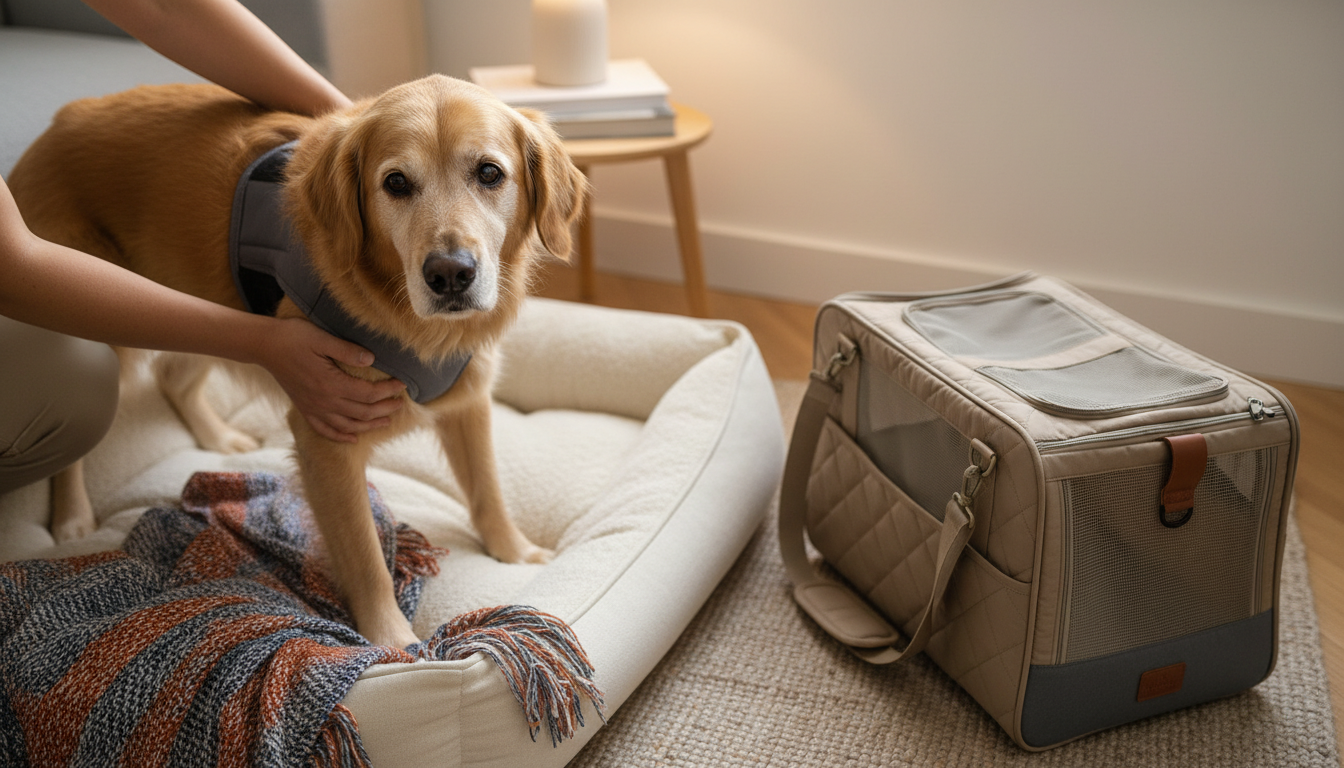
When a dog’s hips are sore or unstable, the goal is simple: support their body evenly, keep their spine aligned, and avoid sudden pressure on the back legs. Before lifting, make sure your dog is calm, your path is clear, and you have a secure place to set them down—like a bed, couch, or non-slip mat.
Small dogs: Use a two-arm cradle hold. Slide one arm under the chest (behind the front legs) and the other under the hips to keep the back end supported. Keep your dog close to your body so they feel stable.
Medium to large dogs: Avoid “scooping” only the front end. Instead, use a supportive lift with your arms under both the chest and the pelvis, or use a hip-support harness/sling when possible. If your dog is heavy, ask for help so you can lift smoothly and evenly.
1) Position your dog standing or lying on their side—whichever is less painful. 2) Place one hand/arm under the chest to stabilize the front. 3) Place your other hand/arm under the pelvis (not just the belly) to support the hindquarters. 4) Lift in one steady motion, keeping their body level. 5) Hold them snug against your torso and move slowly.
For dogs that can’t manage long walks, a structured dog carrier can be a cozy option, helping keep them supported while you handle stairs, crowds, or longer outings. Look for features like a stable base, padded sides, strong straps, and easy entry—comfort and safety matter most when joints are sensitive. For more travel-friendly comfort ideas, visit this guide to pet travel comfort gear, carriers, and walking bags.
Don’t lift by the front legs, don’t let the back end dangle, and don’t twist your dog’s torso while turning. If your dog yelps, resists, or seems more painful afterward, pause and consult your veterinarian or rehab specialist.
Use short, slow walks on non-slip surfaces and consider a hip-support harness for steadier steps. Keep nails trimmed and add rugs or runners at home to reduce slipping.
High-impact activities like jumping, sprinting, and repetitive stair runs can aggravate painful hips. Sharp turns on slippery ground can also strain the joints.
Support both the chest and the pelvis so the back end doesn’t hang. Lift smoothly, keep the spine level, and hold your dog close to your body for stability.