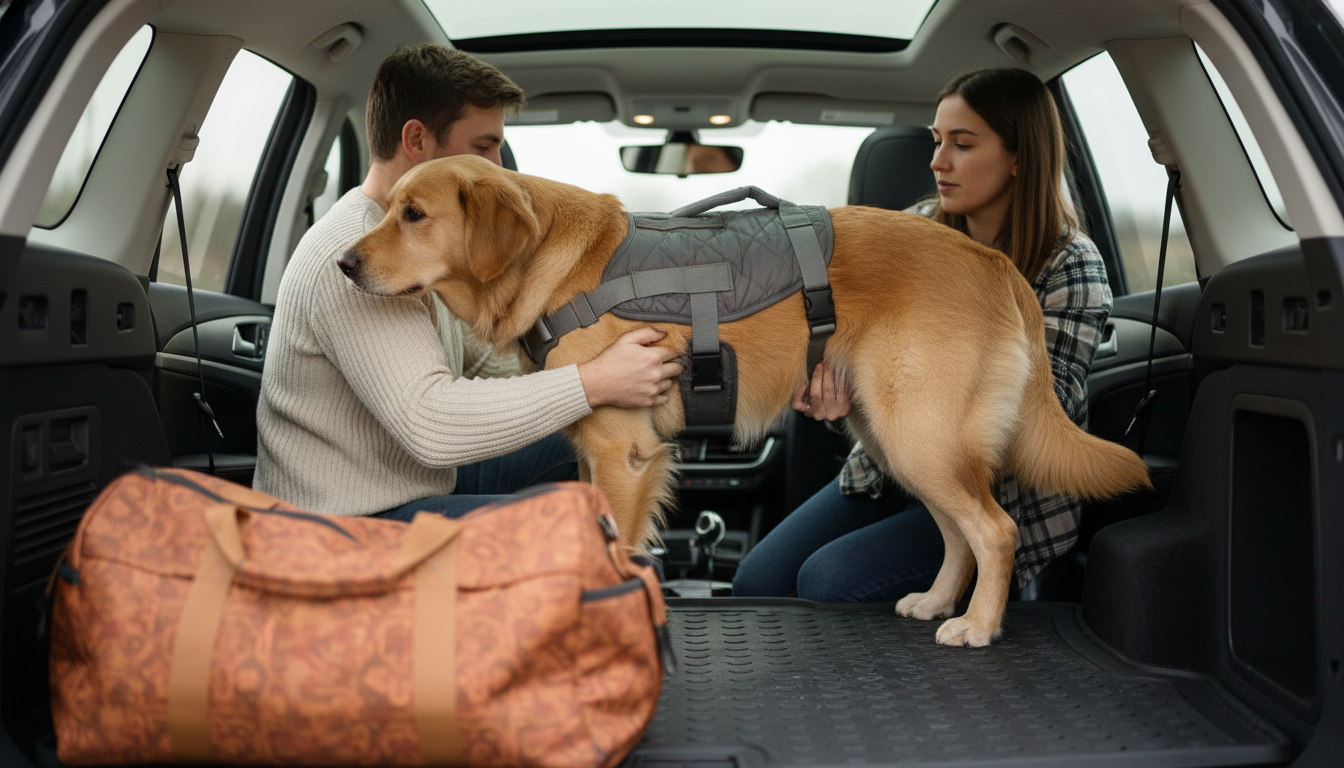
Carrying a 100-pound dog is less about strength and more about setup, support, and staying safe for both of you. If your dog can stand and take a little weight, the gentlest option is usually “assist” carrying with a support harness or lift sling. If they can’t stand, it’s often safer to use a two-person lift or a soft stretcher-style method.
If your dog is yelping, can’t bear weight, is struggling to breathe, or seems disoriented, avoid lifting more than necessary and contact a vet. Even a calm dog may panic when in pain, so move slowly and keep your face away from their mouth.
1) Support harness or rear lift sling: For dogs with limited mobility (especially in the hips), use a harness with sturdy handles and/or a rear sling to support the back end while they walk. Keep their spine level and take short steps.
2) Two-person “stretcher” lift: If your dog can’t stand, two adults can use a thick blanket or sturdy dog stretcher. Roll the dog gently onto the blanket, then each person lifts one side so the dog stays centered and supported.
3) Fireman-style carry (only if needed): This can work in emergencies, but it’s harder on your back and can twist your dog’s hips. If you must, keep the dog’s body close to your torso and avoid sudden turns.
Squat, don’t bend. Keep your core braced, hold your dog close, and lift with your legs. If your dog is heavy enough that you’re straining, pause and switch to a two-person method or use a mobility aid.
Many big dogs do best with travel and comfort gear that reduces lifting—like supportive carriers for short transfers, ramps for car entry, and durable walking bags that keep essentials handy. For more ideas on comfort-focused travel setups, visit this guide to pet travel comfort gear and dog carriers.
Use a support harness or rear lift sling if your dog can stand, and keep their body level. If they can’t stand, use a two-person blanket “stretcher” lift to support the whole body.
Avoid lifting under the belly alone. Use a front harness plus a rear support sling so the hips stay aligned and the back end is stabilized.
Don’t yank them up by the front legs, don’t let the back end dangle, and don’t force stairs or jumping when they’re sore. Avoid twisting lifts that torque the hips.