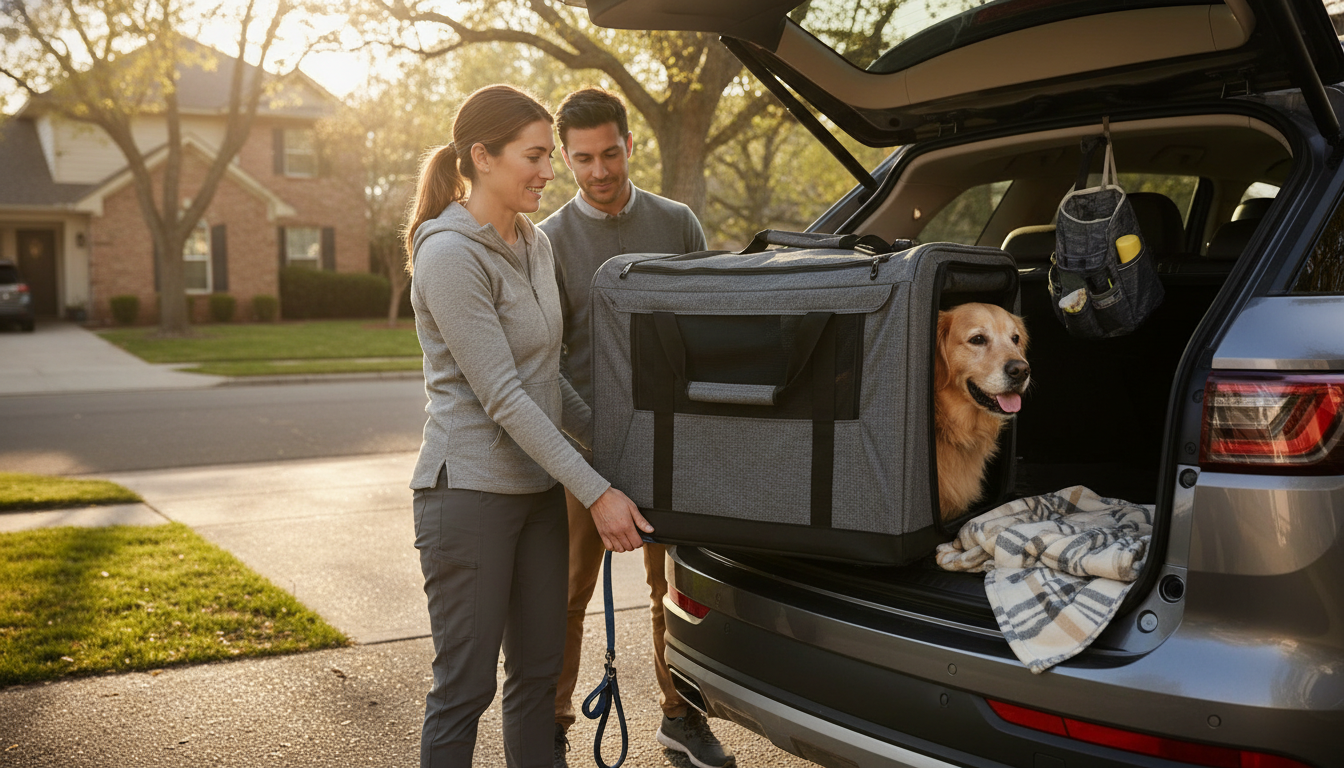
Carrying a 100 lb dog is all about protecting your back while keeping your dog calm, supported, and secure. If your dog is injured, in pain, or unable to stand, it’s safest to call your vet for guidance before moving them—especially if you suspect a spine, hip, or leg injury.
Below are practical points for best ways to safely lift and carry a large dog.
For most people, a 100 lb dog is a two-person job. Have one person support the chest and front legs while the other supports the hips and back legs. Lift together on a count of three and keep your dog level to reduce stress on joints.
If your dog can support weight on their front legs, stand behind them, gently lift their hindquarters by wrapping your arms under the thighs, and walk them forward. Stop immediately if your dog shows pain or resistance.
Fold a sturdy towel or blanket lengthwise and place it under your dog’s belly (or under the hips for rear-leg issues). Hold both ends like handles to help take weight off your dog’s legs while you guide them. This works well for getting to the car or moving across the house.
Bend at the knees, not the waist. Keep the dog close to your body, tighten your core, and avoid twisting—turn with your feet instead. If the lift feels unstable, reset and get help.
For big dogs, supportive travel and lifting solutions (like structured carriers for specific situations, slings, and other pet travel accessories) can make movement less stressful and more secure. For more comfort-first travel tips and gear ideas, visit this guide to pet travel comfort gear and dog carriers.
Most dogs do best with a bed that matches their size and sleep style, offers easy-to-clean materials, and provides enough support for their joints—especially as they get older.