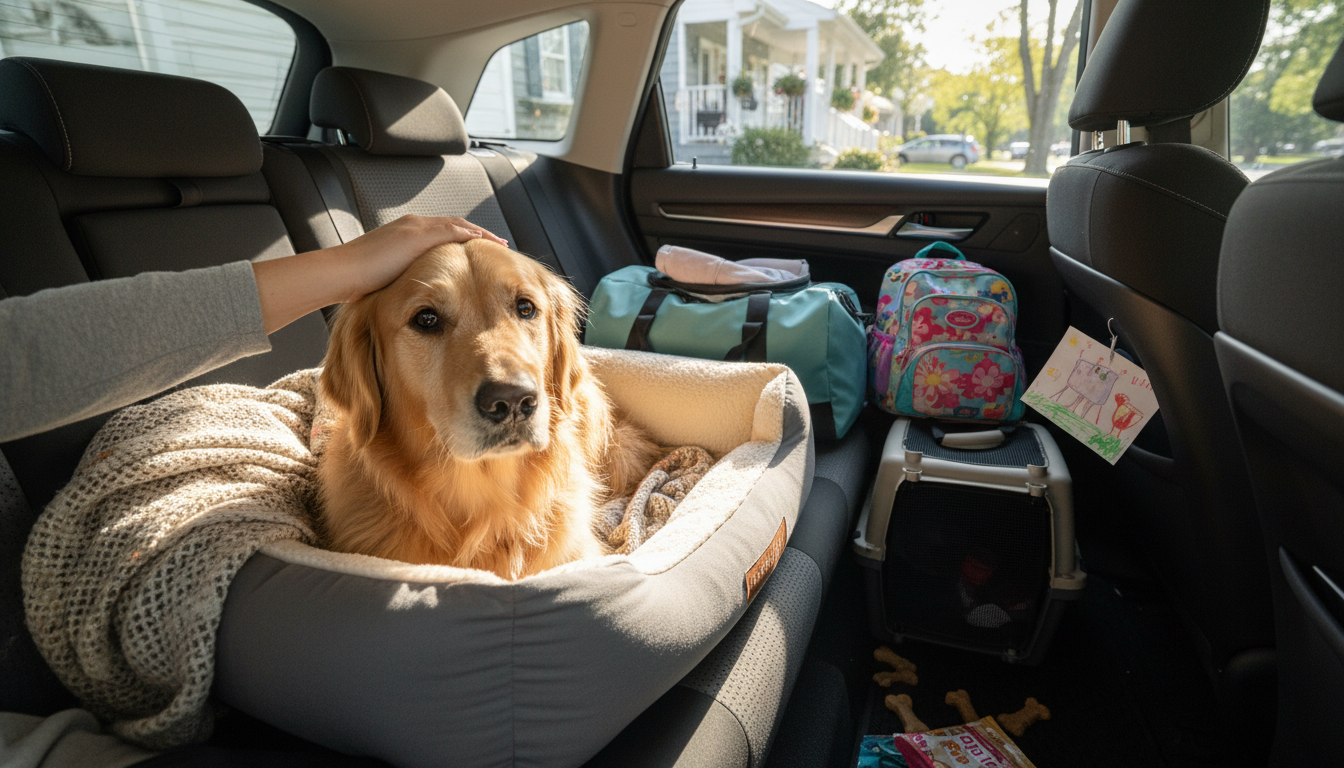
Some dogs hop in the car like it’s an adventure; others act like the seat is lava. If your pup gets anxious on the road, the goal is simple: create a safer, steadier, more predictable ride—then build positive associations over time.
An anxious dog often feels worse when they’re sliding around or can’t find a stable spot. Use a crash-tested harness with a seat belt tether, or a well-structured dog car seat or carrier that keeps them supported and contained. Add a familiar blanket that smells like home to boost comfort.
Do “car time” without going anywhere: let your dog explore the car while it’s parked, offer treats, then do short sessions with the engine on. Next, take 1–3 minute drives around the block and gradually increase distance. Consistency matters more than speed.
Bring the same travel routine each time—potty break, quick drink of water, then buckle in. Play soft music, avoid strong air fresheners, and keep the temperature cool. If your dog watches the road and seems overwhelmed, positioning them to face forward in a supportive seat can help reduce stress.
A long-lasting chew, lick mat (for parked practice or breaks), or a favorite toy can be soothing. For dogs with persistent anxiety, ask your veterinarian about behavior training, motion sickness, or safe calming options tailored to your dog’s size and health.
For a deeper look at safe, comfortable travel setups—especially choosing a supportive seat or carrier—visit this guide: https://kingwuff.com/blog/guide-puff-puppy-dog-car-seat-carrier-bag-king-wuff/.
Secure your dog in a stable car seat, carrier, or harness to reduce sliding and uncertainty, then practice short, positive drives with treats. If it continues, check with a vet for motion sickness or anxiety support.
Panting can be a sign of stress, excitement, heat, or motion sickness. Keep the car cool, limit overstimulation, and consider shorter drives while you work on calm conditioning.
Many dogs do well with a favorite chew or comfort item, plus a secure, cozy place to ride. For supplements or medications, consult your veterinarian to choose the safest option for your dog.