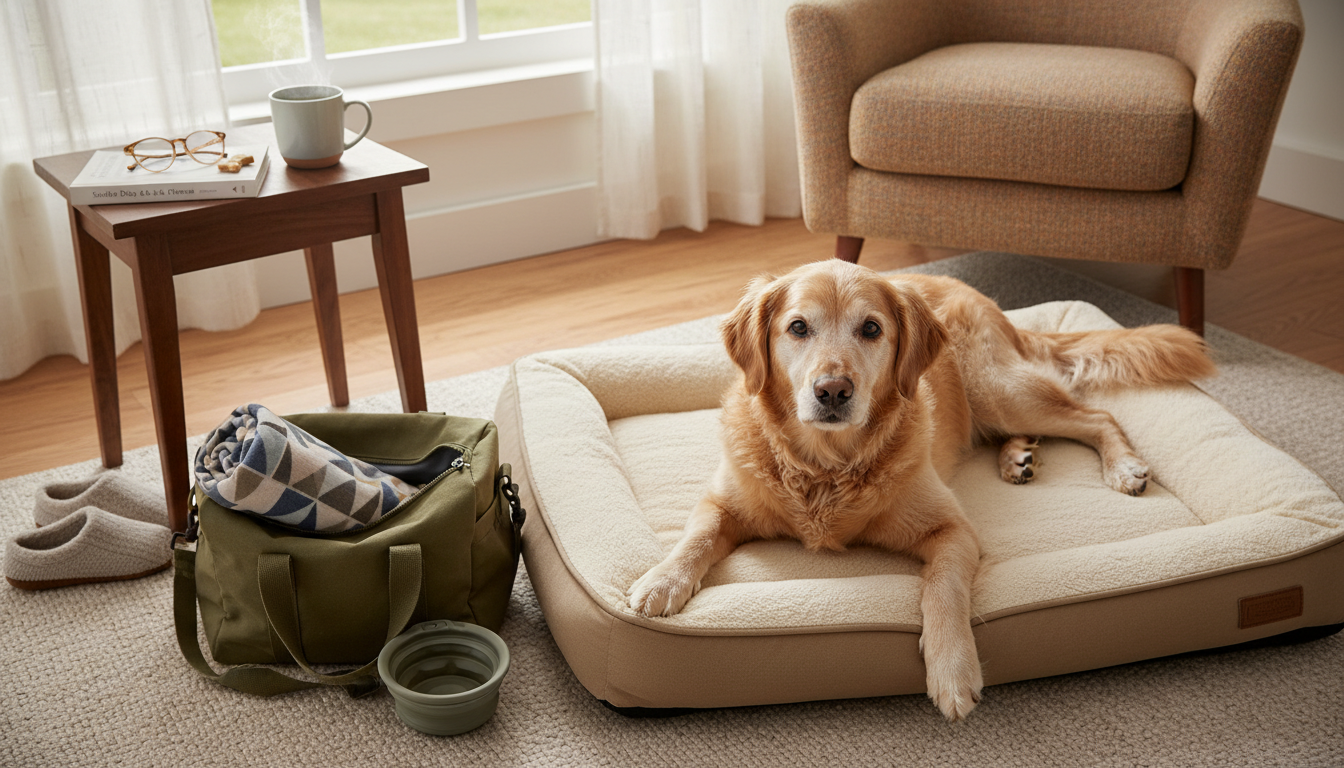
Helping an older dog rebuild strength in their back legs is all about gentle consistency: safe movement, supportive footing, smart nutrition, and plenty of recovery time. Because seniors can have arthritis, nerve changes, or pain that looks like “weakness,” start with a quick vet check before increasing activity—especially if there’s limping, knuckling, or sudden decline.
Short, frequent walks on level ground are often the best starting point. Aim for a pace your dog can maintain without dragging toes or lagging, then gradually add time (think minutes per week, not miles per day). If your dog tolerates it, gentle hill walking or slow incline work can activate glutes and hamstrings without the jarring impact of running.
Try 3–5 repetitions of easy exercises, once daily or every other day:
Sit-to-stand: Ask for a sit, then a stand, rewarding calm, controlled movement.
Weight shifts: While your dog is standing, lure their nose slightly side to side so they shift weight over each rear leg.
Cavaletti-style steps: Walk slowly over a line of low obstacles like broom handles or pool noodles (kept very low) to encourage lifting feet.
Slick floors make seniors brace and avoid using their back legs fully. Use runners or non-slip mats in favorite pathways, keep nails and paw fur trimmed for grip, and consider supportive bedding so muscles recover comfortably after exercise.
Older dogs need high-quality protein to maintain lean muscle. Choose a senior-appropriate diet with strong protein sources, and ask your vet if omega-3s (fish oil), vitamin E, or joint-support supplements fit your dog’s health profile.
Consistency matters, and having essentials organized helps you stick with frequent, shorter walks. For a comfortable way to carry treats, water, and daily walk gear, see this guide to a hands-free dog walking bag: https://kingwuff.com/blog/guide-beige-rover-dog-walking-bag-hands-free-organized-carry/.
Yes—many senior dogs can improve strength with low-impact walks, gentle strengthening drills, and good traction at home. Progress slowly and pause if you see pain, limping, or worsening weakness.
Combine a vet evaluation with a gradual exercise plan, a protein-forward diet, and supportive care like non-slip flooring and comfortable rest. Targeted rehab or hydrotherapy can help if available.
Common reasons include arthritis-related inactivity, age-related muscle loss, spinal or nerve issues, and pain that limits normal use. A vet exam can pinpoint the cause and guide a safe plan.