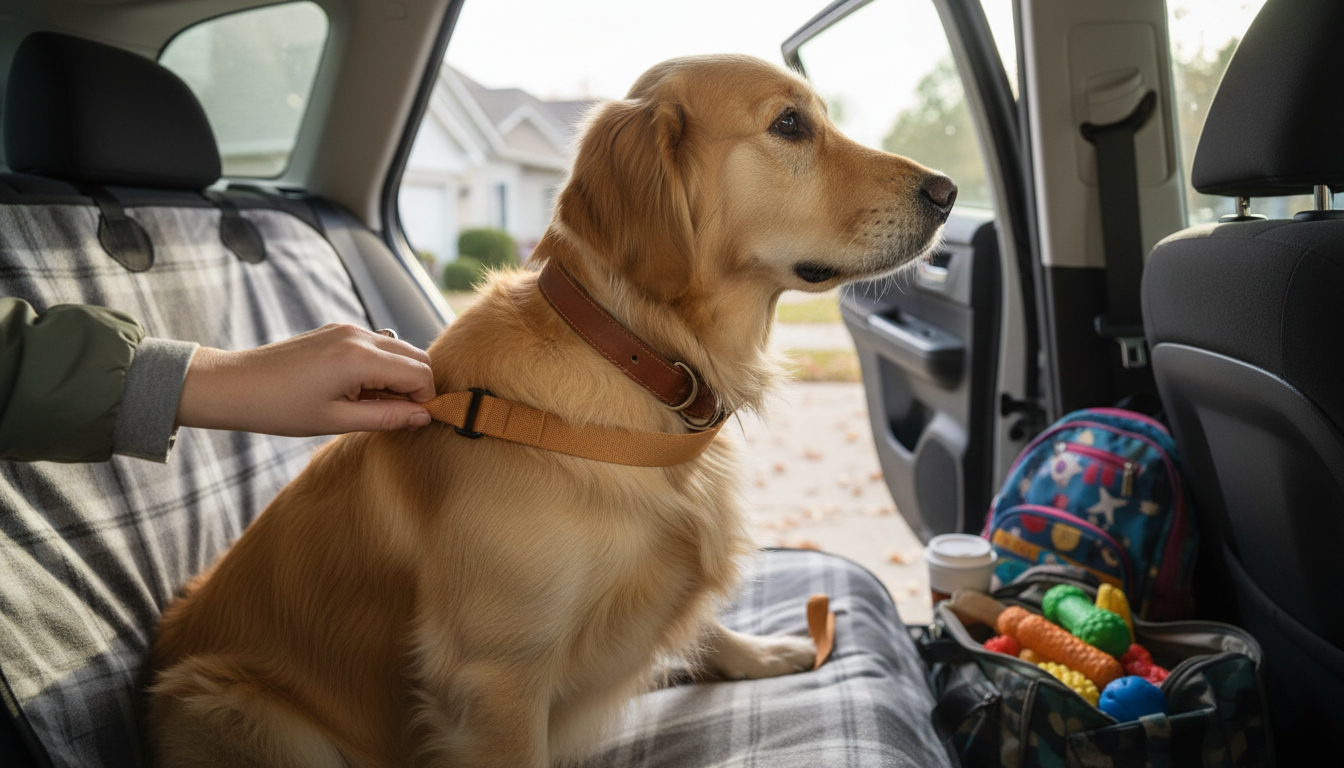
If a dog isn’t wearing a harness, there isn’t a truly safe way to “buckle” them in with a standard seat belt. A seat belt is designed to work with a harness or a crash-tested carrier/seat that secures your pup and helps distribute force during sudden stops. Without that setup, the belt can slip, tangle, or put dangerous pressure on the neck or abdomen.
Below are practical points for what to do instead (safe options that still feel simple).
For small to medium pups, a structured dog car seat or carrier that anchors with the vehicle seat belt is one of the easiest ways to travel without putting a harness on your dog. Your dog rides in a cozy, enclosed space, while the product—not your dog’s body—gets buckled in.
If your goal is to keep your dog on the seat, the safest approach is a well-fitted harness paired with a dog seat belt tether that clicks into the seat belt buckle or attaches to the LATCH system. Avoid clipping a tether to a collar; it can lead to serious neck injuries in a sudden stop.
For bigger pups or longer drives, a crash-rated crate secured in the cargo area or back seat is a solid option. It prevents roaming, reduces distraction, and creates a den-like space that many dogs find calming.
Below are practical points for quick safety checklist before you roll.
For a cozy, travel-ready setup and tips on helping your pup ride comfortably, visit this guide: https://kingwuff.com/blog/guide-puff-puppy-dog-car-seat-carrier-bag-king-wuff/.
Most dogs do best with a bed that matches their size and sleep style, offers easy-to-clean materials, and provides enough support for their joints—especially as they get older.