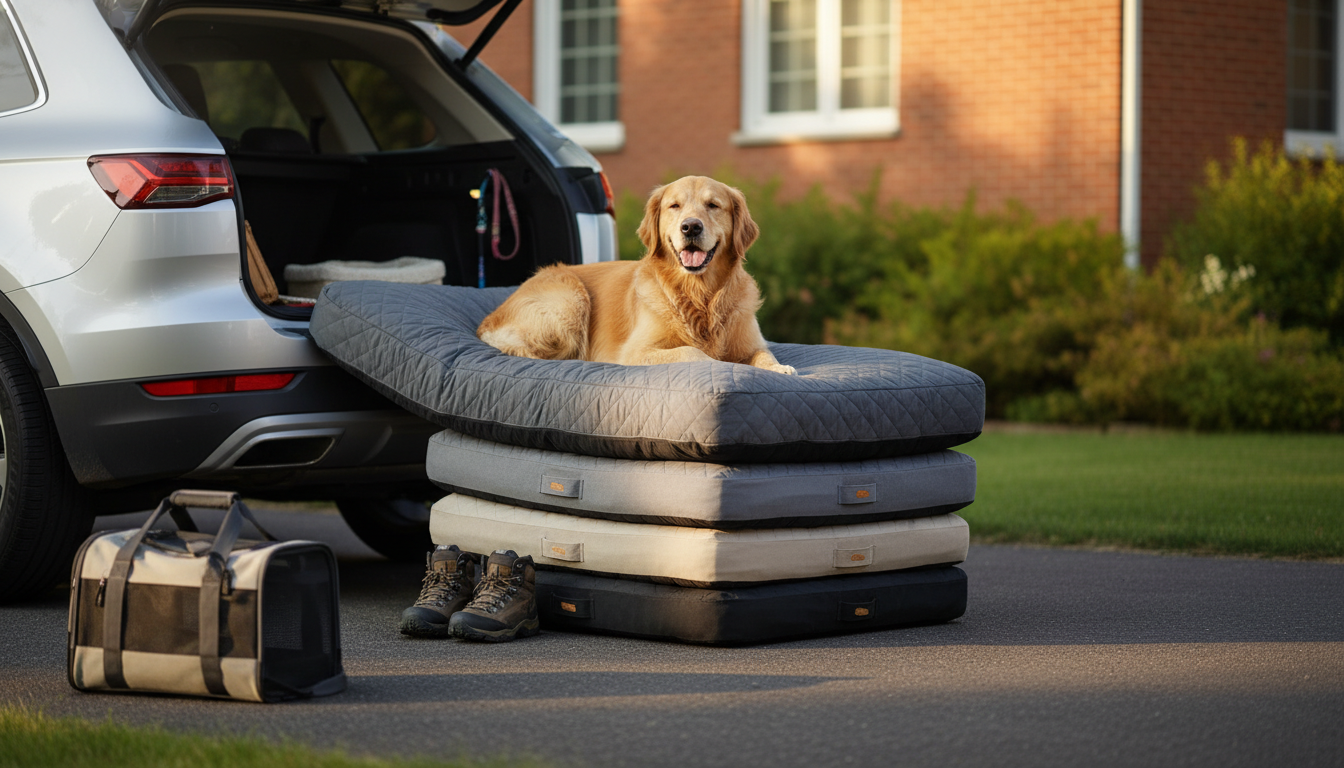
For most dogs, a good orthopedic dog bed should be about 3 to 6 inches thick. That range usually provides enough cushion to relieve pressure on joints while still feeling stable and supportive.
Small dogs (under ~25 lbs): 2–4 inches is often plenty, especially if your pup is young and light. If they’re a senior or have joint stiffness, aim closer to 4 inches for extra relief.
Medium dogs (~25–60 lbs): 4–5 inches is a comfortable sweet spot, helping reduce pressure on hips, elbows, and shoulders without “bottoming out.”
Large dogs (60+ lbs): 5–7 inches is ideal, since heavier dogs compress foam more. A thicker bed helps keep their joints from pressing into the floor.
Thickness only helps if the bed stays supportive. A quality orthopedic bed should feel firm but not hard—your dog should sink in slightly while still being held up. If you can easily feel the floor when you press down with your hand, the bed may be too thin (or the foam too soft) for that dog’s weight.
If your dog is older or has mobility challenges, a very tall bed can be harder to step onto. In those cases, look for supportive foam around 4–6 inches and consider placing it where your dog doesn’t have to climb or jump to reach it.
For daily use, features like a washable cover and a non-slip bottom help keep the bed fresh, secure, and cozy—especially on slick floors. For more tips on choosing a practical, pet-safe setup, visit this guide to washable, non-slip dog bed mattresses and plush pads.
Yes. Even small dogs can benefit from pressure relief and joint support, especially if they’re seniors, have luxating patellas, or simply love a sturdier cushion.
A supportive orthopedic foam bed around 3–5 inches thick with a low, easy-entry profile is typically best. A washable cover and non-slip bottom can also make daily care simpler and safer.