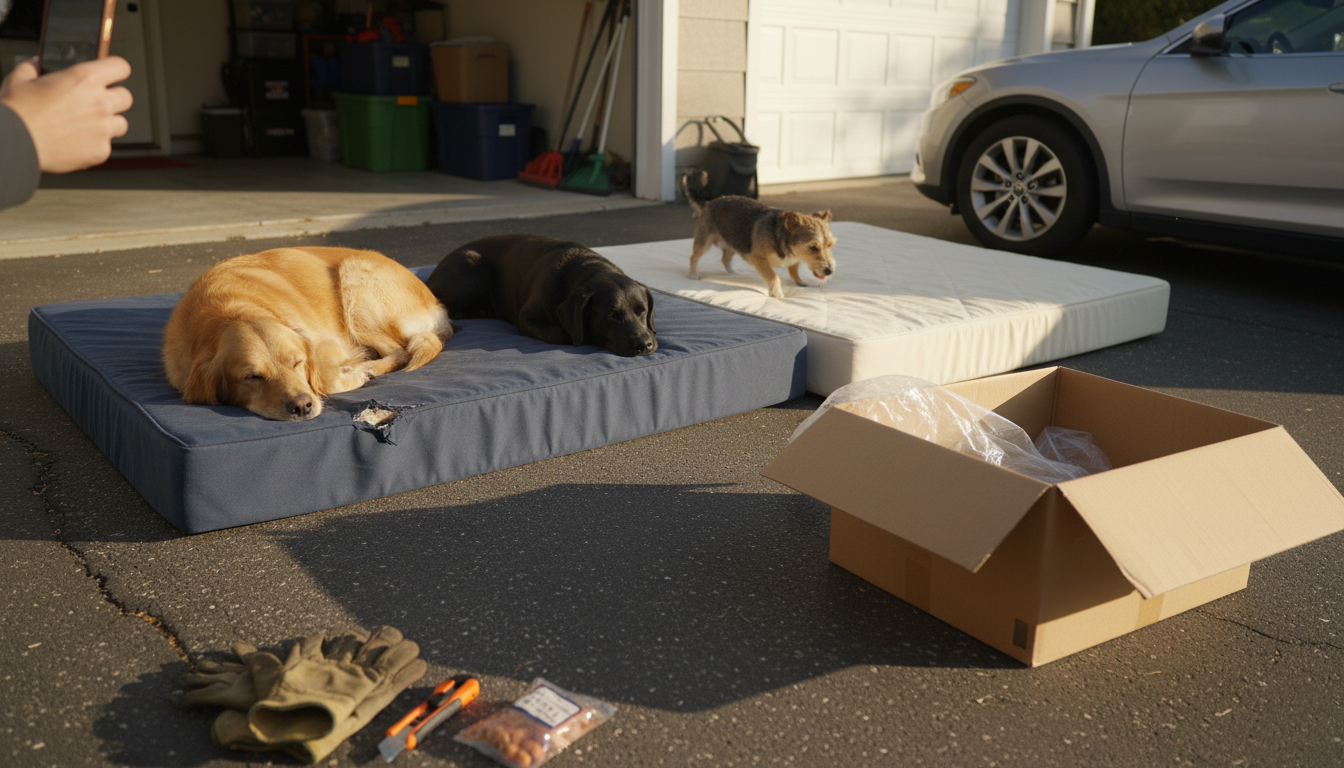
Most orthopedic dog beds should be replaced about every 1.5 to 3 years, but the “right” timing depends on how well the foam is holding up and how your dog is using it day to day. If your pup sleeps on it nightly, is a larger breed, or loves to dig and nest before settling in, you may land closer to the 18–24 month mark. For occasional use (like a secondary bed in the office), a quality orthopedic bed can often stay supportive for closer to three years.
The easiest way to decide is to check comfort and structure—not the calendar. Orthopedic beds are designed to cushion joints and help reduce pressure points, so once the bed stops doing that job, it’s time for a refresh.
The foam feels flat or lumpy: If it doesn’t spring back, has dips where your dog lies, or feels uneven, it’s no longer offering consistent support.
Your dog looks less comfortable: Restlessness, frequently changing positions, or choosing the floor can mean the bed isn’t cushioning like it used to.
Cover wear and tear: Rips, thinning fabric, or broken zippers can expose the inner foam and create a safety hazard—especially for chewers.
Odors that won’t wash out: Even washable covers eventually reach a point where deep odors or lingering stains are hard to fully remove.
Choose a bed with durable foam and a removable, washable cover. Keep nails trimmed, rotate the bed occasionally, and wash the cover on a consistent schedule to reduce buildup. If your bed has a non-slip base, keep that side clean too so it stays stable on hard floors.
For more tips on keeping a dog bed fresh, safe, and comfy, visit this guide to washable, non-slip dog bed mattresses and plush pads.
With regular use, many orthopedic dog beds last around 1.5 to 3 years. Longevity depends on foam quality, your dog’s size, and daily wear.
Plan on replacing most dog beds every 1 to 3 years, sooner if the fill flattens or the cover becomes damaged. A bed should be replaced when it stops being supportive and hygienic.
A well-made dog bed typically lasts 1 to 3 years. Heavy chewers, senior dogs, and large breeds often need a sturdier bed replaced more frequently.