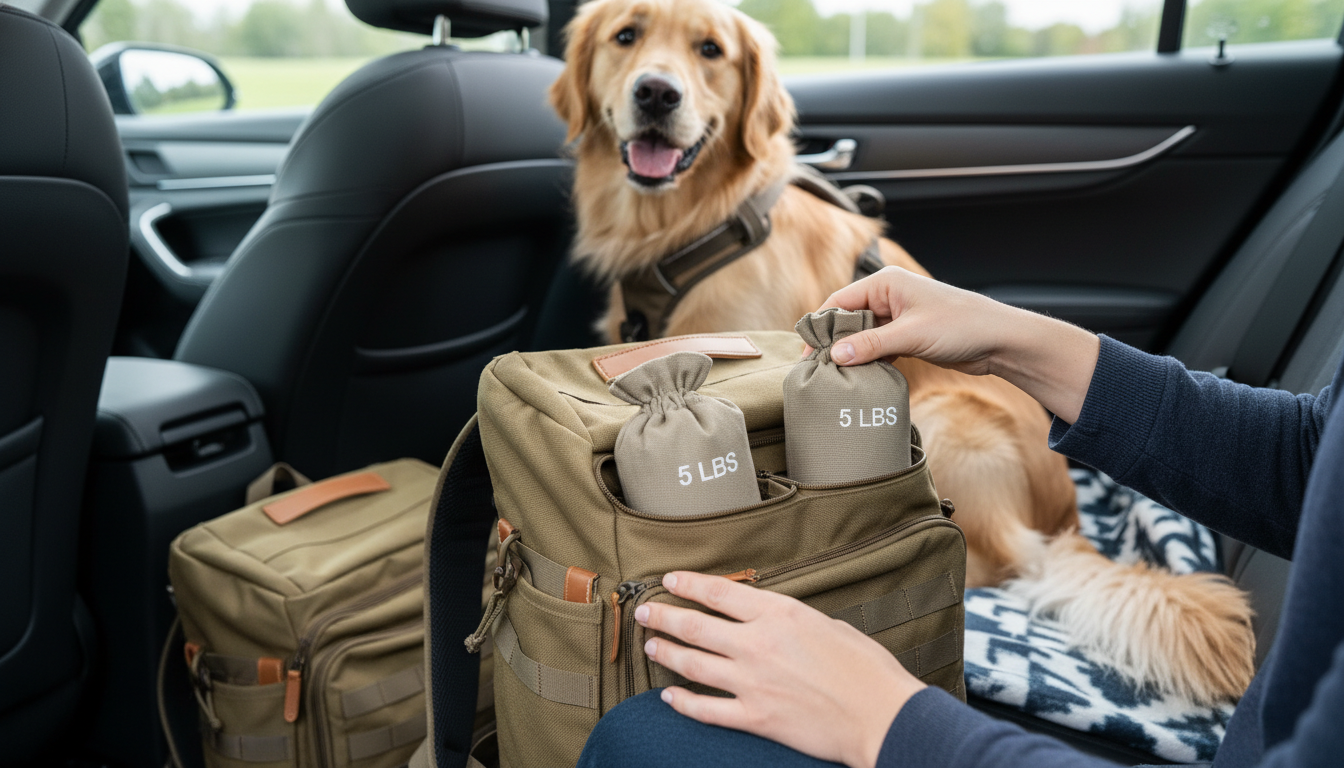
For a healthy adult dog that weighs about 50 pounds, a common guideline is to keep a carried load around 10% to 15% of their body weight. That works out to roughly 5 to 7.5 pounds in a properly fitted dog backpack. Some fit, well-conditioned dogs may handle up to about 20% (around 10 pounds) for shorter, easier outings, but that shouldn’t be the starting point.
Comfort and safety matter more than the number on the scale. A 50 lb dog may need a lighter load if they’re still growing, are a senior, are overweight, or have joint, back, or breathing issues. Terrain and weather also count—steep trails and hot days increase strain quickly.
A supportive pack with a snug (not tight) harness-style fit helps prevent rubbing and shifting. Aim to distribute weight evenly on both sides, keep heavier items close to the dog’s shoulders, and avoid bulky loads that bounce. Start with an empty pack for a few walks, then add weight gradually in small increments while watching your dog’s posture and energy.
If you notice slowing down, lagging behind, excessive panting, reluctance to move, a tucked tail, or soreness after the walk, reduce the weight right away and keep the next outings lighter. When in doubt—especially for dogs with past injuries—check with your vet before adding significant weight.
For more dog travel comfort tips and gear considerations, visit this guide to pet travel comfort and dog carriers.
Many healthy adult dogs can carry about 10% to 15% of their body weight, or roughly 5 to 7.5 pounds for a 50 lb dog. Start lighter and increase slowly if your dog stays comfortable.
It varies widely by breed, jaw health, and the object’s shape, but mouth-carrying should stay light and brief. Avoid heavy or awkward items that strain the neck, teeth, or gums.
It can be, especially for hikes and longer walks where you want your dog to carry small essentials like collapsible bowls or waste bags. A well-fitted, durable pack can also help keep outings organized—comfort should always come first.