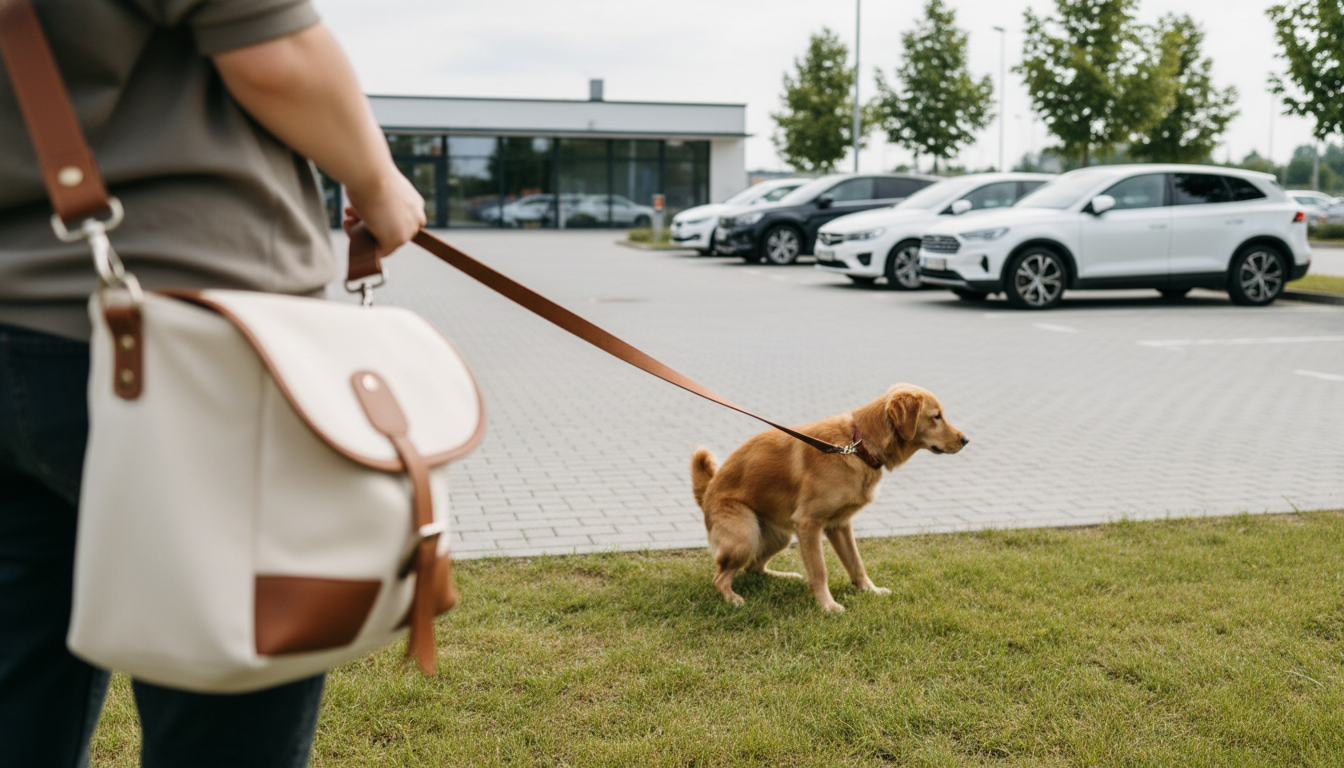
Most healthy adult dogs do best with 3–5 potty breaks per day, spaced out so they’re not holding urine for too long. A common rhythm is first thing in the morning, once or twice during the day, early evening, and a last quick break before bed. Many dogs can physically “hold it” longer, but giving regular chances to pee is more comfortable and can support bladder health—especially for smaller dogs.
That said, the right number depends on your dog’s age, size, routine, and health:
On walks, it’s normal for dogs to “pee a little” several times while sniffing. That’s often scent-marking, not a sign they’re overdoing it. Still, if your dog is squatting repeatedly with little output, seems uncomfortable, has accidents despite being trained, or you notice blood or strong odor, it’s time to call your vet.
Having a predictable potty schedule is easier when walks feel organized—treats, waste bags, and water always within reach. For ideas on staying hands-free and prepared on every outing, check out this guide: hands-free organized carry for dog walks.
If your dog suddenly needs to pee far more than usual, wakes you overnight to go out, or strains and produces only small amounts, it may be too often and worth a vet check. Increased urination can be linked to UTIs, diabetes, kidney issues, or medications.
Many adult dogs urinate about 3–5 times per day, while puppies and seniors often need more frequent breaks. The best number is the one that keeps your dog comfortable and accident-free.
Most dogs need to pee shortly after waking up, and many do well with another chance after breakfast. Puppies may need multiple morning breaks closer together.