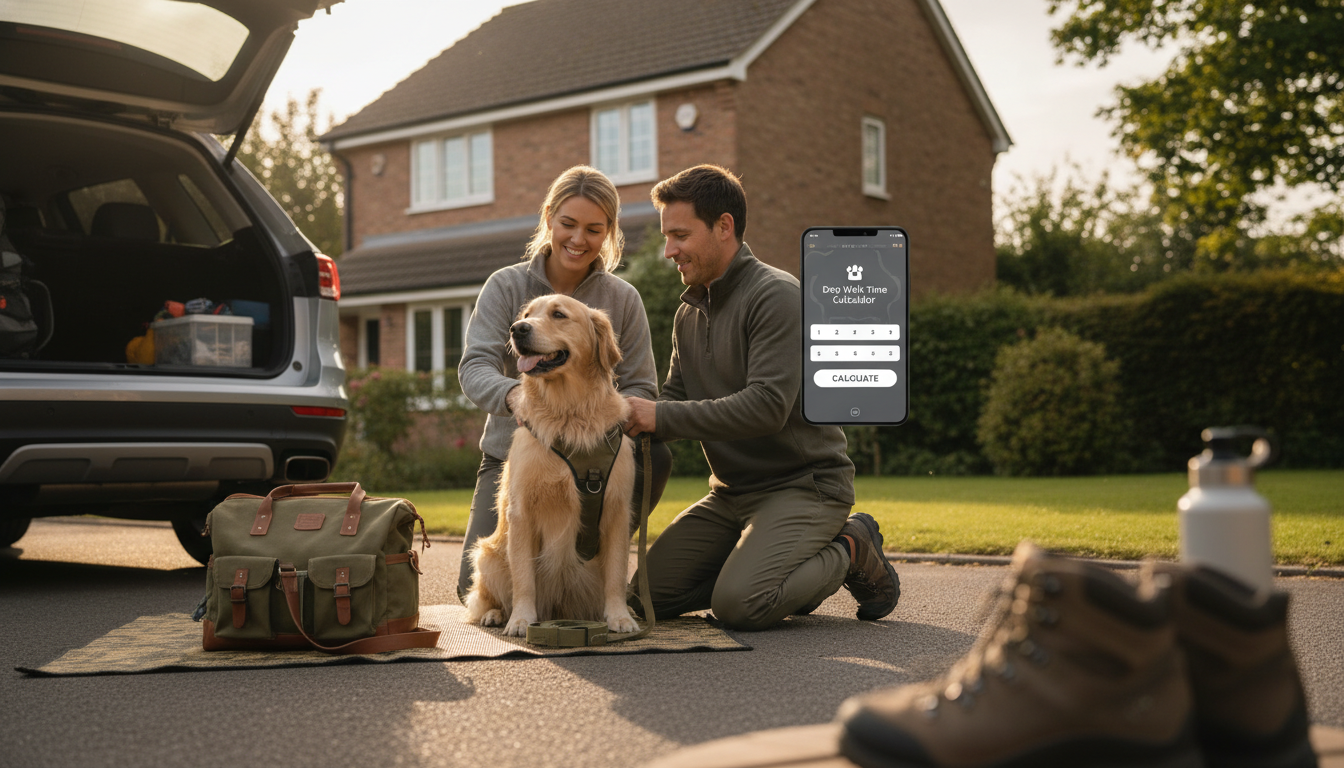
A “how long should I walk my dog” calculator is a helpful starting point, but the best answer always comes from your dog’s real-life signals. Most calculators use a mix of age, breed type, weight, fitness level, and weather to estimate a safe walk time. Use the number as a baseline, then adjust based on how your dog feels during and after the walk.
To get a more useful result, plug in details beyond weight whenever possible. A young, athletic dog and a senior dog can weigh the same and need very different walk lengths. If the calculator allows it, include:
Even if a calculator suggests a longer walk, keep it comfortable. Start with the low end of the range and watch for signs that it’s time to head home: slowing down, lagging behind, heavy panting, frequent sitting, or seeking shade. After the walk, your dog should recover quickly—steady breathing and normal energy within a short time is a good sign you’re in the right zone.
Longer walks go more smoothly when essentials are organized—water, treats, waste bags, and your phone. A hands-free setup can help you stay relaxed and focused on your dog’s pace and safety. For a practical, pet-centric approach to staying comfortable and prepared, visit this guide to a hands-free, organized dog walking bag.
Many 20 lb adult dogs do well with 30–60 minutes per day, often split into two walks. Adjust based on age, fitness, and weather, and prioritize steady pacing with plenty of sniff breaks.
A common target is 30–120 minutes daily, depending on breed, age, and energy level. Splitting time into multiple walks is often easier on joints and helps with routine and potty needs.
Most 2-year-old dogs benefit from at least 1–2 walks daily, with some higher-energy breeds needing 3 outings. Mix in mental enrichment (sniffing, training moments) to make walks more satisfying.