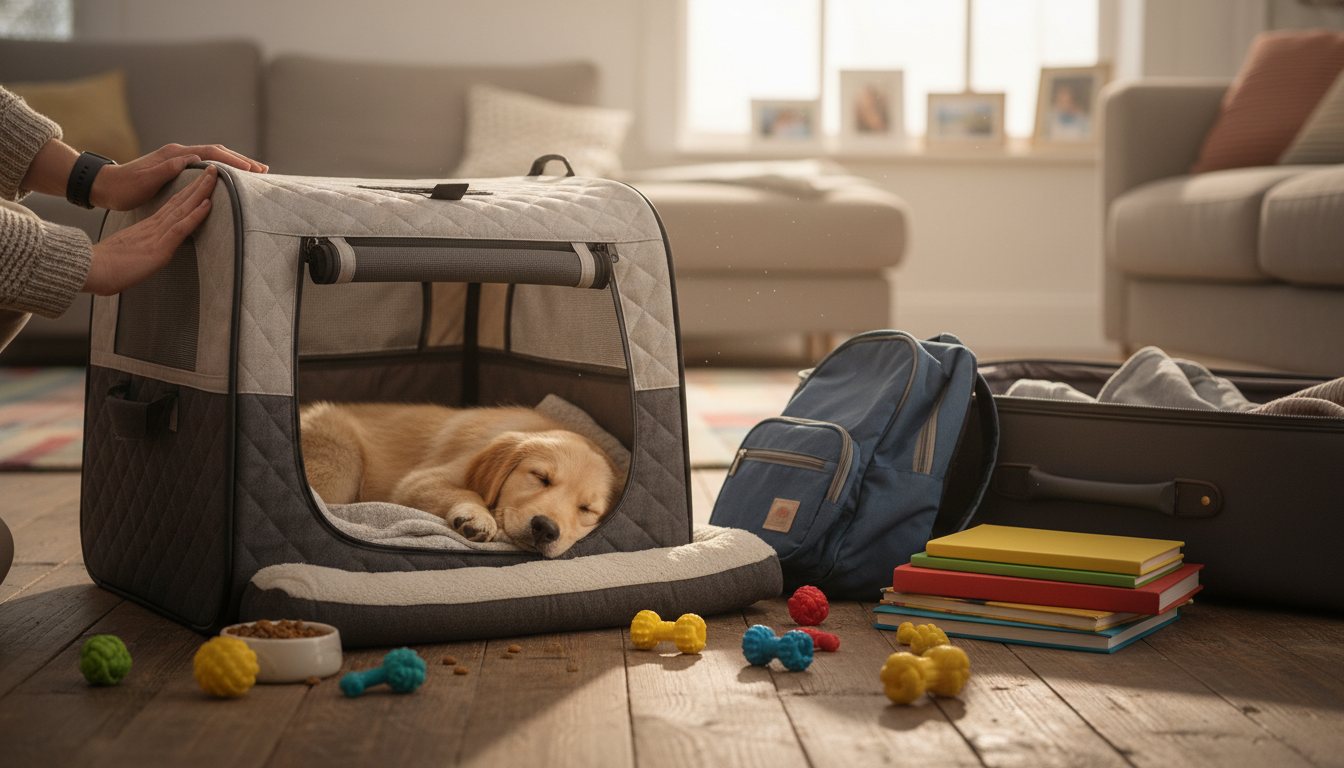
At 12 weeks old, most puppies can comfortably stay in a crate for about 2–3 hours during the day, assuming they’ve had a potty break, a little movement, and a chance to settle. Overnight is often longer—many puppies this age can make it 4–6 hours—but it varies by puppy, schedule, and how consistent potty training has been.
A common guideline is roughly one hour per month of age for daytime crating, which puts a 12-week-old (about 3 months) at around 3 hours max. Use that as a ceiling, not a goal. Some pups need breaks sooner, especially after drinking water, playing hard, or waking up from a nap.
If a puppy is crated longer than they can handle, you’ll often see whining that escalates, frantic scratching, or repeated accidents. Crating should feel like a calm, cozy den—never a place where your puppy is forced to “hold it” past their comfort level.
Keep the crate appropriately sized so your puppy can stand up, turn around, and lie down comfortably, but not so big that one corner becomes a bathroom. Add soft, supportive bedding if your puppy isn’t chewing it, and keep the environment quiet and warm. A predictable rhythm helps: potty break, short play, calm-down moment, then crate.
If your schedule requires more than 2–3 hours during the day, plan for a midday potty break (a neighbor, pet sitter, or dog walker) or use a puppy-safe playpen area with a potty pad option while training is still in progress. For travel days, a secure carrier can be a cozy alternative for short periods—especially for small pups who do best feeling close and supported.
For comfort-focused travel tips and choosing the right setup, visit this guide to a cozy dog carrier bag.
Most dogs do best with a bed that matches their size and sleep style, offers easy-to-clean materials, and provides enough support for their joints—especially as they get older.